Shop All Collections
Browse aquarium products and automation gear from local shops and Amazon.
African Cichlids
View all35 products available from Danaqua Live Fish & More

Zebra OB Cichlid
The OB Zebra Cichlid, scientifically known as Metriaclima estherae, is a popular African cichlid known for its vibrant, often blotched coloration, stemming from the "Orange Blotch" (OB) gene. They are a color morph of the Red Zebra Cichlid, native to Lake Malawi in Africa. These cichlids are relatively hardy and well-suited for aquariums with other Mbuna species.

Jewel Fish 5 Spot
The Jewel Fish 5 Spot, also known as the Banded Jewelfish or Five Star General, is a species of cichlid from West Africa characterized by its coloration and aggressive nature. They have a base color of gray or silver with five distinct black spots along their sides, often surrounded by bronze or iridescent scales. These fish are known for their territorial and predatory behavior, making them a challenging species for community tanks.

Buffalo Head Cichlid
The Buffalo Head Cichlid, scientifically known as Steatocranus casuarius, is a unique freshwater fish native to the Congo River basin in Africa. They are also called Lionhead or Blockhead Cichlids due to the prominent hump that develops on the head of males as they mature. These cichlids are known for their semi-aggressive, territorial behavior, especially during breeding, and their preference for well-oxygenated water with strong currents.

Brichardi cichlid (Neolamprologus brichardi) 2"
The Brichardi cichlid (Neolamprologus brichardi) is a popular freshwater fish known for its elegant, elongated body, lyre-shaped tail fins, and graceful swimming style. Also called the Princess of Burundi or Fairy cichlid, it's a relatively hardy species, making it a good choice for beginners interested in African cichlids.

Livingstoni Cichlid (Nimbochromis livingstonii)
The Livingstoni Cichlid (Nimbochromis livingstonii) is a captivating African cichlid known for its predatory behavior and unique "playing dead" hunting tactic. Adult males can grow up to 10 inches long, displaying vibrant blue and white patterns, while females are slightly smaller and less intensely colored. Juveniles have a mottled brown and white pattern that transitions as they mature.

Rock-Dwelling Mbuna Cichli - Compressiceps East African Cichlid (Malawi Eyebiter)
The Rock-Dwelling Mbuna Cichlid—Compressiceps East African Cichlid (now known as the Malawi Eyebiter, Dimidiochromis compressiceps) is a deep-bodied, laterally compressed cichlid with a large mouth, which can grow up to 10 inches long. It is native to Lake Malawi, features a whitish-silver body with a dark horizontal stripe, and males develop vibrant metallic blue, red, and orange fins when sexually mature. A peaceful mbuna, it requires a large, spacious tank with rocky structures, caves, and sand to mimic its natural habitat.

Placidochromis milomo VC-10 2"
The Placidochromis milomo, also known as the Super VC 10, is a striking cichlid from Lake Malawi, known for its large, fleshy lips and vibrant coloration, particularly in males. These fish are relatively peaceful compared to other African cichlids and are popular in community aquariums with other Lake Malawi species.

Taiwan Reef Cichlid (Protomelas sp. "Steveni Taiwan")
The Taiwan Reef Cichlid (Protomelas sp. "Steveni Taiwan") is a vibrant African cichlid from Lake Malawi, known for its striking coloration and peaceful nature. Males display a blue face, blue and gold body, white dorsal fin, blue caudal fin, and red anal fin, while females are silvery with faint black bars. They are relatively peaceful compared to other African cichlids and can grow to about 6 inches in length.

Blue Dolphin Hap Cichlid (Cyrtocara moorii)
The Blue Dolphin Cichlid (Cyrtocara moorii) is a captivating African cichlid known for its vibrant blue coloration and distinctive dolphin-like head hump, especially prominent in males as they mature. They are relatively peaceful, though males can be territorial, and they are found in Lake Malawi. They are mouthbrooders, with females holding the eggs and fry in their mouths for protection.

Albino Zebra CICHLID
Albino Zebra Cichlids are a pale, often pinkish-white variation of the popular Red Zebra Cichlid (Maylandia estherae) from Lake Malawi, Africa. They are characterized by their vibrant red fins (especially in males) and bright red or orange coloration, although the albino variety is distinguished by its pale body and red eyes. These fish are active, territorial, and known for their playful personalities, making them a popular choice for aquarists.

Venustus Cichlid
The Venustus cichlid, also known as the Giraffe cichlid, is a striking fish from Lake Malawi, characterized by its unique coloration and predatory behavior. Males develop vibrant blue heads and yellow bodies with dark blotches, while females are more subdued with a silver base and similar blotches. They are known for their ambush predator hunting style and can grow up to 10 inches, requiring a large aquarium with plenty of space and hiding places.

Red Zebra
The Red Zebra Cichlid, scientifically known as Maylandia estherae, is a vibrant freshwater fish native to Lake Malawi in Africa. It's known for its striking orange to red coloration, particularly in the males, and its bold, semi-aggressive personality. These fish are popular in the aquarium hobby due to their beautiful color and interesting behavior.

Yellow Peacock Cichlid
The Yellow Peacock Cichlid, scientifically known as Aulonocara baenschi, is a vibrant freshwater fish native to Lake Malawi, known for its bright yellow coloration and peaceful temperament. These cichlids are popular among aquarium hobbyists for their striking appearance and relatively calm demeanor compared to other African cichlids.

Compressiceps Albino Cichlid
The Compressiceps Albino Cichlid, also known as the Albino Malawi Eyebiter (Dimidiochromis compressiceps), is a striking freshwater fish known for its unique albino coloration and predatory behavior. It is a popular choice among experienced aquarists for its captivating appearance and interesting personality.

Red Peacock Cichlid
Red Peacock Cichlids are a vibrant and popular variety of African cichlid, known for their striking red coloration and active personalities. They are not a naturally occurring species, but rather a selectively bred color form of Aulonocara cichlids, often derived from the Aulonocara jacobfreibergi species according to Whitlyn Aquatics. These cichlids are generally peaceful but can be territorial, especially males.

Chindongo saulosi Mbuna German Blood (Juveniles 2"+)
locally breeding!Pseudotropheus saulosi is classified as a dwarf Mbuna, reaching a size of only 3-4 inches. These colorful little fish come originally from the Taiwan Reef area of Lake Malawi. The males are blue with black vertical bars, and the mouthbrooding females are deep yellow. Fry are all yellow as well, changing colors at maturity. Malawian and Victorian cichlids are similar in care and temperament, leading to fish from these two lakes being grouped together in the hobby. Several hundreds species of cichlid are found in Lake Malawi, along with many regional variations, but Lake Victoria has far fewer due to the introduction of invasive predators. Most cichlids in both lakes are rock-dwellers. They seldom stray far from the rocky bottoms and sides of the lake and will quickly dart into the rocks to hide. As with all cichlids, they are very territorial and will not tolerate other cichlids around "their" crevice. Two of the most popular groups of these cichlids are the "Peacocks" (mostly the Aulonocara genus) and "Mbuna's" (native term for "rock fish" and including the genera Pseudotropheus, Labidochromis, Maylandia, Melanochromis and others). While aggression and compatibility can vary from species to species, mixing Mbuna and Peacock cichlids is not usually recommended. Mbuna cichlids tend to be more aggressive and may bully the usually more passive Peacocks but some Mbuna cichlids are far more aggressive than others. Several other groups of cichlids can also be found from these lakes, some of which can be large and aggressive predators; research all choices carefully. Decor for a Malawi/Victoria aquarium should be very rocky. Rock "piles" and shelf-like backgrounds are common designs and can be made from tufa rock, lava rock or slate. Substrates can range from the whitish coral sand used in saltwater aquariums to black freshwater sand or even regular decorative gravels. Wood tends to lower pH and is not usually recommended for African cichlid aquariums.

Blue Neon Peacock Cichlid
The Blue Neon Peacock Cichlid, scientifically known as Aulonocara sp., is a vibrant freshwater fish native to Lake Malawi in Africa. Males exhibit a striking metallic blue face, dorsal, and anal fins, with a bright yellow body. Females are typically gray with a subtle blue or yellow sheen. They are known for their elongated bodies, elegant fins, and can reach a size of 4-6 inches (10-15 cm).

Auratus Cichlid
The Auratus Cichlid, scientifically known as Melanochromis auratus, is a freshwater fish native to Lake Malawi in Africa. It's known for its vibrant colors and aggressive temperament. Juveniles and females display a golden yellow base with black horizontal stripes, while dominant males transition to a dark brown or black body with light blue or yellow stripes. These fish are relatively easy to care for but require a large tank and careful consideration of tankmates due to their territorial nature.

Acei Cichlid (Pseudotropheus sp. "acei")
The Acei Cichlid (Pseudotropheus sp. "acei") is a vibrant freshwater fish known for its slender blue body and bright yellow fins, especially its tail. Originating from Lake Malawi in Africa, they are popular among aquarium enthusiasts for their relatively peaceful nature compared to other Mbuna cichlids. They are also known for being mouthbrooders, with females holding the eggs in their mouths until they hatch and the fry become free-swimming.

Frontosa Burundi cichlids
Frontosa cichlids, scientifically known as Cyphotilapia frontosa, are a popular and striking species of freshwater fish, notable for their large size and unique appearance. They are characterized by a nuchal hump on their head, which becomes more prominent as they mature, especially in males. They also have distinctive vertical black or dark blue bars on a white or blue body. These cichlids are relatively peaceful for their size and are found in Lake Tanganyika, Africa.

Yellow Labidochromis
The Yellow Lab Cichlid, scientifically known as Labidochromis caeruleus, is a vibrant, popular freshwater fish, particularly sought after in African cichlid aquariums. They are characterized by their bright yellow coloration and are known for being relatively peaceful compared to other Mbuna cichlids. They are omnivorous, growing to about 4 inches in length, and are maternal mouthbrooders.

Demasoni cichlids
Demasoni cichlids are small, brightly colored African cichlids known for their striking blue and black vertical stripes. They are relatively peaceful for Mbuna cichlids and relatively easy to care for in aquariums. They are endemic to Lake Malawi, specifically around Pombo Rocks in Tanzania.

Rostratus Cichlid
The Rostratus Cichlid, scientifically known as Fossorochromis rostratus, is a species of cichlid fish native to Lake Malawi in East Africa. It's a relatively large, sexually dimorphic species, with males typically reaching 12 inches (30 cm) and females slightly smaller. Males are known for their vibrant blue and green iridescent coloration with black markings, while females are generally pale yellow-brown with a checkerboard pattern.

Kenyi Cichlid
The Kenyi Cichlid, scientifically known as Metriaclima lombardoi, is a vibrant, aggressive freshwater fish native to Lake Malawi in Africa. They are known for their striking color differences between males and females and their territorial nature. Kenyi cichlids are popular in the aquarium trade due to their beauty and engaging behavior, but they require specific tank conditions and careful compatibility considerations.

Rock-Dwelling Mbuna Cichlid – Compressiceps East African Cichlid
Cyrtocar, Dimidiochromis compressiceps, Haplochromis, Malawi Eyebiter, ParatilapiaOriginally from Lake Malawi, Africa, the Compressiceps Cichlids can reach up to 10″ long! They enjoy an environment of foliage, rocks, caves, and wood. Valisneria is a great plant to have in your aquarium, if you purchase these fish. Other care tips to keep in mind for your aquarium are: pH: 7.8-8.5 KH: 10-15° Temp: 72-82° F Food: New Life Spectrum “Cichlid Formula” (Found at Fish Foods)

Assorted Elongatus Cichlid 2"
The Assorted Elongatus Cichlid, also known as the Elongate Mbuna or Elongatus Cichlid, refers to a group of African cichlid species from Lake Malawi, Africa. These fish are popular in the aquarium trade due to their vibrant colors, elongated body shape, and active behavior.

Red Fin Borleyi (Copadichromis borleyi)
The Red Fin Borleyi (Copadichromis borleyi) is a striking African cichlid known for its vibrant coloration and engaging personality, making it a popular choice for freshwater aquariums. These fish, native to Lake Malawi, exhibit distinct color differences between males and females.

Obliquidens cichlid
The Obliquidens cichlid, scientifically known as Astatotilapia latifasciata, is a species of freshwater fish native to Lake Victoria in Africa. They are also commonly called Zebra Obliquidens or Victoria Zebra Fish. These cichlids are known for their striking coloration, particularly the males, which can display a bright red belly and yellow towards the tail during breeding season. They are moderately aggressive, omnivorous, and can reach a size of 5-6 inches.

Ice Blue Zebra Cichlid (Maylandia greshakei)
The Ice Blue Zebra Cichlid (Maylandia greshakei), also known as the Red Top Ice Blue Zebra or William's Mbuna, is a striking freshwater fish known for its vibrant coloration and active personality. It features an ice blue body with a bright orange or red dorsal fin, making it a popular choice for aquariums. These fish are native to Lake Malawi, Africa, and typically grow to be 4-6 inches (10-15 cm) in length.

Polleni Cichlid (Starry Night Cichlid)
The Polleni Cichlid, scientifically known as Paratilapia polleni, is a captivating fish also called the Starry Night Cichlid or Black Diamond Cichlid due to its distinctive appearance. Originating from Madagascar, these cichlids are known for their striking black body adorned with iridescent blue or gold spots resembling a starry night sky. They are relatively large, reaching 10-12 inches in length, and can be somewhat aggressive, especially towards their own kind or similarly sized fish.

OB Peacock Cichlids
OB Peacock Cichlids, scientifically known as Aulonocara sp., are a vibrant and popular choice for African cichlid aquariums. They are characterized by their striking, multi-colored (often orange, red, or yellow blotches on a blue or grey base) patterns, which vary significantly between individuals, making each fish unique according to Whitlyn Aquatics. These cichlids are known for their semi-aggressive and territorial behavior, especially during breeding, and typically reach a size of up to 6 inches (15 cm).

Strawberry Peacock Cichlid (Aulonocara sp.)
The Strawberry Peacock Cichlid (Aulonocara sp.) is a vibrant, freshwater fish known for its striking pink to reddish-pink coloration and sparkling scales. Originating from Lake Malawi in Africa, these fish are selectively bred for their unique color and are a popular choice for aquariums. They are generally peaceful but can be territorial, especially when breeding.

Electric Blue Ahli (Sciaenochromis ahli)
The Electric Blue Ahli (Sciaenochromis ahli) is a vibrant African cichlid known for its striking blue coloration and is a popular choice for aquarists. These fish are native to Lake Malawi and can grow to be 6-8 inches long, requiring a spacious aquarium. Males are typically more colorful than females, developing a bright blue body with accents of yellow or orange on their fins. They are semi-aggressive, especially during breeding, and benefit from a larger tank with plenty of hiding spots.

Ice Blue Zebra Albino Cichlid
The Ice Blue Zebra Albino Cichlid, also known as the William's Mbuna, is a vibrant, freshwater fish characterized by its striking blue body and bright orange dorsal fin. It's a popular choice for Mbuna cichlid tanks, known for its semi-aggressive temperament and preference for a diet rich in spirulina and vegetables. These cichlids are native to Lake Malawi, Africa, and are typically found in rocky habitats.

Blue Peacock Cichlid (Aulonocara nyassae)
The Blue Peacock Cichlid (Aulonocara nyassae) is a freshwater fish known for its vibrant blue coloration and peaceful nature, making it a popular choice for aquariums. They are native to Lake Malawi in Africa and typically grow to about 4-6 inches in length. These fish are relatively easy to care for, requiring a 55-gallon or larger aquarium with plenty of rocks for hiding and a sandy substrate.
Air Distribution
View all2 products available from AQUANEAT, Enkarl

AQUANEAT 2-Way Air Gang Valve with Check Valves
Stainless steel gang valve manifold with lever control and suction cups. Split one air pump output into 2 lines with individual flow control.
both
Enkarl Airline Check Valves (20pc) + 25ft Airline Tubing
Complete airline tubing kit with 20 check valves and 25 feet of standard airline tubing. Prevents backflow and water siphoning.
bothAir Pumps
View all3 products available from Tetra, Hygger

Tetra Whisper Air Pump — 10 to 30 Gallon
Ultra-quiet air pump with dome shape that dampens noise. Powerful, reliable, and energy-efficient. Plug into a Tuya smart plug for HA scheduled aeration.
both
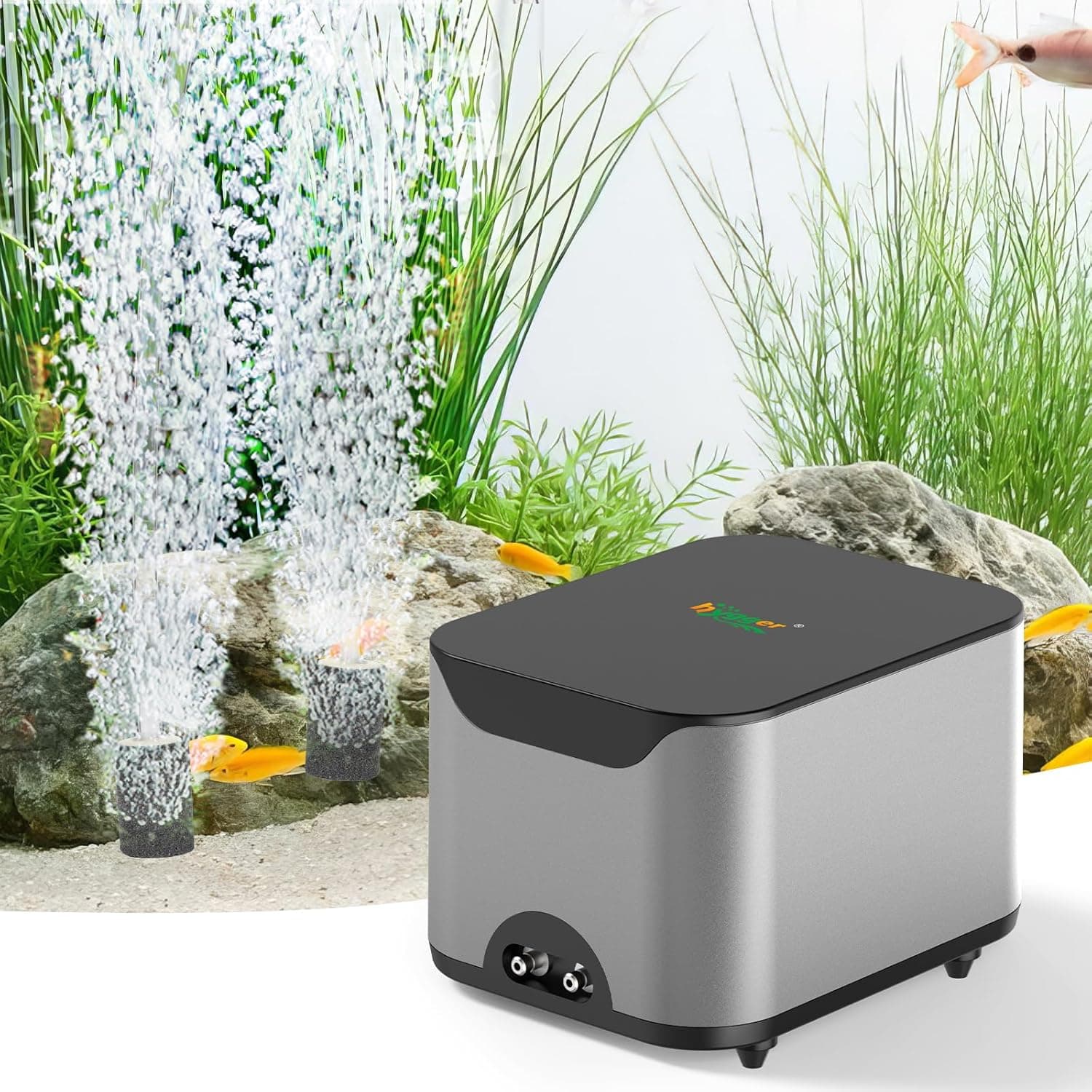
Hygger Ultra Quiet Air Pump 6W — Dual Outlets, Up to 300 Gal
Powerful dual-outlet air pump with adjustable airflow. Includes air stones and airline tubing. Whisper quiet at under 35dB. Tuya smart plug compatible.
both
Hygger Rechargeable USB Portable Air Pump — Battery Backup
Battery-powered portable air pump with USB charging. Auto-activates during power outages. Essential for fish safety during emergencies.
bothAir Stones
View all2 products available from Pawfly

Pawfly 2-Inch Air Stone Disc Bubble Diffuser
Fine bubble air stone for aquarium aeration. Creates dense, small bubbles for efficient gas exchange. Works with any air pump.
both
Pawfly 4-Inch Air Stone Disc — 2 Pack
Large disc air stones produce a wall of fine bubbles. Great for larger tanks and sump aeration. Includes 2 discs.
bothAmerican Cichlids
View all53 products available from Danaqua Live Fish & More

Geophagus surinamensis
The Geophagus surinamensis, also known as the Redstriped Eartheater, is a South American cichlid fish, notable for its ability to sift through substrate for food. It is a larger Geophagus species, reaching up to 12 inches (30 cm) in length, and is characterized by beautiful iridescent blue, green, and red colors, though the red stripes may fade in aquarium environments.

Green Terror Cichlid (Andinoacara rivulatus)
The Green Terror Cichlid (Andinoacara rivulatus) is a vibrant freshwater fish known for its striking green and blue coloration and, as the name suggests, its potential for aggressive behavior. They are a popular choice in the aquarium hobby due to their beauty but require experienced keepers due to their territorial nature.

Geophagus brasiliensis
The Geophagus brasiliensis, commonly known as the Pearl Eartheater or Pearl Cichlid, is a South American cichlid known for its striking blue spotting on a brown or tan base. Males can grow up to 25 cm, while females are generally smaller. They are native to southeastern Brazil and Uruguay but have been introduced to other regions including Australia and the United States. While they are generally peaceful, they can be territorial, especially during breeding.

Geophagus heckelii ( Threadfin Acara or Heckelii Threadfin) MEDIUM
The Geophagus heckelii, also known as the Threadfin Acara or Heckelii Threadfin, is a South American cichlid from the northern Amazon Basin according to Aquatics Unlimited. They are characterized by their golden-brown to beige body with darker vertical bars, and unique thread-like extensions on their dorsal and anal fins. They are known for their "eartheater" behavior, sifting through the substrate for food.

Managuensis Cichlid
The Managuensis Cichlid, also known as the Jaguar Cichlid, is a large, aggressive, and territorial freshwater fish native to Central America. It's characterized by a silvery or golden-green body with black spots and blotches, and a dark stripe running from the eye to the gill cover. In aquariums, they can grow up to 12 inches, but in the wild, they can reach lengths of 24 inches or more.

Pink Convict Cichlid
The Pink Convict Cichlid, a color variation of the Convict Cichlid (Amatitlania nigrofasciata), is a freshwater fish known for its pale pink or white coloration with black stripes. They are generally smaller than the wild-type convict cichlids, reaching about 4-5 inches in length. They are popular in the aquarium hobby due to their vibrant color and interesting behavior.

Turkana Jewel Cichlid (Rubricatochromis exsul)
The "Jewel Fish Turkana Blood Red" likely refers to the Turkana Jewel Cichlid (Hemichromis exsul), a vibrant fish with a ruby-red body and iridescent turquoise spots. It is an active, hardy, and semi-aggressive cichlid native to Lake Turkana in Kenya. During breeding, its color intensifies, and it becomes particularly aggressive, so it is best kept in a species-only or large, well-escaped aquarium with robust tankmates. Originating from the alkaline waters of Lake Turkana in Northern Kenya, the Turkana Jewel Cichlid is one of the smaller and more docile members of its genus, making them much more suitable aquarium fish than the large growing and extremely aggressive species of their former genus, Hemichromis which are more commonly available in the hobby. With their vivid blood red coloration and and active, outgoing nature, this species makes an impressive centerpiece fish or addition to a mixed species cichlid community aquarium provided they are given ample space to maintain a territory. Although this species is peaceful for an African Cichlid, they are still territorial (especially when breeding) and tankmates should be chosen with care. The Turkana Jewel Cichlid is extremely hardy and will do well under a wide variety of conditions but they will display their best color in slightly hard, alkaline water.

Convict cichlids
Convict cichlids, also known as convict striped cichlids, are freshwater fish characterized by their distinctive black and white vertical stripes, resembling a convict's uniform. These fish, scientifically named Amatitlania nigrofasciata, are relatively small, typically reaching about 4-6 inches in length. They are known for their aggressive and territorial behavior, especially during breeding season.

Electric Blue Acara
The Electric Blue Acara is a striking freshwater cichlid known for its vibrant, iridescent blue coloration and peaceful nature, making it a popular choice for community aquariums. It's a hybrid, developed from the Blue Acara (Andinoacara pulcher), and while not a naturally occurring species, it's highly sought after for its beauty and relatively calm temperament compared to other cichlids.

Laetacara curviceps (Dwarf Flag Cichlid)
The Laetacara curviceps, also known as the Dwarf Flag Cichlid, is a small, peaceful cichlid species native to South America, specifically the Amazon River basin. They are known for their calm demeanor, vibrant coloration (often with yellow and black markings), and suitability for community tanks. They are relatively easy to breed and make good parents, actively caring for their young.

Jack Dempsey cichlid (Rocio octofasciata)
The Jack Dempsey cichlid (Rocio octofasciata) is a popular freshwater fish known for its vibrant colors and aggressive nature. It has a flat, oval body with a base color of gray-brown to red-brown, often with iridescent blue and green spots. Adults can reach 7-8 inches (18-20 cm) in length. They are native to Central America and require a spacious aquarium with warm, neutral water.

Blue Acara (Aequidens pulcher)
The Blue Acara (Aequidens pulcher) is a freshwater cichlid known for its beautiful coloration and peaceful temperament, especially compared to other cichlids. Wild Blue Acara are found in slow-moving rivers, lakes, and marshes of South America, primarily in Venezuela and Trinidad. They are typically mottled brown with electric blue spots and lines, and males have longer, pointed fins.

Trimac cichlid (Amphilophus trimaculatus) MEDIUM
The Trimac cichlid (Amphilophus trimaculatus), also known as the three spot cichlid, is a large, aggressive freshwater fish native to Central America, particularly the Pacific slope drainages from Mexico to El Salvador. They are known for their vibrant colors and bold presence, making them a striking addition to large aquariums, though their aggressive nature necessitates careful consideration of tankmates.

Wild Oscar 2.5"-3"
A Wild Oscar is a large, predatory cichlid fish native to South America, known for its robust oval body, large mouth, and distinctive dark green or brown coloration with mottled patterns and spots. It has large eyes with a red outline and a prominent "eyespot" (ocellus) on its dorsal fin. Wild Oscars are highly intelligent, grow up to 12-16 inches, and are popular aquarium fish despite their aggressive and territorial nature.

Black Belt Cichlid (Vieja Maculicauda)
Black Belt Cichlids (Vieja maculicauda) are large cichlids native to Central America, including Honduras, Guatemala, Nicaragua, and Costa Rica. They are primarily herbivorous and should not be fed a diet high in animal protein, but they will readily accept most prepared foods in the aquarium. Tanks should be furnished with rocks and driftwood, but plants are likely to be torn up or moved.

Abramites Headstanders
Abramites headstanders, scientifically known as Abramites hypselonotus, are a type of freshwater fish characterized by their unique "headstanding" posture when resting. They are also called marbled headstanders due to the dark, wavy bands and spots that adorn their bodies. These fish are known for their active schooling behavior and are popular in the aquarium hobby.

Uaru cichlid (triangle cichlid)
The Uaru cichlid, or "triangle cichlid," is a large, peaceful South American cichlid known for its distinctive oval body shape and a prominent black splotch on its side, which becomes more pronounced with age. Juveniles are mottled, but adults develop a tan or bronze coloration. They grow to 8-12 inches, have a semi-herbivorous diet rich in plant matter, and are social fish that form pairs and care for their young. Appearance & Size Body Shape:Uarus have a unique, tall, and flattened body, resembling a disc. Coloration:Juvenile Uaru are mottled with brown and black, while adults mature to a tan or bronze color with a prominent, almost tear-shaped black spot on their mid-section. Size:They are a moderately large cichlid, reaching adult lengths of 8-10 inches (20-25 cm), with some sources noting up to 10-12 inches (25-30 cm). Fins:Fins are generally transparent with a hint of reddish or orange, particularly in males. Behavior & Temperament Peaceful Nature:Uarus are considered a gentle giant cichlid. They are generally non-aggressive and can even be kept with smaller tetras and other peaceful cichlids. Social:They are intelligent and social fish that thrive in small schools or groups. Breeding:Pairs form strong bonds and are excellent parents, fanning their eggs and feeding their fry on their parent's slime coat. Diet Herbivorous Tendencies:Uarus are omnivores with a strong preference for plant-based foods, requiring a diet rich in vegetables. Food Sources:They readily consume brine shrimp, fish flakes, fresh vegetables (like zucchini, peppers, cucumbers), lettuce, and spirulina-based foods. Aquarium Care Tank Size:A minimum of a 70-gallon aquarium is recommended, as they need ample space to swim. Tank Setup:Provide hiding spots with driftwood, rocky formations, or clay pots. Water Parameters:They prefer warm, soft, and acidic water conditions, but can adapt to a variety of conditions if acclimated slowly.

Butterfly Peacock Bass (Cichla ocellaris)
Cichla ocellaris, commonly known as the Butterfly Peacock Bass, is a very large species of cichlid from South America, and a prized game fish. It can reach 29 inches in length. Its body shape similar to that of a largemouth bass; color is highly variable, but generally golden with three black vertical bars.

Green Severum (Heros efasciatus) SMALL/MEDIUM
The Green Severum (Heros efasciatus) is a South American cichlid known for its oval, laterally compressed body and olive-green coloration with faint vertical barring. They are generally peaceful for their size, but can become territorial, especially during breeding. They typically reach around 8 inches (20 cm) in length and are often kept in 55-gallon or larger tanks. Green Severums are omnivorous, adaptable to various freshwater environments, and can be a stunning addition to medium to large community tanks, according to aquarium websites.

Carpintis Cichlid (Herichthys carpintis)
The Carpintis Cichlid (Herichthys carpintis), also known as the Green Texas Cichlid or Pearlscale Cichlid, is a moderately large cichlid originating from the Rio Pánuco drainage in Mexico. It features a greyish-blue body with distinctive light blue or green spots, becoming more intensely colored during breeding. They are omnivorous, hardy, and easy to breed, but they are also aggressive and territorial, requiring large tanks with plenty of hiding places.

Synspilum cichlid (Vieja synspilum)
The Synspilum cichlid (Vieja synspilum), also known as the Redhead Cichlid or Quetzal Cichlid, is a popular freshwater fish known for its vibrant colors and large size. Native to Central America, they are found in Mexico, Belize, and Guatemala, inhabiting slow-moving or stagnant waters like rivers, lakes, and lagoons. These fish are omnivorous, and while primarily herbivores, they will also consume insects and small fish.

Gold Balloon Ram (Mikrogeophagus ramirezi)
The Gold Balloon Ram (Mikrogeophagus ramirezi) is a freshwater fish, a color variation of the German Blue Ram, prized for its bright yellow coloration and unique balloon-shaped body. These dwarf cichlids are relatively peaceful and can be kept in community tanks with other non-aggressive species. They are omnivores, enjoying a varied diet, and thrive in warm, well-planted aquariums with plenty of hiding places.

Firemouth Cichlid (Thorichthys meeki)
The Firemouth Cichlid (Thorichthys meeki) is a popular freshwater fish known for its vibrant coloration and interesting behavior. It features a turquoise-blue body with red markings on the throat and belly, and black banding along the sides. Males are typically more brightly colored and larger than females, sometimes reaching up to 6 inches in length.

Emerald Cichlid (Chocolate Cichlid (Hypselecara temporalis)
The Emerald Cichlid, also known as the Chocolate Cichlid (Hypselecara temporalis), is a large, South American freshwater fish known for its stunning color shifts from deep browns to vibrant reds, oranges, and greens, often with a prominent black spot and large eyes, making it a popular, generally peaceful but sizable addition to community tanks with similar fish like Discus and Angelfish, needing spacious setups with driftwood and soft substrate.

Red Spot Severum
The Red Spot Severum, scientifically known as Heros efasciatus, is a striking and relatively peaceful cichlid species popular in freshwater aquariums. They are known for their vibrant coloration, featuring a golden base with red-orange speckles, and their engaging behavior. Red Spot Severums are relatively peaceful for cichlids and can be kept in community tanks, but may exhibit some aggression during breeding.

Electric Blue Balloon Ram
The Electric Blue Balloon Ram is a dwarf cichlid (a selectively bred variant of the German Blue Ram, Mikrogeophagus ramirezi) characterized by its striking electric blue coloration, distinctive rounded "balloon-like" body shape, and peaceful, yet territorial (during breeding) temperament. Growing to about 2-3 inches, it is a popular and beautiful addition to planted community freshwater aquariums, requiring pristine water conditions, a varied omnivorous diet, and a minimum tank size of 20 gallons. Physical Characteristics Color:A vivid, intense electric blue. Body:A robust, tall, and stout, "balloon-shaped" body, a result of selective breeding. Fins:Can have long, flowing fins, depending on the specific variant. Eyes:Often have bright red eyes, providing a striking contrast to the blue body. Size:Adults typically reach about 2-3 inches in length. Temperament & Behavior Peaceful:Generally a peaceful and social fish, suitable for community tanks with other small, non-aggressive fish. Territorial:Can become territorial, especially during the breeding period, and will defend their territory and eggs. Monogamous:They tend to form monogamous pairs. Care Requirements Diet:Omnivores that thrive on a diet of high-quality flake foods, sinking pellets, and frozen foods such as bloodworms and brine shrimp. Tank Conditions:Require pristine water quality, soft to moderately hard water with a neutral pH, and slightly elevated temperatures (75-82°F). Aquarium Setup:A planted tank with plenty of dense plants, driftwood, caves, and hiding places is ideal. Tank Size:A minimum tank size of 20 gallons is recommended. Key Considerations Delicate Nature:As a selectively bred variant, they are more sensitive than their wild counterparts and require careful attention to water quality, making their care level intermediate to advanced. Reduced Fertility:Color and shape variants of the Ram Cichlid, including the Electric Blue Balloon, are known to have reduced fertility compared to wild types.

Red Dragon Flowerhorn
Red Dragon Flowerhorn is a striking hybrid cichlid known for its vibrant red coloration, prominent nuchal hump (kok), and elaborate head protuberances according to Pet Zone Tropical Fish. These fish are prized for their intense red hue, which extends across their body, fins, and head, and for the intricate patterns they display. They are also known for their engaging personalities and can be quite interactive with their owners.

Electric Blue Jack Dempsey (EBJD)
The Electric Blue Jack Dempsey (EBJD) is a color variation of the common Jack Dempsey cichlid, known for its striking electric blue coloration. These fish are generally smaller and less aggressive than the standard Jack Dempsey, making them a more suitable choice for community aquariums. They are popular for their vibrant appearance and active behavior.

Blackberry Silver Dollar (Myleus schomburgkii) 2"-3"
The Black Berry Silver Dollar is a rare and stunning variation of the classic Silver Dollar, known for its unique dark, berry-toned coloration. With a body shape resembling a traditional Silver Dollar but a strikingly deep, almost purplish-black hue, this fish makes a bold statement in larger freshwater aquariums.

Albino Red Tiger Oscar 2"+
The Albino Red Tiger Oscar is a striking variant of the popular Tiger Oscar, known for its vibrant red markings against a creamy white or pale orange body. These fish can grow up to 12-14 inches and are highly interactive, often recognizing their owners and even being trained to eat from hand. They are generally peaceful towards tank mates of similar size but should be housed with caution due to their size and potential to eat smaller fish.

Black Bar Silver Dollar (Myleus schomburgkii) 3"
The Black Bar Silver Dollar, scientifically known as Myleus schomburgkii, is a freshwater fish known for its distinctive appearance and active schooling behavior. It features a silver body with a prominent black vertical bar, and its elongated dorsal and anal fins add to its unique look. These fish are omnivores, primarily herbivorous, and are best kept in groups of five or more.

Platinum Polar Parrotfish 1"-1.5"
Platinum Polar Parrotfish, also known as Platinum Polar Cichlids, are a unique, man-made hybrid fish, known for their striking platinum white coloration and peaceful yet curious temperament. They are a crossbreed, often involving Blood Parrots and possibly other cichlids like Flowerhorns. They are relatively easy to care for, making them popular additions to freshwater aquariums.

Kribensis cichlids (Pelvicachromis pulcher)
Kribensis cichlids (Pelvicachromis pulcher) are a popular, relatively peaceful dwarf cichlid, known for their vibrant colors and ease of care. They are native to West Africa, particularly Nigeria and Cameroon, and thrive in planted aquariums with plenty of hiding places. Males and females exhibit distinct coloration, with males being larger and more slender with pointed fins, and females displaying a bright pink or purple belly, especially when breeding.

Balloon body carpintis Texas cichlid 3”
The term "ballon carpenter cichlid" refers to a balloon-shaped variant of the Green Texas Cichlid ( <>Herichthyscarpintis<> <>𝐻𝑒𝑟𝑖𝑐ℎ𝑡ℎ𝑦𝑠𝑐𝑎𝑟𝑝𝑖𝑛𝑡𝑖𝑠<> ), which has an elongated body, green-blue or turquoise coloration, and a "pearlscale" pattern. It is an aggressive and territorial freshwater fish native to Mexico that requires a large tank and careful tankmate selection.

Silver Dollar
Silver dollar fish, known for their flat, circular shape and silvery sheen, are popular freshwater aquarium fish. They are generally peaceful but can be semi-aggressive due to their opportunistic nature, potentially nipping at smaller tank mates. They are omnivorous, primarily eating plant matter but also readily consuming fish food and some meaty treats. Several varieties exist, including the common silver dollar, red hook silver dollar, and spotted silver dollar.

German Blue Rams
German Blue Rams are small, vibrantly colored freshwater cichlids popular in the aquarium hobby. They are known for their iridescent blue markings, yellow-green bodies, and peaceful, playful personalities. These fish are not beginner-friendly, requiring specific water parameters and a varied diet.

Cuban Cichlid (Nandopsis tetracanthus)
The Cuban Cichlid (Nandopsis tetracanthus) is a large, robust, and aggressive freshwater fish native to Cuba, known for its striking black and white patterned coloration that develops with age, though males tend to grow larger and more colorful than females. These territorial fish require spacious tanks with hiding spots, thrive in warm, slightly alkaline water, and are omnivorous, consuming a varied diet. Due to their aggressive and territorial nature, they are best kept in species-only tanks or with other robust, similarly-sized fish, and often best housed alone. Physical Characteristics Size:Males can reach a maximum length of up to 30 centimeters (about 12 inches), with females remaining smaller. Coloration:Adults display a beautiful, contrasting pattern of black spots on a white or beige ground, with black spots sometimes coalescing into lines. Sex Differences:Adult males are generally larger and more vividly colored than females. Body Shape:They have a typical cichlid shape – ovate and slightly compressed laterally, similar to North American sunfishes. Behavior and Temperament Aggressive:Cuban Cichlids are known to be very aggressive and territorial, especially when spawning. Reclusive:They are generally reclusive unless they feel threatened or are engaged in breeding. Tank Mates:They should not be kept with timid or smaller fish, as they may attack them. Habitat and Diet Native Range:The species is endemic to the lakes and rivers of Cuba. Diet:They are omnivorous, eating a mix of plant and animal matter, such as pellets, frozen foods like bloodworms and shrimp, and occasionally fresh vegetables. Aquarium Care Tank Size:A minimum tank size of 75 gallons is recommended for a single fish or pair. Water Conditions:They prefer warm water (around 76-82°F) and slightly alkaline water (pH 7.0-8.0). Tank Setup:Provide rocks, caves, and driftwood for decoration and to help establish territories. Filtration:A strong filtration system is essential due to their messy eating habits.

Red Parrotfish
Red Parrotfish, scientifically known as Scarus xanthopleura, are a vibrant species of parrotfish found in coral reefs. They are characterized by their bright red coloration and distinctive parrot-like beak, formed by fused teeth. These fish are omnivorous, feeding on algae and small invertebrates in their reef habitats.

Fenestratus Cichlid (Vieja fenestrata)
The Fenestratus Cichlid (Vieja fenestrata) is a large, robust, and aggressive freshwater cichlid known for its impressive size and marbled coloration. It is native to southern Mexico and is characterized by its deep body, prominent nuchal hump in dominant males, and a marbled pattern of iridescent white, blue, red, and green. Due to its size and temperament, it is recommended for experienced aquarists with large tanks.

Salvini cichlids
Salvini cichlids, also known as Tricolor cichlids or Yellow Belly cichlids, are vibrant freshwater fish native to Central America. They are characterized by their bright yellow bodies adorned with black markings and red accents. Both males and females are colorful, with males often displaying longer, more pointed fins and sometimes more intense coloration.

Blue Polar Parrotfish 1"-1.5"
The "Blue Polar Parrotfish" is not a real fish species found in nature. It is a hybrid fish, specifically a man-made cichlid, often referred to as a Polar Blue Parrot Cichlid or Polar Blue Convict. These fish are known for their vibrant blue coloration, rounded body shape, and unique beak-like mouth, which they inherit from their parent species, the Convict Cichlid and Blood Parrot Cichlid.

Jurupari Geophagus Satanoperca jurupari
The Jurupari Geophagus, scientifically known as Satanoperca jurupari, is a peaceful South American cichlid that gets its "Earth Eater" nickname from its natural behavior of sifting through sand for food. These fish are characterized by a tan or grayish-brown body with iridescent golden-green hues, vertical stripes, and a striking metallic sheen that becomes more vivid with age. While generally calm, they can become territorial during breeding season, and a varied diet of pellets, flakes, and vegetable matter is essential for their omnivorous needs. Appearance Coloration:Tan to gray base color with vertical bands and iridescent scales in shades of gold or green. Fins:May have orange or red accents and spiky dorsal fins. Size:Can grow up to 10 inches (8 inches in aquarium conditions). Behavior "Earth Eater" Behavior:Naturally sift through sand with their mouths to find food, creating a natural, calming display. Temperament:Generally peaceful and shy, but can be territorial and aggressive towards other fish, especially during breeding season. Social Life:Do best in groups but can also form pairs. Habitat and Diet Origin:Native to the Amazon River basin in South America. Diet:Omnivorous, consuming both plant and animal matter, including small invertebrates and crustaceans. Substrate:Require a soft sand substrate to accommodate their natural digging and sifting behavior. Aquarium Care Tank Environment:Provide ample hiding places with bogwood, branches, and plants. Diet:Offer a varied diet of high-quality pellets, flakes, frozen foods, and blanched vegetables. Water Conditions:Maintain excellent water quality, as they are sensitive to poor conditions.

Red Copper Oscar
The "Red Oscar" is a color variation of the Astronotus ocellatus species, commonly known as the Oscar fish. It's characterized by its vibrant red or orange coloration, often with black markings or spots. These fish are popular aquarium inhabitants, known for their intelligence and interactive behavior with their keepers.

Red Spot Gold Severum (Heros cf. efasciatus)
The Gold Severum, scientifically known as Heros efasciatus, is a popular South American cichlid, known for its striking gold coloration and peaceful yet semi-aggressive temperament. They are a color variation of the green Severum, with a gold or yellow body and red spots or dashes. These fish are relatively hardy and can be a beautiful addition to a community aquarium, but they do require a spacious tank due to their potential adult size of up to 8 inches.

Yellow Parrotfish
The term "Yellow Parrotfish" can refer to several different fish species, but it most commonly refers to the Yellowfin Parrotfish (Scarus flavipectoralis). This fish is known for its yellow pectoral fins, particularly in the terminal (adult male) phase. They also have a blue-green stripe from the snout to the pectoral fin base and can grow up to 30 cm long. Other fish, like the Stoplight Parrotfish (Sparisoma viride), can also have yellow coloration, especially in certain phases or as juveniles. Additionally, the "Yellow Parrot Cichlid" is a freshwater aquarium fish, a man-made hybrid.

Texas cichlids MEDIUM
Texas cichlids are known for their vibrant coloration, aggressive temperament, and large size. They are native to the Rio Grande basin in Texas and northeastern Mexico. Adult males can reach 12 inches in length and develop a distinctive nuchal hump on their head. Females are typically smaller, around 8 inches, and may have more black markings, especially during breeding. Their base color is often a pearly gray, with iridescent blue or green scales and spots. They also exhibit vertical black bars and dark blotches along the body.

Albino Geophagus Heckelii- Albino Threadfin Acara 2.5"-3"
The Albino Geophagus Heckelii, or Albino Threadfin Acara, is a pale-colored, albino variant of the Threadfin Acara characterized by red or pink eyes and a body that shows hints of white, pink, and yellow, sometimes developing vibrant orange accents as it matures. These generally peaceful, medium-sized "eartheater" cichlids grow to about 6-8 inches and are known for their distinctive thread-like fin filaments, which can also show red or orange. They require a spacious aquarium with a sandy substrate for sifting, plenty of hiding spots, and a varied diet of high-quality food. Appearance Coloration:Instead of the typical pigmentation, the albino variant has a white to cream body with subtle pink and yellow hues. Eyes:A defining characteristic is the presence of red or pink eyes. Fins:The name "Threadfin" comes from the delicate, thread-like filaments on their dorsal and caudal fins, which can be accentuated with red or orange. Size:Adults typically reach 6 to 8 inches (15-20 cm) in length. Behavior and Temperament Peaceful:The Albino Heckelii is known for its peaceful nature, making it suitable for community tanks with other peaceful fish species. "Eartheater" Behavior:Like other Geophagus, they sift through sand substrates to find food, creating pits and piles in their environment. Semi-Territorial:While generally peaceful, they can become territorial, especially during breeding, so providing adequate hiding spaces is essential. Habitat and Care Tank Setup:They require a spacious aquarium with a sandy substrate, rocks, and driftwood for hiding places and swimming space. Water Parameters:They prefer temperatures between 75-82°F (24-28°C) and neutral to slightly acidic water conditions. Diet:As omnivores, they readily accept a varied diet of high-quality pellets, flakes, frozen foods like brine shrimp and bloodworms, and some vegetable matter.

Flagtail Prochilodus
The Flagtail Prochilodus is a silver, freshwater characin from the Amazon basin known for its distinctive red and black striped tail. These fish have large pursed lips, grow to over 10 inches long, and are active algae-eaters. They require large tanks with powerful filtration, strong currents, and tight-fitting lids to prevent them from jumping. Physical Characteristics Size:Can grow to about 10-12 inches (25-30 cm), sometimes larger. Coloration:Silvery body, large pursed lips, and a prominent tail with bold alternating black and orange stripes. Juveniles:Often have a smattering of dark spots on their flanks, which fade with age. Habitat and Diet Origin:Native to the Amazon River system in South America. Diet:Omnivorous, feeding heavily on algae and vegetable matter. They will eat green flakes, algae wafers, and leafy greens like spinach. Aquarium Care Tank:A very large tank is necessary, with a minimum of 180 gallons recommended for an adult. Filtration & Water Flow:Require powerful filtration and strong water current. Lid:A tight-fitting lid is essential, as they are powerful jumpers. Water Quality:Sensitive to poor conditions and produce significant waste, necessitating frequent water changes. Tank Mates:Best kept with other large, active, and docile fish, as they can be quarrelsome. Behavior Activity:Very active and constantly busy foraging for food. Jumping:Known to be expert jumpers, making a secure lid crucial.

Red Chili Oscar (Astronotus ocellatus)
The Red Chili Oscar (Astronotus ocellatus) is a selectively bred variety of the common Oscar, known for its intense, vibrant red coloration that can be even more striking than other red or orange Oscar varieties. It is a popular, large, and interactive freshwater fish, prized for its unique appearance and personality.

Red Devil cichlids SMALL/MEDIUM
Red Devil cichlids are known for their vibrant coloration, often exhibiting a bright red or orange hue, and their robust build. They are also recognized for their aggressive and territorial behavior, particularly during breeding. These fish can grow up to 12-16 inches (30-40 cm) in length.

Red Tiger Oscar 2.5”-3”
The Red Tiger Oscar, scientifically known as Astronotus ocellatus, is a popular color variation of the Oscar cichlid. It features a dark (blue-black) background with vibrant orange-red markings and patterns, sometimes described as resembling a tiger's stripes or a marble pattern. These fish are known for their striking appearance and are a popular choice for aquariums.

"Pike Jewel Fish" SMALL
The term "Pike Jewel Fish" is a bit ambiguous as it likely refers to two different types of fish: the Pike Cichlid (Crenicichla) and the Jewel Cichlid (Hemichromis), which are not closely related. Pike Cichlids are known for their elongated, pike-like shape and predatory nature, while Jewel Cichlids are a vibrant, colorful group within the cichlid family, known for their territorial behavior.

SRT F4 Super Red Texas Cichlid Juvenile
An SRT (Super Red Texas) cichlid is a prized hybrid, known for its intense, vibrant red color, fancy pearl patterns, and robust Texas cichlid body shape, developed by selectively crossing Texas Cichlids (Herichthys cyanoguttatus) with Blood Parrots (Amphilophus/Vieja hybrids), aiming for ultimate color and pattern quality, far beyond a standard Red Texas, with 'SRT' signifying top-tier breeding. Key Characteristics of SRTs: Color: Deep, uniform, and often fading to a stunning blood-red, sometimes peeling to reveal more color underneath. Pearls: Intricate, sometimes worm-like or spaced-out pearl markings (iridophores) on the body, inherited from parent lines. Body: A classic, well-formed Texas cichlid shape, sometimes with compact/short-body variants. Genetics: A hybrid of Texas Cichlids (like Green Texas) and Blood Parrots, incorporating Red Devil and Vieja traits for color and form. Rarity: Considered high-grade, superior quality fish, often with high price tags. What "SRT" Means: Super Red Texas: It's a marketing/breeder term indicating a higher quality, more intensely colored, and better-patterned Red Texas hybrid than standard versions. Parentage (Typical): Male Texas Cichlid (Green Texas) x Female Blood Parrot (itself a hybrid, often Red Devil x Vieja). In essence, an SRT is a premium, highly-sought-after variant within the Red Texas Cichlid family, representing the pinnacle of color and pearl development from intensive selective breeding.
Angelfish
View all6 products available from Danaqua Live Fish & More

Koi angelfish (Pterophyllum scalare) MEDIUM
Koi angelfish (Pterophyllum scalare) are a popular freshwater fish known for their striking coloration and graceful appearance. They typically display a blend of black, white, and orange, resembling koi fish patterns. These cichlids are relatively peaceful, have a tall, thin body, and are relatively easy to care for in a planted aquarium with plenty of space.

Marble Angelfish (Pterophyllum scalare) MEDIUM
The Marble Angelfish (Pterophyllum scalare) is a freshwater fish known for its striking marbled color pattern, typically featuring a mix of black, white, and gold or silver markings on its body and fins. They are a popular choice for aquariums due to their elegant appearance, peaceful nature (though they can be territorial during spawning), and adaptability to community tanks.

Gold Angelfish (Pterophyllum scalare) MEDIUM
The Gold Angelfish (Pterophyllum scalare) is a freshwater cichlid with a distinctive gold coloration, known for its tall, thin body shape and graceful fins. It's a popular aquarium fish, generally peaceful but can be territorial during spawning. They thrive in planted or community tanks and are known for their shimmering appearance, especially under bright lighting.

Black Angelfish (Pterophyllum scalare "Black")
The Black Angelfish (Pterophyllum scalare "Black") is a popular aquarium fish known for its deep black coloration. It's a relatively peaceful cichlid with a tall, thin body, unlike many other cichlids. While native to South America, most Black Angelfish in the hobby are tank-raised. They thrive in heavily planted aquariums with driftwood or rock formations and prefer gentle water flow.

Assorted angelfish
Assorted angelfish are a popular freshwater aquarium fish known for their elegant, tall, disc-shaped bodies and flowing fins. They come in a variety of striking color patterns, including silver, black, gold, and marbled varieties. These peaceful yet territorial cichlids are native to South America and thrive in planted tanks with hiding spots and open swimming areas.

Silver Angelfish ( Pterophyllum scalare) MEDIUM
The Silver Angelfish, scientifically known as Pterophyllum scalare, is a popular freshwater fish characterized by its shimmering silver body, long, flowing fins, and triangular shape. It's known for its elegant swimming style and peaceful nature, making it a favorite in community aquariums.
Aquarium Controls
View all6 products available from Inkbird, Tuya, Shelly, Lutron

Inkbird ITC-306A WiFi Temperature Controller — Dual Probes
WiFi aquarium thermostat with heating/cooling outlets and dual temperature probes. Control heaters and fans remotely. Works with Tuya/Smart Life app and Home Assistant.
both
Tuya WiFi Smart Power Strip — 4 AC + 4 USB, Surge Protector
WiFi-enabled power strip with individually controllable outlets. Tuya/Smart Life compatible — full local control in Home Assistant via Tuya integration. Control lights, heaters, pumps independently.
both
Shelly Plus Plug US — WiFi Smart Plug with Power Monitoring
Compact WiFi smart plug with real-time power monitoring. Runs local firmware — no cloud required. Native Home Assistant integration via Shelly. Perfect for controlling individual aquarium devices.
both
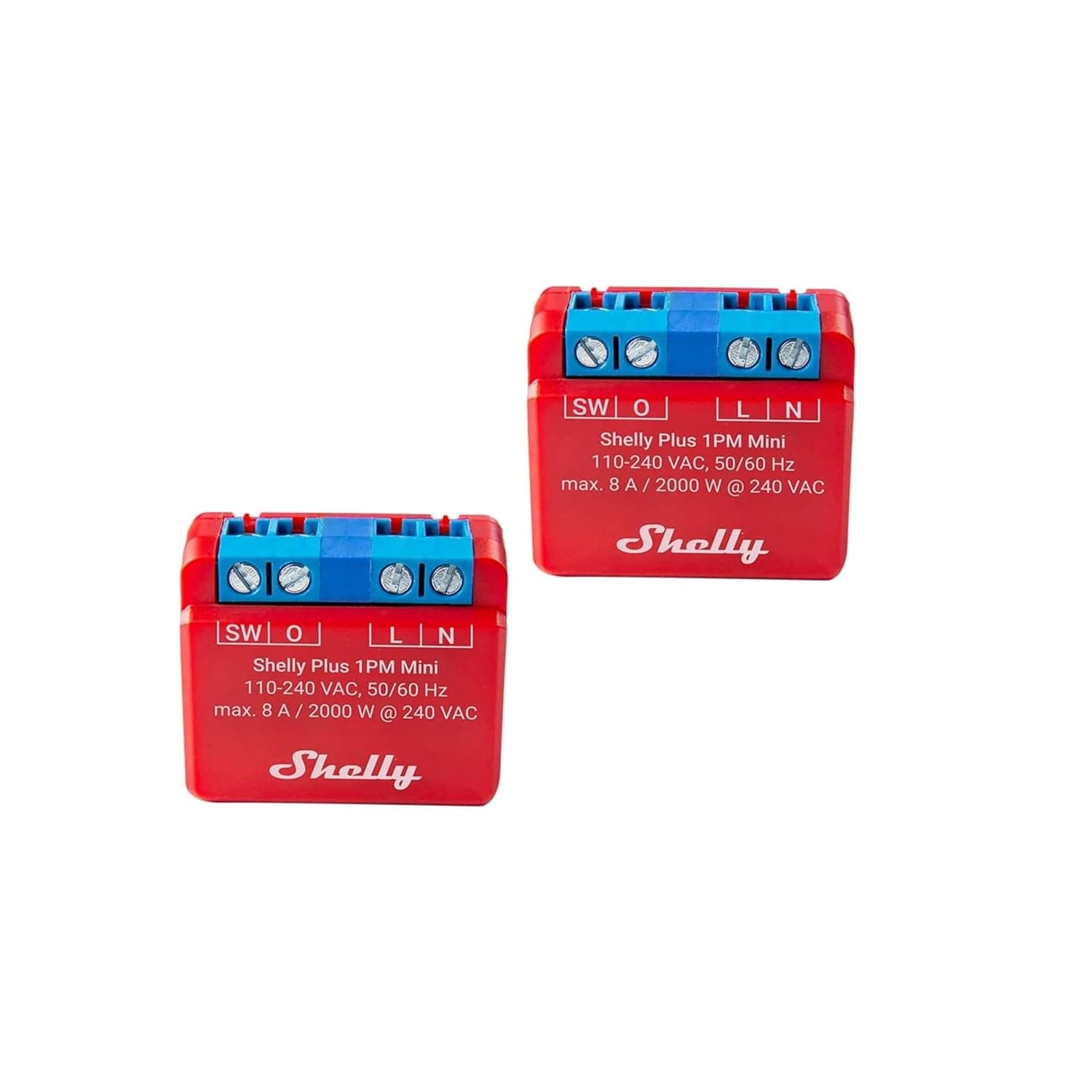
Shelly Plus 1PM Mini — WiFi Relay Switch with Power Metering
Ultra-compact WiFi relay that fits behind any switch or inside enclosures. Monitor power consumption of pumps, heaters, and lights. 100% local control via Home Assistant.
both
Lutron Pico Remote — Wireless Scene Controller for Caseta
Wireless scene controller for Lutron Caseta. Pair with Caseta Smart Bridge for Home Assistant tank scene control — one button for day mode, night mode, feeding mode, and more.
both
Lutron Caseta Smart Hub — Works with Home Assistant
Hub for Lutron Caseta and Pico remotes. Native Home Assistant integration via Lutron Caseta Pro. Control aquarium lighting scenes, fans, and pumps with physical buttons.
bothAuto Feeders
View all3 products available from Eheim, Zacro, Pawfly

Eheim Everyday Fish Feeder — Programmable Auto Dispenser
Reliable programmable feeder with adjustable portion control. Battery operated with low-battery indicator. Pair with a Tuya smart plug for HA integration and feeding schedules.
both
Zacro Automatic Fish Feeder — USB Rechargeable
USB rechargeable auto feeder with timer for up to 4 feedings per day. Adjustable food amount slider. Perfect for weekends and vacations. Smart plug compatible.
both
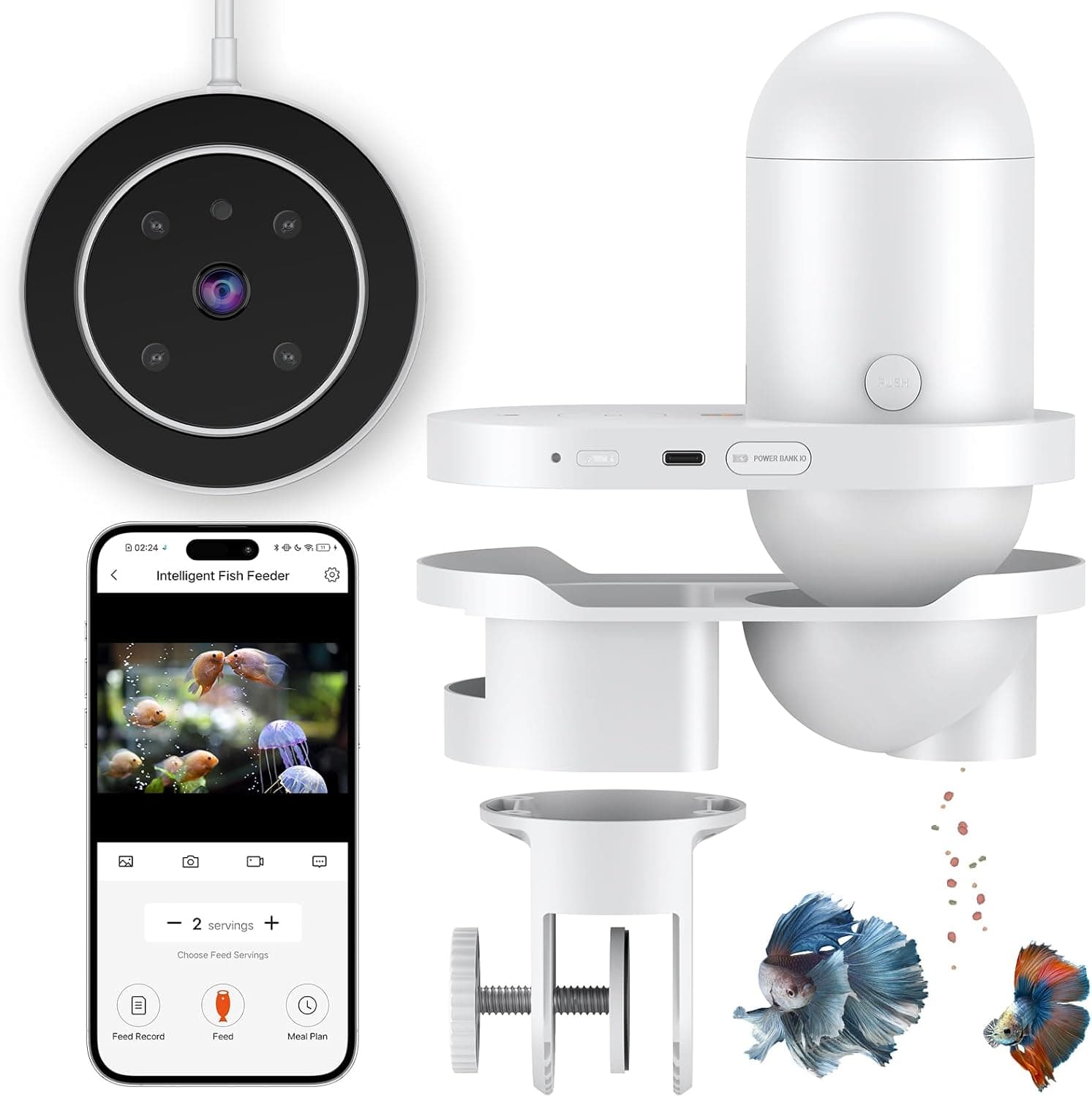
Pawfly WiFi Auto Fish Feeder with 2.5K HD Camera
Smart automatic fish feeder with built-in 2.5K HD camera, infrared night vision, and WiFi app control. 230mL capacity, timer scheduling, USB powered. Monitor and feed remotely.
bothAWC Systems
View all2 products available from AutoAqua, Kamoer

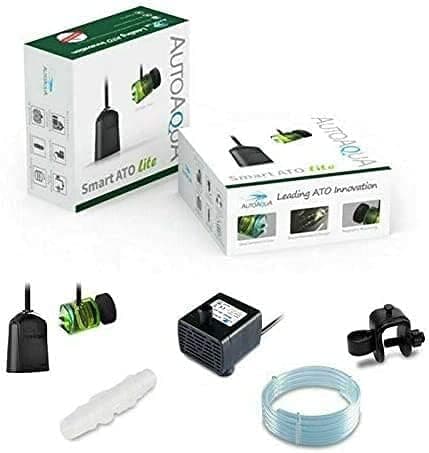
AutoAqua Smart ATO Lite — Automatic Top-Off System with Pump
Optical sensor auto top-off system that detects water level and pumps fresh water automatically. Prevents evaporation drop. Tuya plug compatible for HA monitoring.
both
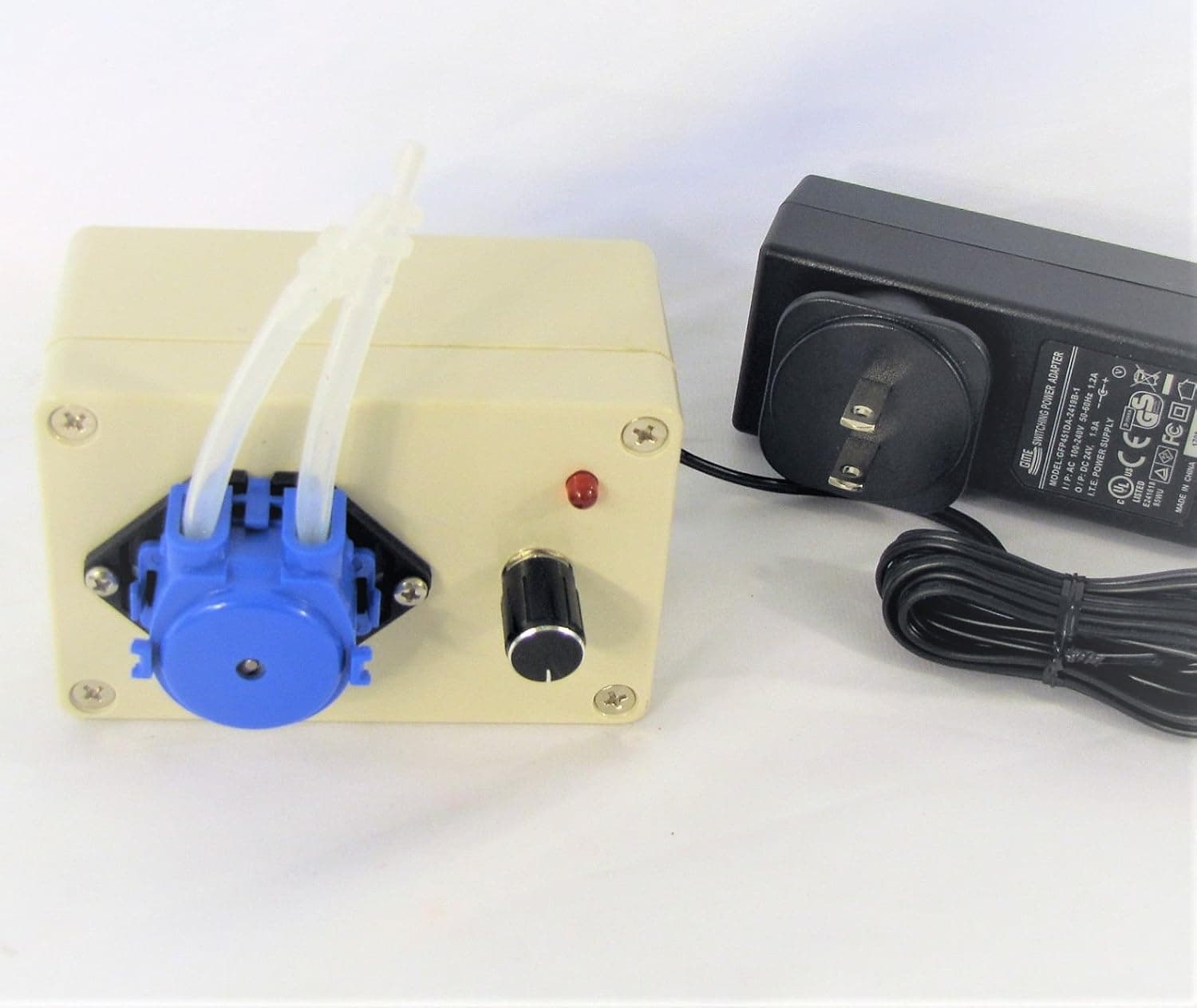
Kamoer Peristaltic Dosing Pump — 24V with Power Supply
Precision dosing pump for automated fertilizer, calcium, and alkalinity dosing. Use with Tuya smart plug for HA-scheduled dosing routines.
bothBackgrounds
View all2 products available from Sporn

Sporn Aquarium Background — Static Cling Black, 24" x 12"
Static cling background — no adhesive needed. Pure black background makes fish colors pop and hides equipment. Easy to trim and reposition.
both
Sporn Aquarium Background — Static Cling Black, 36" x 18"
Large static cling background for 30-55 gallon tanks. No glue, no tape — just press and stick. Removes cleanly for tank maintenance.
bothBarbs
View all12 products available from Danaqua Live Fish & More

Cherry barbs
Cherry barbs are small, peaceful freshwater fish, popular for their bright red coloration, especially in males, and their suitability for community aquariums. They are relatively hardy, easy to care for, and are known to school well, adding activity and color to a tank.

Black Ruby Barb (Pethia nigrofasciata) PAIR
The Black Ruby Barb (Pethia nigrofasciata) is a tropical freshwater fish native to Sri Lanka, known for its vibrant coloration and playful behavior. Mature males exhibit a striking ruby red head and body, with black fins, while females are more subdued in color with three vertical black stripes. They are generally peaceful and hardy, making them a good choice for community aquariums.

Tiger Barb Albino Large
The Albino Tiger Barb is a color variation of the popular Tiger Barb, characterized by its pale, cream-colored body with faint orange or pinkish hues and the classic Tiger Barb black vertical stripes, which are more subtle due to its albino nature. They typically grow to 2-3 inches and have red or orange-tinged fins. Like their non-albino counterparts, they are active and social, best kept in groups of 6 or more, and can be nippy towards slower-moving fish.

Hi-Fin Rosy Barb (Puntius conchonius) PAIR
The Hi-Fin Rosy Barb (Puntius conchonius) is a vibrant freshwater fish known for its elongated fins and bright coloration. These barbs have a torpedo-shaped body and a forked tail, with a single dorsal fin. Males typically display a more intense pinkish-red hue compared to the females, who often have a golden or silvery coloration. They are generally peaceful, active swimmers, and relatively easy to care for, making them a popular choice for community aquariums.

Redtail Tinfoil Albino Barb
The Redtail Tinfoil Albino Barb is a striking freshwater fish known for its vibrant colors and active behavior. It's a color variant of the Red Tail Tinfoil Barb, distinguished by its white or pale pink body, red or orange eyes, and reddish-pink fins. These barbs can grow quite large, reaching up to 12-14 inches, and are best kept in spacious aquariums with other active, similarly-sized fish.

Tiger Barb Green
Green Tiger Barbs are a color variation of the common Tiger Barb, known for their striking iridescent green bodies and bright orange or red fins. They are a medium-sized, active, and semi-aggressive schooling fish, native to Sumatra and Borneo, but readily available through captive breeding.

Redtail Tinfoil Barb (Barbonymus schwanenfeldii)
The Redtail Tinfoil Barb (Barbonymus schwanenfeldii) is a large, active freshwater fish known for its metallic silver body and vibrant red fins. They have a distinctive black blotch on the dorsal fin and a black stripe on each lobe of the red caudal (tail) fin. These barbs are peaceful but can be greedy eaters, requiring a large aquarium to accommodate their size and active nature.

Tiger Barb red fin
Tiger barbs, also known as Sumatra barbs, are vibrant, schooling freshwater fish from Southeast Asia. They are characterized by their striking vertical stripes, typically black and orange, on a metallic body. These active and social fish are popular in the aquarium trade due to their bold coloration and playful behavior.

Emerald Green Barb
The Green Tiger Barb, also known as the Moss Green Tiger Barb, is a color morph of the standard Tiger Barb (Puntigrus tetrazona). It's characterized by a green body with silver and gold blotches and bright orange fins. These are active, schooling fish that can be somewhat nippy towards other tankmates, especially those with long fins or slow movements. They are generally hardy and readily accept a variety of foods.

Blushing Tiger Barb
The Blushing Tiger Barb is a color morph of the Tiger Barb (Puntigrus tetrazona), characterized by a pale, sometimes white, body with a pinkish or reddish blush, particularly around the gills, and faint black stripes. They are known for their active and semi-aggressive nature, and are best kept in groups within a community tank.

Longfin Cherry Barb PACK OF 6
The Longfin Cherry Barb is a visually stunning freshwater fish, known for its vibrant coloration and elongated, flowing fins. It's a peaceful, schooling fish, making it a great addition to community tanks and planted aquariums. Originating from Sri Lanka, this variety is selectively bred from the standard Cherry Barb to enhance its finnage.

Tiger Barb Colored
Red Tiger Barbs are a vibrant variety of Tiger Barb known for their intense red or reddish-orange body color and black vertical stripes. They are active, energetic, and thrive in groups, adding lively movement to aquariums. They typically grow to 2.5-3 inches and can live for 5-7 years with proper care.
Bettas
View all10 products available from Danaqua Live Fish & More

Assorted Betta Female
An "Assorted Betta Female" refers to a female Betta splendens fish that comes in a variety of colors and patterns, rather than a specific color. These fish are smaller and have shorter fins than males but are known for their intelligence and diverse, vibrant coloration, making them suitable for sorority tanks with proper conditions, or for individual community tank placement. Appearance & Temperament Color:"Assorted" signifies a mix of possible colors, such as blue, red, yellow, pink, or even patterned variations like mustard gas. Fins:Female bettas possess shorter, more streamlined fins compared to the long, flowing fins of males. Size:They typically grow to about 2 to 2.5 inches (5 to 6 cm) in length. Behavior:While generally more peaceful than males, they can still exhibit some aggression, especially if not given enough space or hiding spots. Tank & Care Tank Size:A minimum of a 5-gallon tank is recommended for a single female, but larger tanks, such as 20 gallons or more, are needed for a "sorority" (a group of females). Environment:They require a tropical freshwater environment with a stable temperature of 78–82°F (25–28°C) and a pH range of 6.5–7.5. Tank Setup:Ample plants and hiding places, such as caves and ornaments, are essential. Diet:They are carnivores and should be fed a high-quality diet of betta pellets, supplemented with live or frozen foods like bloodworms and brine shrimp. Why Choose an Assorted Female Betta? Color Variety:You get a unique and vibrant fish without knowing the exact color beforehand. Community Tank Option:Their less aggressive nature allows for the possibility of keeping them in groups (sororities) or with other peaceful fish, offering more display options. Hardiness:They are hardy and relatively easy to care for, making them a great choice for beginners and experienced hobbyists alike.

Hellboy Betta (Male)
A Hellboy Betta male is a vibrant Betta splendens characterized by its intense red coloration, often combined with other bold hues like black, white, or iridescent blue, and typically features short, agile Plakat (short-finned) fins, making it an active and striking aquarium fish. These territorial and aggressive males are best kept in a single-male community or with very carefully chosen peaceful tankmates. Appearance Coloration:The defining feature is its vivid, often metallic, red coloration. This red can be mixed with secondary colors such as black, white, or iridescent blue and green. Fin Type:"Hellboy" is a type of Plakat Betta, meaning it has short, full fins. This gives it a more active and agile swimming style compared to traditional long-finned Bettas. Temperament & Behavior Aggressive:Like other male Bettas, Hellboys are highly territorial and aggressive, especially toward other males. Community Housing:While they can be housed in a community tank, it must be large enough and contain only peaceful, non-aggressive tankmates, such as snails or certain small fish. Intelligent & Active:They are known for being intelligent and responsive to their owners and their environment. Care Requirements Tank Size:A properly sized aquarium with stable, well-maintained freshwater conditions is essential. Water Parameters:The ideal water conditions include a pH between 6.5 and 7.5 and a temperature of 75-82°F (24-28°C). Diet:A high-protein diet of Betta-specific pellets is recommended, with occasional live food like brine shrimp or mosquito larvae.

Betta Giant
A Giant Betta Male is a significantly larger variety of the common Siamese fighting fish, capable of reaching up to 5 inches in length, compared to the standard 2.5 inches. These fish are known for their striking, vibrant colors and long, fluid fins, which are often more developed and showy than those of females. Male Giant Bettas are highly territorial and use their vibrant colors and fin displays to assert dominance and attract mates. Key Characteristics Size:Up to 5 inches long, making them the largest betta variety. Color:A wide and vibrant array of colors and patterns, which can vary greatly from one individual to another. Fins:Possess long, flowing, and often exaggerated fins, such as those seen in the longtail varieties. Behavior:Highly territorial and aggressive towards other male bettas. Breeding:Exhibit the classic male betta behavior of building bubble nests during the breeding season. Origin:Bred through selective artificial selection by skilled breeders, originating from the betta splendens species. Care and Habitat Tank Size:A minimum of a 10-gallon tank is recommended for a single Giant Betta Male. Water Parameters:Maintain a stable water temperature (76-82°F) and a neutral pH (around 7.0). Diet:Provide a balanced diet suitable for ornamental bettas. Sensitivity:They can be more sensitive to shipping stress, with overnight shipping sometimes recommended.

White Halfmoon Betta (Male)
A White Halfmoon Betta is an elegant, pure white Betta splendens variant with a distinctive, flowing tail that fans out into a perfect half-moon shape, often with a shimmering or iridescent quality. These exotic fish are known for their striking appearance and require care similar to other bettas, including a heated, filtered aquarium with low water flow and a varied diet of high-protein foods. Appearance Color:The defining characteristic is a shimmering or sparkling, pure ivory-white color across the entire body and fins. Tail:The name "Halfmoon" refers to the tail, which, when flared, resembles a capital "D" or a 180-degree fan, creating a semicircular shape. Fins:Males typically have large, flowing fins, including the caudal (tail) fin, dorsal, and ventral fins. Care Requirements Aquarium:A heated and filtered aquarium with a minimum of 5 gallons is recommended, providing enough space for the fish to swim and explore. Water Conditions:Water temperatures should be maintained between 75-80°F (24-27°C) with a pH of 6.5-7.5. Water Flow:A gentle water flow is essential because the long fins can be easily damaged by strong currents. Diet:A varied diet of high-quality flakes, pellets, frozen, or live foods rich in animal protein is necessary. Social Behavior:Like most male bettas, White Halfmoon Bettas are semi-aggressive and should be housed alone. Origin The White Halfmoon Betta is a variant of Betta splendens that was selectively bred from stock originating in Thailand.

Betta Black Samurai (Male)
A male Black Samurai Betta is characterized by a bold, metallic, armor-like black body with contrasting iridescent scales, often silver or white, on the head and back. These striking fish are prized for their unique appearance, a product of line breeding within the Betta splendens species. They are generally hardy, intelligent, and require a varied diet and stable water conditions, with only one male being kept per aquarium due to their territorial nature. Appearance Coloration:A deep, metallic black is the primary color, with iridescent silver, white, or gold scales creating a "samurai armor" effect on the head and back. Fins:They have short, plakat-style fins. Body:Their bodies are stocky and cylindrical, typical of the plakat variety. Other Characteristics:They are known for the reflection of light off their metallic scales, creating a dramatic appearance. Temperament & Care Territorial:Male Black Samurai Bettas are territorial and aggressive, so they should be housed alone in an aquarium. Diet:They are carnivores and thrive on a varied diet of high-quality Betta pellets and frozen or live foods like bloodworms, brine shrimp, and daphnia. Tank Environment:A minimum tank size of 4-5 gallons is recommended, with a stable temperature of 75-82°F (24-28°C). Filter:A gentle filter is advised to avoid strong currents, as they prefer slow-moving or standing water. Lifespan:With proper care, they can live for 2-4 years.

Galaxy Koi Betta
A male Galaxy Koi Betta is a fish recognized for its unique, marbled "galaxy" color patterns featuring swirling blues, reds, white, and metallic iridescence, inspired by koi fish. These distinctive markings are created by a marble gene, resulting in a unique color layout for each individual. With their striking appearance and unique genetic traits, Galaxy Koi Bettas are prized for aquariums, especially in nano tanks. Appearance & Genetics Marbling:They display a unique color-changing gene that creates a vibrant, speckled, or marbled pattern. Colors:The pattern resembles a starry galaxy and includes vibrant colors like blue, turquoise, red, and orange, often with iridescent scales. Uniqueness:Each fish has a one-of-a-kind, evolving color palette, making every Galaxy Koi Betta unique. Fins:They may have short fins (Plakat) or long, ornate fins (Halfmoon), with a Halfmoon Plakat (HMPK) type offering better swimming ability. Behavior Territorial:Male Galaxy Koi Bettas are highly territorial and should be kept alone in an aquarium to avoid conflict. Intelligent:They are described as intelligent and interactive fish, with some recognizing their owners. Care Requirements Aquarium Size:A minimum of a 4-gallon tank is recommended. Filtration:A gentle filter is necessary to prevent strong currents, which can stress this Betta variety. Diet:A varied diet of high-quality Betta pellets, frozen bloodworms, and brine shrimp is ideal for their health. Lifespan:With proper care, they typically live for 2 to 4 years.

Wild bettas Type (Male)
Wild bettas are less colorful, smaller, and have shorter fins than their domesticated counterparts, with duller bodies and iridescent but less prominent colors. They live in shallow freshwater habitats like rice paddies and marshes in Southeast Asia and possess a labyrinth organ to breathe air from the surface in their low-oxygen environments. Males display territorial aggression, while females are drabber and used for breeding. Appearance Coloration:Wild bettas are generally subdued, with drab brown or greyish-green bodies. They have iridescent scales that can flash blue or green in the light, but these are less intense than in captive-bred fish. Fins:Males have shorter, less elaborate fins than their domesticated cousins, often with a red crescent-shaped band or red accents. Size and Shape:They are smaller and more slender, reaching only a few inches in length, making them more streamlined for their habitats. Habitat Environment:They live in shallow, slow-moving freshwater environments such as rice paddies, swamps, and canals in countries like Thailand, Malaysia, Indonesia, Vietnam, Laos, and Cambodia. Breathing Adaptation:Their labyrinth organ allows them to breathe air directly from the water's surface, which is crucial for surviving in the low-oxygen water of their marshy habitats. Behavior Social Structure:Unlike the highly territorial domesticated Betta splendens, some wild bettas are more social. Mating:Males display vivid red and blue coloration during mating displays. Territoriality:Male wild bettas are aggressive and will fight to protect their territories and nests, a survival trait in their competitive environment.
Avatar Betta Fish (Male)
A beautiful and unique variety of the betta fish species. It has a striking black coloration that is accented by iridescent blue spots on its fins and body. Our breeders have selectively bred this fish to have a perfect color on its body. A male Avatar Betta is a type of Betta splendens distinguished by its short fins, deep metallic blue-green or dark black coloration, and vibrant, iridescent scales. It is known for its rich coloration, where light reflects off its body and scales, often featuring intricate patterns, sometimes with "heart" shapes on the sides of its body. As a short-finned (Plakat) variety, it is more agile and less prone to fin damage than long-finned types. Key Characteristics Body and Fins:Male Avatar Bettas are typically short-finned (Plakat) Bettas, with stocky, cylindrical bodies and shorter, more robust fins compared to their long-finned counterparts. Coloration:They are famous for their deep, intense metallic colors, which can include electric blue, turquoise, dark black, or even copper and gold. Iridescence:The name "Avatar" comes from the way light reflects off the body and scales, creating a dazzling, iridescent display of color. Patterns:The coloration often includes intricate patterns on the fins and body, with some specimens even featuring unique "heart" patterns on their sides. Temperament:Like most male Bettas, they are territorial and aggressive and must be kept alone or with very careful consideration of tank mates to prevent fighting. Origin and Breeding Indonesia:The Avatar Betta is a variety developed by breeders, particularly in Indonesia, who have selectively bred Betta splendens for enhanced color intensity and fin strength. Hybridization:It is a domesticated form resulting from line-breeding and hybridization with other Betta species and mutations to achieve the striking appearance. Named After a Film:The name "Avatar" is inspired by the popular movie, similar to other named varieties like "Hellboy" or "Armageddon" that are also produced in Southeast Asia.

Elephant Ear Betta
The Elephant Ear Betta, also known as the Dumbo Betta, is a striking Betta fish distinguished by its large, elephant-ear-like pectoral fins that give it a unique and elegant appearance. These visually captivating fish are available in many vibrant colors and patterns, and while they are hardy, they require specific care, including a gentle filter and a diet of high-quality pellets and live foods. Appearance Large Pectoral Fins:The hallmark feature is the oversized pectoral fins that resemble elephant ears, moving gracefully as the fish swims. Colors and Patterns:They come in a wide range of vibrant colors, including solid, marbled, koi, and metallic shades. Body Types:They can be paired with different tail types, such as Halfmoon or Delta, creating distinct looks within the Elephant Ear variety. Care Requirements Aquarium Setup:A varied diet of high-quality pellets, frozen, or live foods is essential for their health. Filtration:A gentle filter is recommended to avoid strong currents, which can be detrimental to their delicate fins. Diet:A mixed diet including high-quality betta pellets, bloodworms, and brine shrimp is ideal. Tank Mates:Male Elephant Ear Bettas are territorial and should be kept alone, though females can sometimes be kept in sororities with enough space and peaceful community fish. Temperament and Lifespan Hardy and Intelligent:Despite their delicate appearance, they are generally hardy and intelligent fish. Lifespan:With proper care, including a good diet and tank maintenance, they can live for 2-4 years.

Betta Nemo (Male)
A male Betta Nemo is a Betta splendens with a unique, marbled coloration of orange, red, white, and black, resembling a clownfish, though the name refers to the color pattern, not the species itself. These "designer" strains are known for unpredictable, evolving patterns due to the marble gene and individual variations in fin shapes and sizes, such as the Halfmoon or Plakat. Appearance Coloration:Displays a striking and vibrant combination of orange, red, white, and black, sometimes with metallic blues or greens. Marble Gene:Their patterns are a result of the marble gene, which causes them to change color over time, meaning no two Betta Nemo fish are exactly alike. Fin Types:Can feature different fin shapes, including the long, flowing Halfmoon or the shorter, more agile Plakat style. Origin and Naming Designer Strains:Betta Nemo is a specific color pattern within the Betta splendens species, bred for its distinctive appearance. Clownfish Connection:The name "Nemo" comes from the clownfish, which shares a similar orange, white, and black color scheme. Behavior and Care Male Aggression:Like other male bettas, they are known to be aggressive and should be housed alone or with carefully chosen, peaceful tankmates. Tank Requirements:Thrive in a minimum 5-gallon tank with a gentle filter and warm water, requiring regular maintenance and water changes. Habitat:They are native to the shallow waters of Southeast Asia.
Camera
View all5 products available from Amouu, HomiQ, Barlus, LINOVISION

Amouu 2K HD Aquarium WiFi Pet Camera — Anti-Glare Glass Mount
2K HD aquarium camera with 140° wide-angle anti-glare lens, night vision, two-way audio, and AI-powered motion detection. Peel-and-stick glass mount installation. 24/7 cloud or SD card recording.
both
HomiQ 3MP Aquarium AI Monitoring Camera — Magnetic Install
3MP terrarium and aquarium camera with close-up detail lens, dual-band WiFi (2.4G/5GHz), starlight color night vision, and AI motion detection. Easy magnetic install. Anti-glare, anti-reflection design.
both
Barlus 5MP Underwater Aquarium Camera — 32ft POE Cable
Fully submersible 5MP POE IP camera in 304 stainless steel housing. Live streaming capability, no built-in lights (fish-safe), 32-foot cable. Perfect for ponds and large aquariums.
both
Barlus HD 5MP Underwater POE Camera — Fill Light, 98ft Cable
Premium submersible 5MP POE IP camera with 316L marine-grade stainless steel, built-in fill light, 2.8mm wide-angle lens, and 98-foot cable. IP68 waterproof for aquaculture and aquarium use.
both
LINOVISION 4K Ultra HD Underwater POE Camera — 33ft Cable
Professional 4K (8MP) underwater POE camera with anti-corrosion coating, 112.7° wide-angle lens, LED illumination, and mobile app. For aquariums, ponds, and aquaculture farms.
bothCatfish
View all19 products available from Danaqua Live Fish & More

Bumblebee catfish
Bumblebee catfish, known for their distinctive black and yellow striped pattern, are small, peaceful, and primarily nocturnal freshwater fish. They are popular in the aquarium hobby due to their unique appearance and relatively small size. There are two main types: the South American Microglanis iheringi and the Asian Pseudomystus siamensis, each with slight variations in appearance and size.

Glass catfish (Ghost Catfish or Phantom Catfish)
Glass catfish, also known as Ghost Catfish or Phantom Catfish, are a fascinating freshwater fish known for their transparent bodies that allow you to see their internal organs. These slender, elongated fish have a forked tail and prominent, whisker-like barbels. They are peaceful, schooling fish, typically reaching a size of about 3-4 inches.

Chinese Algae Eater (Gyrinocheilus aymonieri)
The term "algae eater large" most commonly refers to the Chinese Algae Eater (Gyrinocheilus aymonieri), known for its large size and bottom-dwelling behavior. These fish can reach up to 11 inches (28 cm) in length and possess a distinctive sucker mouth for attaching to surfaces. While peaceful when young, they can become territorial and aggressive towards other fish as they mature.

Four Line Pictus Catfish
The Four Line Pictus Catfish, scientifically known as Pimelodus blochii, is a popular freshwater fish known for its sleek, silver body and four prominent dark stripes. These catfish are active and social, preferring to be kept in groups of five or more. They are omnivores, readily accepting a variety of foods, and can grow to be about 4 inches long.

Girafee Nose Catfish 3"-4"
Also known as the giraffe nosed catfish is found throughout Africa in lakes and rivers, partially due to introduction and establishment in other areas. It is found in many important lakes and rivers such as the Nile and Lake Chad. Its distribution covers includes bodies of water from East Africa to West Africa. It generally lives in shallow waters with muddy bottoms This fish has a maximum size that sources say are between two and three feet. The giraffe-like pattern will fade with age to a two-tone mottled brown. Various subspecies have been described for this fish, indicating some geographical variation in coloration The Giraffe Nosed Catfish comes from lake and river systems located throughout Africa. It has a large head and is a marbled or spotted gray with a few black spots arranged in a line. The Giraffe Nosed Catfish is a very peaceful tank member and appreciates having several hiding places.

Longnose Twig Catfish (Farlowella gracilis)
Farlowella needle-nose (Twig) Catfish are long, slender, armored bottom-dwellers from South America, characterized by their elongated, twig-like bodies for camouflage and a pronounced rostrum (nose). They are primarily brown or olive-green with dark bands, and males develop small bristles (odontodes) on their snouts when mature, while females have smoother, thinner noses. These peaceful algae-eaters are best suited for a well-planted aquarium with driftwood, good water flow, and other peaceful tank mates. Physical Characteristics Body Shape: Extremely long and slender, resembling a twig or stick for camouflage in their natural habitat. Nose: A pronounced rostrum (snout) that is elongated, sometimes as long as the rest of the body is wide. Coloration: Generally olive-green to brown, often with a distinct, irregular dark band extending from the head to the tail. Fins: Transparent fins with dark-spotted rays. Sexual Dimorphism: Males have broader snouts with small, bristly odontodes (whiskers) when mature; females have thinner, smooth snouts.

Upside Down Catfish
Upside Down Catfish, scientifically known as Synodontis nigriventris, are peaceful, schooling fish characterized by their unique upside-down swimming behavior. Native to the Congo and Niger River basins in Africa, they are a smaller species, typically reaching around 4 inches in length. They have a mottled brown and black coloration and are known for their ability to scavenge for food, including algae, on the underside of leaves and other surfaces, which they achieve by swimming upside down.

Striped Raphael Cat
The Striped Raphael Catfish is a widespread, medium sized Doradid Cat that has been popular in the aquarium hobby for many years. With their peaceful demeanor and attractive striped pattern, this catfish is an ideal tankmate and “clean-up crew” fish for aquariums with medium to large fish provided plenty of cover is provided. In the wild, they are a cryptic species which tends to inhabit leaf litter and driftwood piles in warm, acidic water. A remarkably hardy and adaptable catfish, they will thrive in a wide variety of water parameters and due to their heavily armored body are rarely at risk of being bullied by larger tankmates.

Spotted Raphael Catfish
Spotted Raphael catfish, scientifically known as Agamyxis pectinifrons, are popular freshwater aquarium fish known for their unique appearance and peaceful nature. They have a dark body covered in light spots, with a striking white stripe on the tail and three pairs of barbels with spots. These catfish are relatively easy to care for, are nocturnal, and appreciate a well-planted aquarium with plenty of hiding places.

Sailfin Marble Achara Catfish (Leiarius Pictus)
The Sailfin Marble Achara Catfish (Leiarius pictus) is a large, impressive South American freshwater fish known for its distinctive marbled or spotted pattern and large, flowing fins. Also known as the Marbled Pim or Pictus Catfish, it's a popular choice for experienced aquarists due to its size and predatory nature.

Salmon catfish
Salmon catfish, also known as blue salmon catfish or Graeffe's salmon catfish, are a species of catfish found in Australian rivers and estuaries. They are known for their sleek, shark-like appearance and powerful swimming ability. These catfish can reach up to 60 cm (2 feet) in length and are typically dusky grey with a bluish tint on their backs, fading to a lighter color on their bellies. They have multiple barbels around their mouths and possess sharp spines on their dorsal and pectoral fins, which can inflict painful wounds.

Sun Catfish (Horabagrus brachysoma)
The Sun Catfish, scientifically known as Horabagrus brachysoma, is a freshwater catfish native to southwestern India. It's characterized by its yellowish-brown coloration, a large black spot behind the head, and a light-colored belly. They are known for their distinctive "sunburst" markings, especially when young, which fade as they mature. Sun catfish are nocturnal, growing to a considerable size (up to 18 inches) and are not suitable for small community tanks.

Synodontis nigrita
The Synodontis nigrita, commonly known as the false upside-down catfish, is a species of catfish native to Africa. It's a medium-sized fish, reaching up to 13.2 inches in length. It's characterized by its golden or brownish coloration with dark spots and a tendency to swim upside down, though not as frequently as the true upside-down catfish.

Tiger Shovelnose Hybrid Catfish
The Tiger Shovelnose Hybrid Catfish is a captivating crossbreed, blending the features of the Tiger Shovelnose Catfish and the Redtail Catfish. These hybrids are known for their striking appearance, combining the Tiger Shovelnose's distinctive stripes with the Redtail's robust build and vibrant red tail coloration. They are a relatively new addition to the aquarium hobby, popular among enthusiasts for their unique look and impressive size.

Synodontis ocellifer
The Synodontis ocellifer, also known as the Ocellated Synodontis, is a peaceful, spotted catfish from West Africa. It's characterized by its yellowish to brown body with black spots, and a long adipose fin extending from the dorsal to the caudal fin. These fish are omnivores and typically inhabit the bottom of the aquarium, preferring a planted environment with hiding places.

Tiger Shovelnose Catfish
The Tiger Shovelnose Catfish, scientifically known as Pseudoplatystoma fasciatum, is a large, predatory fish native to South America. They are easily recognized by their long, slender body with a silver base coloration and striking black stripes and spots, giving them a tiger-like appearance. These fish can grow over 3 feet long in captivity, requiring large aquariums and suitable tank mates.

Synodontis angelicus (Angel Catfish) and Synodontis eupterus (Featherfin Catfish)
Synodontis angelicus (Angel Catfish) and Synodontis eupterus (Featherfin Catfish) are both popular, visually striking catfish species, but they are distinct. Synodontis angelicus, also known as the Polkadot or Angel Squeaker, has a dark chocolate body with a cream-white mottled overlay, often described as a maze-like pattern. Synodontis eupterus, or Featherfin Catfish, has a light to dark brown body with distinctive dark spots or markings, and elongated, feathery pectoral fins. The Synodontis angelicus x eupterus hybrid combines these features, creating a unique, cryptic pattern with dark chocolate and cream-white contrasting colors.

Dolphin Head Tiger ShovelNose Catfish 16"
This is a RARE species of Tiger Shovel Nose Catfish This fish is a Jumbo size measures over 16"+ healthy and eating pellets

South American Redtail Catfish (Phractocephalus hemioliopterus) 3"+
The South American Redtail Catfish (Phractocephalus hemioliopterus) is a large, strikingly colored freshwater fish. It is characterized by a dark grey or black body, a white stripe along its midline, and a vibrant red or orange caudal (tail) fin. They also feature a broad head, long barbels (whiskers), and are known for their powerful build and fighting spirit when hooked.
Corydoras
View all8 products available from Danaqua Live Fish & More

Corydoras sterbai
Corydoras sterbai, commonly known as Sterba's Corydoras, is a popular freshwater catfish appreciated for its peaceful temperament and striking appearance. These small, armored catfish are characterized by their silver-brown bodies adorned with white spots and stripes. They are native to South America, specifically the Guapore and upper Madeira rivers in Brazil and Bolivia. Sterba's Corys are relatively easy to care for and are a great addition to community and planted aquariums.

Corydoras agassizii
Corydoras agassizii, commonly known as Agassiz's Cory or the Spotted Cory, is a peaceful, bottom-dwelling catfish native to the Amazon River basin. It's characterized by its spotted pattern, with dark spots or blotches on a pale body, often with a dark stripe across the eyes. These fish are popular in community aquariums due to their peaceful nature and attractive appearance.

Panda Corydoras
Panda Corydoras, also known as Panda Corys, are a popular freshwater aquarium fish known for their distinctive black and white panda-like markings. They are small, peaceful, and social catfish, typically reaching around 2 inches in length. Panda Corys are popular in community tanks due to their gentle nature and scavenging habits, helping to keep the aquarium clean.

Peppered Corydoras (Corydoras paleatus)
The Peppered Corydoras (Corydoras paleatus) is a popular freshwater catfish known for its speckled pattern and peaceful nature. It's a small, hardy fish, typically reaching around 2.5 inches in length, and is a great addition to community and planted aquariums. They are native to South America and are omnivores, readily accepting various flake foods, pellets, and frozen foods.

Aeneus Albino Cory (Corydoras aeneus var. albino)
The Aeneus Albino Cory (Corydoras aeneus var. albino) is a freshwater fish known for its unique pale coloration and peaceful nature. These bottom-dwelling scavengers are popular in community aquariums due to their adaptability and striking appearance. They have a creamy white or pinkish body with bright red eyes, and are typically around 2.5 to 3 inches long

Black Venezuela Cory Catfish (Corydoras schultzei), Tank-Bred
The Black Venezuela Cory Catfish (Corydoras schultzei), is a dark-colored variant of the Gold Flash Corydoras, with a striking black body and dark reddish-maroon fins. It is a peaceful, schooling fish that thrives in groups and is a popular choice for community tanks. Despite its name, it originates from Peru, not Venezuela, and was developed in Germany in the 1990s.

Aeneus Green Corydoras
The Aeneus Green Corydoras, also known as the Bronze Corydoras, is a small, peaceful, and popular freshwater catfish species, often kept in community aquariums. They are known for their green shimmer, white belly, and scavenging behavior. They are social fish, thriving when kept in groups of six or more.

Pygmy Corydoras (Corydoras pygmaeus)
Pygmy Corydoras (Corydoras pygmaeus) are tiny, armored catfish, about 1 inch (2.5 cm) long, known for their silver bodies, a distinctive black horizontal stripe from snout to tail, and peaceful, social, schooling behavior. Unlike most other Corydoras, they spend a significant amount of time swimming in the water column rather than just on the substrate, making them active additions to nano and planted aquariums. They require a large group (6+), soft sand or gravel substrate, and thrive in well-planted tanks with clean, soft water.
Crayfish
View all5 products available from Danaqua Live Fish & More

Blue crayfish LOBSTER
Blue crayfish, also known as Electric Blue Crayfish or Blue Lobster, are a popular freshwater crustacean known for their vibrant blue coloration. They are omnivorous scavengers and are relatively easy to care for in an aquarium. They are active, explore their environment, and can be quite hardy, but they are also known to be territorial and potentially aggressive.

Crayfish
Crayfish are freshwater crustaceans, closely resembling small lobsters, with a hard exoskeleton, a segmented body, and prominent claws. They have a two-part body consisting of a cephalothorax (fused head and thorax) and an abdomen (tail). Crayfish are found in various freshwater habitats like rivers, streams, and lakes, and some species can even burrow in muddy areas.

Orange Lobster Crayfish
The "Orange Lobster Crayfish" typically refers to the Orange Dwarf Mexican Crayfish, also known as the CPO (Cambarellus patzcuarensis "orange") crayfish. These are popular freshwater crayfish kept in aquariums due to their vibrant orange coloration and manageable size, typically growing to 1-1.6 inches. They are relatively peaceful compared to larger crayfish species and can be kept with various tank mates, including some fish and shrimp.

Mexican Dwarf Orange Crayfish
The Mexican Dwarf Orange Crayfish, scientifically known as Cambarellus patzcuarensis, is a vibrant freshwater crustacean popular in the aquarium hobby. They are known for their small size, reaching 1.5 to 2 inches in length, and their striking orange coloration, which can range from tangerine to a fiery sunset hue. These crayfish are relatively peaceful and can be kept with other non-aggressive tank mates, like shrimp and small fish, in a 10-gallon or larger tank.

White Lobster Crayfish
A White Lobster Crayfish, also known as a White Specter Crayfish or Snow White Lobster, is a popular freshwater crustacean known for its striking white coloration and active nature. It's a variant of the Electric Blue Crayfish (Procambarus alleni) and is popular in aquariums due to its unique appearance and scavenging habits.
Danios
View all3 products available from Danaqua Live Fish & More

Giant Danio
The Giant Danio (Devario aequipinnatus) is a schooling, freshwater fish known for its lively and active nature. It's a relatively large danio, reaching up to 5 inches in length, and is characterized by its silvery body with iridescent blue and orange, broken vertical stripes. These fish are popular in community aquariums due to their peaceful temperament and beautiful markings, but they do require a spacious tank and plenty of open swimming space.

Leopard Danio
Unique to the Leopard Danio is a barbel at the end of each lip. An elongated fin version of this fish has been developed, showcasing long, flowing fins and an extended tail. Regardless of the form, Leopard Danios remain highly active, making them mesmerizing to observe.

Zebra Danios
Zebra Danios, also known as Zebrafish (Danio rerio), are small, freshwater fish popular in aquariums due to their hardiness and active nature. They are characterized by their slender, torpedo-shaped bodies and distinctive horizontal blue and silver stripes, which extend from head to tail. Zebra Danios are known for their peaceful temperament and make great additions to community tanks with other compatible fish.
Discus
View all11 products available from Danaqua Live Fish & More

Yellow Pigeon Blood Discus 4"+
The Yellow Pigeon Blood Discus is a vibrant, selectively bred color morph of the Discus fish, characterized by its golden-yellow body and red speckling (the "pigeon blood" pattern). These fish are popular in the aquarium hobby due to their striking appearance and graceful movements, but they require more specific care than many other freshwater fish.

Turquoise Discus
Turquoise Discus are a vibrant variety of Discus fish, known for their striking blue and turquoise coloration with intricate red or orange patterns. They have a distinctive disc-like shape, and can grow to be about 6-8 inches in diameter. These peaceful and social fish are popular in the aquarium hobby due to their beautiful appearance and relatively calm temperament.

Super Red Discus
Super Red Discus Fish are known for their vibrant, deep red coloration and disc-shaped bodies, making them a popular choice for aquarium enthusiasts. These fish are a variety of the discus (Symphysodon) species, typically reaching a size of 6-8 inches. They are not the easiest to care for and require specific water parameters and tank setup to thrive.

Blue Diamond Discus (Symphysodon discus)
The Cobalt Blue Discus is a stunning freshwater fish known for its vibrant, electric blue coloration and distinctive round shape. They are a popular choice for aquarists due to their peaceful temperament and beautiful appearance. They originate from the Amazon basin and are a type of cichlid fish.

Red Melon Discus
Red Rose Discus fish are a stunning, full-bodied red variety of the popular Discus fish, known for their vibrant, rich coloration and elegant, disc-shaped bodies. They are highly sought after in the aquarium hobby for their striking appearance and peaceful temperament.

Red Pigeon Blood Discus
Red Pigeon Blood Discus are a vibrant strain of Discus fish, known for their bright red or orange bodies with a unique, often white or cream-colored, maze-like pattern. They are selectively bred, not found in the wild, and are a popular choice for aquariums due to their striking coloration and peaceful temperament.

Golden Discus 4"+
Golden Discus fish are a vibrant and popular variety of Discus cichlids known for their striking coloration and graceful, rounded body shape. They are typically a dazzling yellow-gold, sometimes with iridescent highlights, and are prized by aquarists for their beauty and peaceful nature. While they can grow up to 8 inches in length, they are best kept in schools to promote their well-being.

Red Leopard Discus
Red Leopard Discus are a vibrant and popular variety of Discus fish, known for their striking red base color and distinctive leopard-like spots. These fish, with their peaceful temperament, make a beautiful addition to community aquariums, especially when housed with other non-aggressive species.

Snow White Discus (Symphysodon sp.) 4"
Snow White Discus (Symphysodon sp.) are a selectively bred variety of discus fish known for their predominantly white coloration. They are characterized by a mostly white body, with fins that may have faint green and red hues. Some may also exhibit small black spots, which can darken when the fish is stressed. These fish are peaceful but prefer to be kept in groups and require specific water conditions.

Red Turquoise Discus
The Red Turquoise Discus is a freshwater aquarium fish known for its vibrant coloration and disc-shaped body. It's a popular choice among hobbyists, prized for its striking turquoise and red stripes and patterns. These fish are generally peaceful, making them suitable for community tanks with compatible tank mates.

Snakeskin discus
Snakeskin discus fish are a vibrant and popular variety of discus, known for their distinctive patterns resembling snake scales and their striking colors. They are a type of Symphysodon aequifasciatus, prized for their beauty and graceful movements in aquariums. The "snakeskin" refers to the pattern of markings, which can vary in color depending on the specific strain, including red, blue, green, and other combinations.
Driftwood
View all5 products available from H2O Plants, Zoo Med, SubstrateSource

Malaysian Driftwood Small - 3 Pack
You will be receiving three (3) pieces of Malaysian Driftwood that will be between 4 to 8 inches in length. All pieces of wood will be unique in shape with 1 to 2 cut edges. Key Features: Essential for Shrimp Breeding Creates Surface Area for Bio-film and Bacterial to Grow Releases Beneficial Tannin into the Water which Simulates the Natural Habitat of Shrimp Provides Hiding Places for Shrimp Natural Feeding Ground for Shrimp of all Types More Information: When asked, “What is the most essential part to a successful shrimp tank?” we will always respond with three key factors: leaf matter, java moss, and a piece of driftwood. As far as driftwood goes, Malaysian driftwood is our number one choice. We have many reasons for why we use Malaysian driftwood so we will cover those briefly. The first reason why Malaysian driftwood is great for the aquarium is because it sinks. Unlike other woods, Malaysian driftwood is so dense that it will instantly sink. This means no waiting for it to water log, no anchoring it and most importantly no hassle. The second reason we use Malaysian driftwood, or any driftwood for that matter, is because it creates surface area. What we mean is this, shrimp need places to hide, graze and sit on. By adding driftwood to an aquarium, one can more than double the surface area in a tank. The best thing about Malaysian driftwood is it is dark thus when all that algae we normally hate grows on it, we don’t know and can’t see it. Thus we won’t clean the algae off the driftwood so in return we are providing a natural and nearly unnoticeable food source for the shrimp. The final main benefit we see from using Malaysian driftwood is the tannins. These tannins leach from the driftwood into the water column carrying a multitude of antifungal and antibacterial properties. Although most people prefer clear aquarium water, here at Flip Aquatics we find that the slight discoloration adds character to the tank and allows the shrimp to feel more comfortable.

Pacific Driftwood Small
Pacific wood is very similar in looks to Malaysian Driftwood with a mix of Mopani wood. It is a dense wood that should sink within 3-4 days. Boiling the wood is always recommend and will help it to sink quicker. You will be receiving one (1) piece of Pacific Driftwood that will be between 3 to 6 inches in length. All pieces of wood will be unique in shape with no more than 1 to 2 cut edges. Key Features: Essential for Shrimp Breeding Creates Surface Area for Bio-film and Bacterial to Grow Releases Beneficial Tannin into the Water which Simulates the Natural Habitat of Shrimp Provides Hiding Places for Shrimp Natural Feeding Ground for Shrimp of all Types More Information: When asked, “What is the most essential part to a successful shrimp tank?” we will always respond with three key factors: leaf matter, java moss, and a piece of driftwood. As far as driftwood goes, Malaysian driftwood is our number one choice yet there are plenty of other great options such as Mopani, Spider and Pacific wood. The reason we use driftwood is because it creates surface area. What we mean is this, shrimp need places to hide, graze and sit on. By adding driftwood to an aquarium, one can more than double the surface area in a tank. The best thing about Pacific driftwood specifically is it is dark thus when all that algae we normally hate grows on it, we don’t know and can’t see it. Therefore, we won’t clean the algae off the driftwood so in return we are providing a natural and nearly unnoticeable food source for the shrimp. The final main benefit we see from using driftwood is the tannins it releases. These tannins leach from the driftwood into the water column carrying a multitude of antifungal and antibacterial properties. Although most people prefer clear aquarium water, here at Flip Aquatics we find that the slight discoloration adds character to the tank and allows the shrimp to feel more comfortable.

Malaysian Driftwood Small
You will be receiving one (1) piece of Malaysian Driftwood that will be between 6 to 10 inches in length. All pieces of wood will be unique in shape with 1 to 2 cut edges. Key Features: Essential for Shrimp Breeding Creates Surface Area for Bio-film and Bacterial to Grow Releases Beneficial Tannin into the Water which Simulates the Natural Habitat of Shrimp Provides Hiding Places for Shrimp Natural Feeding Ground for Shrimp of all Types More Information: When asked, “What is the most essential part to a successful shrimp tank?” we will always respond with three key factors: leaf matter, java moss, and a piece of driftwood. As far as driftwood goes, Malaysian driftwood is our number one choice. We have many reasons for why we use Malaysian driftwood so we will cover those briefly. The first reason why Malaysian driftwood is great for the aquarium is because it sinks. Unlike other woods, Malaysian driftwood is so dense that it will instantly sink. This means no waiting for it to water log, no anchoring it and most importantly no hassle. The second reason we use Malaysian driftwood, or any driftwood for that matter, is because it creates surface area. What we mean is this, shrimp need places to hide, graze and sit on. By adding driftwood to an aquarium, one can more than double the surface area in a tank. The best thing about Malaysian driftwood is it is dark thus when all that algae we normally hate grows on it, we don’t know and can’t see it. Thus we won’t clean the algae off the driftwood so in return we are providing a natural and nearly unnoticeable food source for the shrimp. The final main benefit we see from using Malaysian driftwood is the tannins. These tannins leach from the driftwood into the water column carrying a multitude of antifungal and antibacterial properties. Although most people prefer clear aquarium water, here at Flip Aquatics we find that the slight discoloration adds character to the tank and allows the shrimp to feel more comfortable.

Zoo Med Spider Wood — Small, 8-12 inches
Natural spider wood (azalea root) for aquascaping. Creates dramatic branching hardscape. Safe for all freshwater aquariums. Each piece is unique.
freshwater
SubstrateSource Cholla Wood — 6 inch, 2 Pack
Natural cholla wood tubes perfect for shrimp, plecos, and fry. Provides hiding spots and grazing surfaces. Sinks quickly after soaking.
freshwaterFilters
View all12 products available from AquaClear, Fluval, Hikari

AquaClear 20 Power Filter — 5 to 20 Gallon
Compact HOB filter ideal for small tanks. Customizable media basket with foam, carbon, and BioMax. Quiet motor and adjustable flow for nano to 20-gallon setups.
both
AquaClear 30 Power Filter — 10 to 30 Gallon
Mid-size HOB filter with customizable media basket. Mechanical, chemical, and biological filtration. Perfect for 10- to 30-gallon community tanks.
both
AquaClear 50 Power Filter — 20 to 50 Gallon
Industry-standard HOB filter with customizable media basket. Mechanical, chemical, and biological filtration in one unit. Quiet operation and adjustable flow.
both
AquaClear 70 Power Filter — 40 to 70 Gallon
Large HOB filter for medium to large tanks. Oversized media basket handles heavy bioloads. Adjustable flow control and ultra-quiet operation.
both
AquaClear 110 Power Filter — 60 to 110 Gallon
The largest AquaClear HOB filter. Massive media capacity for tanks up to 110 gallons. Ideal for heavily stocked cichlid and community tanks.
both
Fluval 107 Performance Canister Filter — Up to 30 Gallon
Entry-level canister filter with multi-stage filtration. Quick-change clamps, virtually silent motor, and self-priming. Great first canister for small tanks.
freshwater
Fluval 207 Performance Canister Filter — Up to 45 Gallon
Multi-stage canister filter with quick-change clamps. Virtually silent motor, large media capacity, and self-priming. Great for planted tanks.
freshwater
Fluval 307 Performance Canister Filter — Up to 70 Gallon
Mid-range canister with multi-stage filtration and large media baskets. Quiet motor, instant-release clamps, and aqua-stop valves for easy maintenance.
both
Fluval 407 Performance Canister Filter — Up to 100 Gallon
High-capacity canister filter for large tanks. Multi-stage filtration with extra-large media baskets. Handles heavy bioloads with quiet, efficient operation.
both
Fluval FX4 High Performance Canister Filter — Up to 250 Gallon
Professional-grade canister filter with smart pump technology. Self-starting, multi-stage filtration, and massive media capacity. Built for large and extra-large aquariums.
both
Hikari Bacto-Surge Sponge Filter — Up to 40 Gallon
High-density foam sponge filter powered by air pump. Excellent biological filtration for shrimp tanks, fry tanks, and hospital tanks. Easy to clean.
freshwater
Hikari Bacto-Surge Sponge Filter — Up to 10 Gallon
Compact sponge filter for nano tanks up to 10 gallons. Gentle flow safe for shrimp and fry. Run with any small air pump.
freshwaterFish Food
View all4 products available from Fluval, Hikari, NorthFin

Fluval Bug Bites Tropical Fish Food — Small Granules, 1.6 oz
Insect-based fish food made with Black Soldier Fly larvae. High protein, sustainably sourced. Slow-sinking granules for tropical community fish.
freshwater
Hikari Tropical Algae Wafers — 8.8 oz
Sinking algae wafers for plecos, otocinclus, shrimp, and other bottom feeders. Nutrient-rich with spirulina. Won't cloud water.
freshwater
Hikari Bio-Pure Freeze Dried Blood Worms — 1.58 oz
Premium freeze-dried blood worms. High-protein treat for tropical fish, bettas, and cichlids. Nitrogen-charged packaging preserves freshness.
freshwater
NorthFin Community Formula — 1mm Slow-Sinking Pellets, 250g
Premium fish food with whole Antarctic krill, herring, and kelp. No fillers, no artificial colors. Trusted by serious fishkeepers.
freshwaterGoldfish
View all9 products available from Danaqua Live Fish & More

Calico Oranda goldfish 4"
Calico Oranda goldfish are a type of fancy goldfish known for their distinctive wen (a fleshy growth on their head) and vibrant, mottled coloration. They typically display a mix of red, orange, white, and black, creating a "calico" pattern. These peaceful and relatively slow-moving fish are popular in freshwater aquariums.

RED AND WHITE ORANDA
There are more than 100 types of Fancy Goldfish, and Orandas are amongst the most popular. These fish are technically goldfish, Carassius auratus, though they've been specially bred to look very different than their more common cousins. Orandas are characterised by their stout bodies, long, trailing fins and a prominent, bubble-like ˜hood' (sometimes known as a wen) on their heads. They come in many different sizes and colours, from small to giant and platinum to chocolate. This red and white colour morph has red and white markings across its entire body, including on its fins and head. Some Orandas develop huge hoods as they age, and these are known as Jelly Head Orandas. These are some of the most sought-after fish in the Fancy Goldfish hobby the larger and more colourful the hood, the more sought after they are!

Red Oranda Goldfish
Oranda Goldfish are one of the most popular goldfish varieties. They are characterized by a round body and benign growth on their head known as a "wen". Goldfish are high waste producers so weekly water changes and larger filters are recommended to keep the water clean. Also make sure the water is well oxygenated. Their average lifespan is 10-15 years.

Red & White Ryukin Goldfish 3"
Red & White Ryukin Goldfish is a selectively bred variety of goldfish, characterized by its distinctive humpback, deep body, and flowing fins. The "Red & White" coloration refers to the striking combination of red and white markings that adorn its body. These fish are known for their hardiness and are popular additions to both aquariums and ponds.

Red Ryukin goldfish
Red Ryukin goldfish is a vibrant, ornamental fish known for its deep, rounded body and pronounced hump behind the head. It is characterized by its bright red coloration and flowing fins. Ryukins are a fancy goldfish variety, selectively bred for their unique body shape and are not found in the wild

black moor
A black moor is a type of fancy goldfish characterized by its deep black coloration and prominent, protruding eyes, resembling a telescope. Also known as a telescope goldfish, they have a rounded body and flowing fins. These goldfish are popular aquarium pets due to their unique appearance and relatively peaceful temperament

Red Ryukin goldfish 2"-3"
Red Ryukin goldfish are a vibrant, distinctive type of fancy goldfish characterized by their deep red coloration, a prominent hump behind their head, and a rounded, egg-shaped body. They are known for their flowing, double tail fins and relatively peaceful temperament, making them a popular choice for aquariums.

Ryukin Calico
Calico Ryukin goldfish are a captivating fancy goldfish variety known for their high, curved backs, egg-shaped bodies, and vibrant, mottled coloration. They are a Japanese breed, developed from the fantail goldfish, and are characterized by their pronounced hump behind the head, curved spine, and flowing fins. The "calico" in their name refers to their unique, multi-colored patterns, which typically include shades of red, orange, white, and black.

Thai Oranda goldfish 4"
Thai Oranda goldfish, originating from top breeders in Thailand, is characterized by its vibrant coloration, flowing fins, and a distinctive head growth called a "wen." These fish are known for their peaceful nature and elegant appearance, making them a popular choice for aquarists of all experience levels.
Gouramis
View all8 products available from Danaqua Live Fish & More

pink kissing gourami (Helostoma temminckii)
The pink kissing gourami, scientifically known as Helostoma temminckii, is a freshwater fish native to Southeast Asia. They are known for their unique "kissing" behavior, where they press their lips together, often in territorial displays between males, though it's not an actual act of affection. These fish are generally peaceful and can grow to be quite large, up to 12 inches (30 cm) in captivity. They have a lifespan of about 5-8 years.

Blue gourami
Blue gouramis, also known as three spot gouramis, are freshwater fish popular in the aquarium hobby. They are characterized by their silvery-blue coloration, two prominent spots (one mid-body and one near the tail), and their eye as the third spot. These fish are relatively hardy and can be a good choice for both beginner and experienced aquarists.

Three spot gourami (Opaline Gourami)
The "natural fish" is brown with faint bars and two dark spots on each side that, along with the eyes, give this fish one of its common names, the Threespot Gourami. The Opaline Gourami has a silvery-blue body with darker markings. The markings often have a bluish tint to them.

Pearl Gourami (Leeri Gourami)
The Pearl Gourami, also known as the Leeri Gourami or Lace Gourami (Trichopodus leerii), is a freshwater fish known for its peaceful nature and striking appearance. It has a silvery body with tiny white "pearl" like spots and a prominent horizontal black stripe. Males are more colorful, developing an orange or red throat area, and have longer, more pointed fins, especially the dorsal fin.

Red Honey Dwarf Gourami (Trichogaster chuna)
Red Honey Dwarf Gourami (Trichogaster chuna) are small, peaceful, and vibrant freshwater fish, known for their striking red or orange coloration, especially in males. They are relatively small, reaching about 2 inches in length, and are a good choice for community tanks with other peaceful, similarly sized fish. These fish are also known as Honey Gouramis or Dwarf Honey Gouramis.

Neon Blue Dwarf Gourami (Trichogaster lalius)
The Neon Blue Dwarf Gourami (Trichogaster lalius) is a small, peaceful freshwater fish known for its vibrant coloration and gentle nature. Males exhibit a bright iridescent blue body with red stripes, while females are a duller silvery-blue. They are labyrinth fish, meaning they can breathe air directly, and are relatively easy to care for in a planted aquarium.

Sunset Thick Lip Gourami (Trichogaster labiosa)
The Sunset Thick Lip Gourami, scientifically known as Trichogaster labiosa, is a popular freshwater fish characterized by its vibrant orange/gold coloration and prominent thick lips. It's a peaceful and relatively hardy species, making it a great addition to community aquariums, especially those with plants and hiding spaces.

Gold Gourami
The Gold Gourami, scientifically known as Trichopodus trichopterus, is a popular freshwater fish known for its vibrant gold-yellow coloration and peaceful nature, often chosen for community tanks. They are a domesticated strain of the Blue Gourami and are relatively easy to care for, making them a good choice for beginner aquarists, though they can be semi-aggressive.
Gravel & Substrate
View all2 products available from Fluval, CaribSea

Fluval Plant and Shrimp Stratum — 8.8 lbs
Volcanic soil substrate for planted and shrimp tanks. Naturally lowers pH for soft-water species. Promotes healthy plant root growth.
freshwater
CaribSea Eco-Complete Planted Aquarium Substrate — 20 lbs
Complete substrate system with live heterotrophic bacteria. Contains iron, calcium, magnesium, potassium, and over 25 other elements. No rinsing required.
freshwaterGuppies
View all5 products available from Danaqua Live Fish & More

Assorted guppies 1 X PAIR
Assorted guppies are a vibrant mix of the popular freshwater fish species, Poecilia reticulata, known for their dazzling colors, flowing fins (especially in males), and lively personalities. They are a great choice for beginners and thrive in community tanks.

Green Platinum Guppy X 1 PAIR
The term "Green Platinum Guppy" could refer to a few different types of guppies that combine these color characteristics, according to Tropical Fish Keeping.

Red Tuxedo guppy PAIR
The Red Tuxedo guppy is a peaceful, live-bearing freshwater fish known for its distinctive "tuxedo" pattern, featuring a dark, contrasting body with vibrant red markings on the tail and sometimes the head or fins. These active, hardy, and hardy fish are excellent for beginner aquarists, thriving in community tanks of 10 gallons or more with other peaceful species. Males are smaller but more colorful with larger fins than the larger, duller females.

Assorted Endler's Livebearer
Endler's Livebearers are small, colorful, and active freshwater fish, popular in home aquariums. They are known for their vibrant colors, peaceful nature, and prolific breeding. Males are smaller and more colorful than females. They are relatively easy to care for and are a good choice for both beginner and experienced hobbyists.

Blue Diamond guppy
The Blue Diamond guppy is a vibrant, selectively bred variety of the common guppy (Poecilia reticulata) known for its striking, deep blue coloration and brilliant shine, often with a metallic or "glowing" quality. These hardy, peaceful, and social livebearers are easy for beginners to care for and are an excellent addition to community tanks. Males are smaller and more colorful with elaborate fins, while females are larger and develop from males after 2 to 3 months.
Heaters
View all21 products available from Fluval, Eheim, Cobalt Aquatics, Hygger

Fluval P 25W Submersible Heater — Up to 6 Gallon
Compact preset heater for nano and small tanks. Slim design fits tight spaces. Fully submersible with auto-shutoff safety. Great for 5-gallon portrait tanks.
both
Fluval P 50W Submersible Heater — Up to 15 Gallon
Preset heater for small to mid-size tanks. Slim profile, fully submersible, with auto-shutoff. Ideal for 9- and 10-gallon community tanks.
both
Fluval E 100W Electronic Heater — Up to 30 Gallon
Electronic heater with LCD temperature display and dual sensors. Fish guard included. Pair with a Tuya smart plug for HA automation and scheduled heating.
both
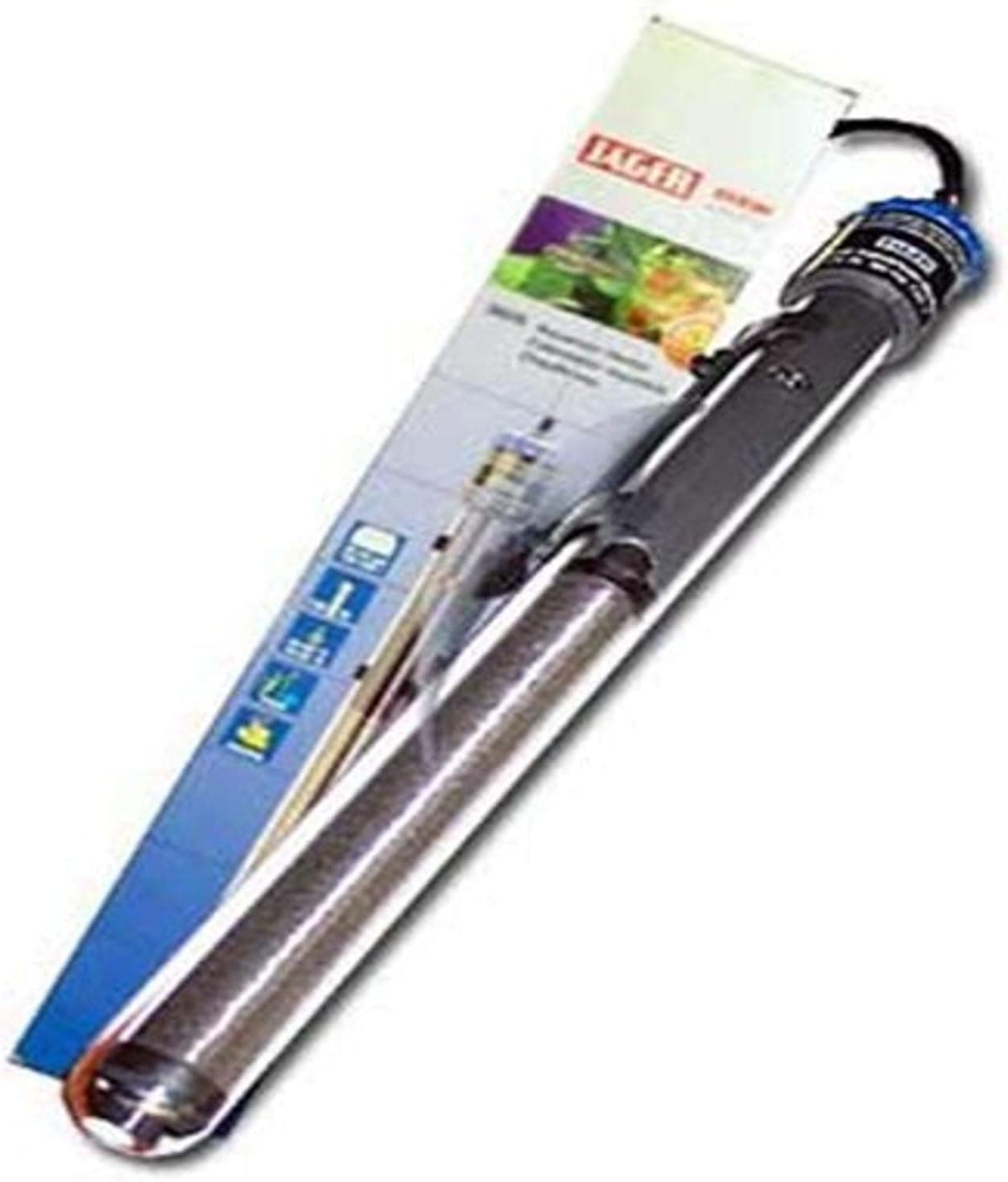
Fluval E 200W Electronic Heater — Up to 65 Gallon
Advanced electronic heater with LCD display and dual temperature sensors. Fish guard included. Smart-plug compatible for Home Assistant automation.
both
Fluval E 300W Electronic Heater — Up to 100 Gallon
Advanced electronic heater with LCD temperature display and dual temperature sensors. Fish guard included. Pair with a Tuya smart plug for HA automation and scheduled heating.
both
Eheim Jager 50W Aquarium Heater — Up to 15 Gallon
Precision German-made heater with TruTemp dial. Shatter-resistant glass, fully submersible. Use with Tuya/Shelly smart plug for HA temperature scheduling.
both
Eheim Jager 75W Aquarium Heater — Up to 25 Gallon
Precision German-made heater with TruTemp dial. Shatter-resistant Schott glass, fully submersible. Recalibrating thermostat for consistent temperature.
both
Eheim Jager 150W Aquarium Heater — Up to 50 Gallon
Precision German-made heater with TruTemp dial. Shatter-resistant glass, fully submersible. Use with Tuya/Shelly smart plug for HA temperature scheduling.
both
Eheim Jager 200W Aquarium Heater — Up to 65 Gallon
German-engineered precision heater for medium-large tanks. TruTemp dial, shatter-resistant Schott glass, fully submersible. Smart-plug compatible.
both
Eheim Jager 250W Aquarium Heater — Up to 80 Gallon
Large German-made heater with precise thermostat. Shatter-resistant glass, dry-run shutoff, and on/off indicator light. Tuya/Shelly smart-plug compatible.
both
Eheim Jager 300W Aquarium Heater — Up to 105 Gallon
The largest Eheim Jager heater. Precision German engineering with TruTemp dial and dry-run protection. Ideal for tanks 75 to 105 gallons.
both
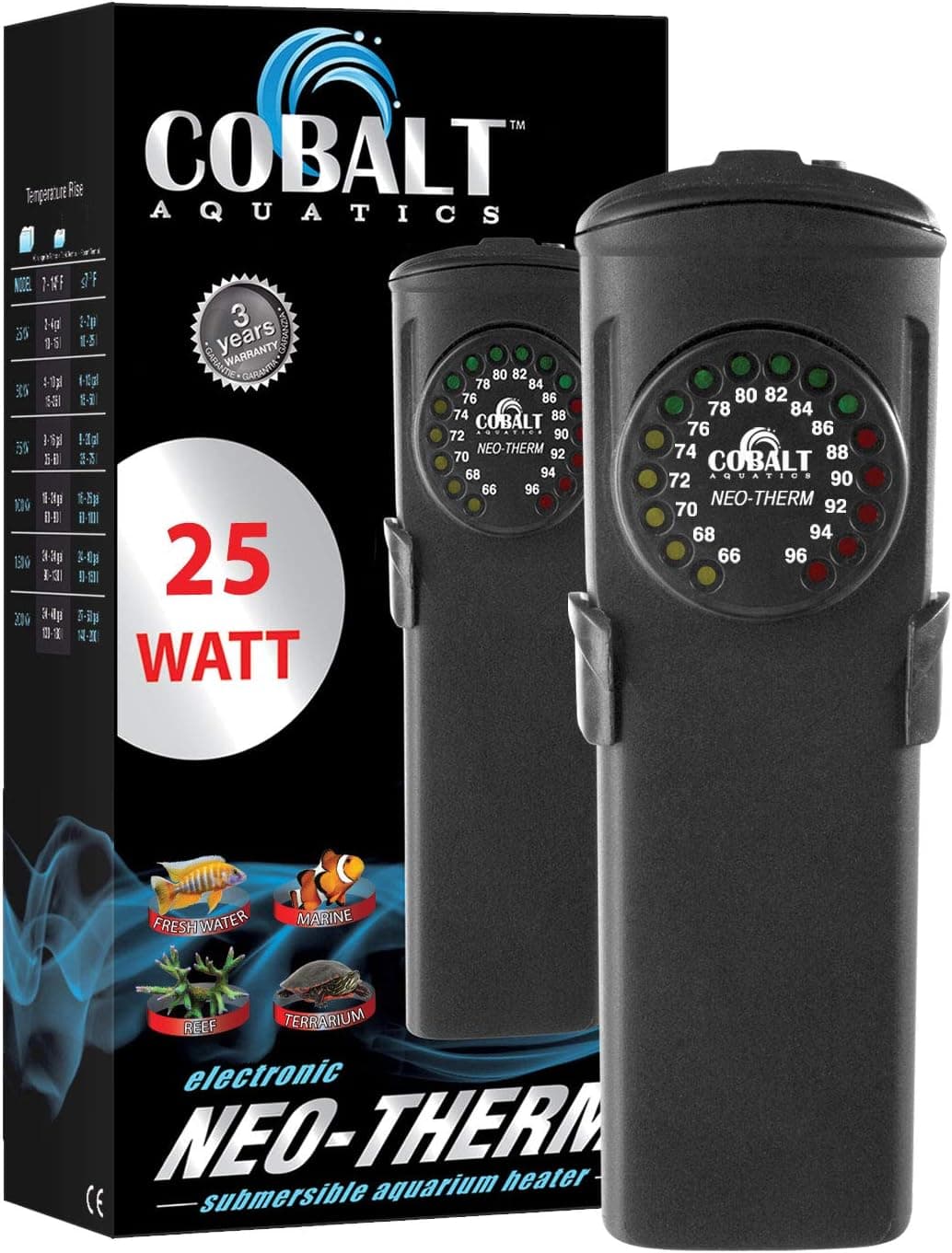
Cobalt Aquatics Neo-Therm 25W — Up to 6 Gallon
Flat, modern shatterproof heater with one-touch digital thermostat. LED temperature indicator. Perfect for nano and small tanks.
both
Cobalt Aquatics Neo-Therm 50W — Up to 12 Gallon
Flat shatterproof design with integrated digital thermostat and LED readout. Accurate to ±0.5°F. Pair with a Tuya smart plug for Home Assistant control.
both
Cobalt Aquatics Neo-Therm 100W — Up to 30 Gallon
Flat, modern design with one-touch digital thermostat. Shatterproof construction and LED indicator. Pair with a Tuya smart plug for remote on/off via Home Assistant.
both
Cobalt Aquatics Neo-Therm 150W — Up to 40 Gallon
Shatterproof heater with integrated electronic thermostat. Slim flat profile mounts flush against glass. LED indicator and ±0.5°F accuracy.
both
Cobalt Aquatics Neo-Therm 200W — Up to 55 Gallon
Powerful shatterproof heater with digital thermostat. Sleek flat design disappears in the tank. Smart-plug compatible for HA automation.
both
Cobalt Aquatics Neo-Therm 250W — Up to 70 Gallon
Large shatterproof heater for medium-large tanks. Digital thermostat with LED indicator and ±0.5°F accuracy. Tuya smart plug compatible.
both

Hygger 50W Titanium Aquarium Heater — Up to 10 Gallon
Compact titanium heating element with external digital controller. Corrosion-resistant and safe for freshwater and saltwater. Budget-friendly for small tanks.
both
Hygger 100W Titanium Aquarium Heater — Up to 30 Gallon
Titanium heating element with separate digital controller. Durable for freshwater and saltwater. Smart-plug compatible for HA automation with Tuya or Shelly.
both
Hygger 200W Titanium Aquarium Heater — Up to 55 Gallon
Mid-range titanium heater with external digital controller. Precise temperature control and corrosion-resistant construction. Smart-plug compatible.
both
Hygger 500W Titanium Aquarium Heater — Up to 125 Gallon
High-wattage titanium heater for large and extra-large tanks. External digital controller with LED display. Corrosion-proof for freshwater and saltwater setups.
bothKnifefish
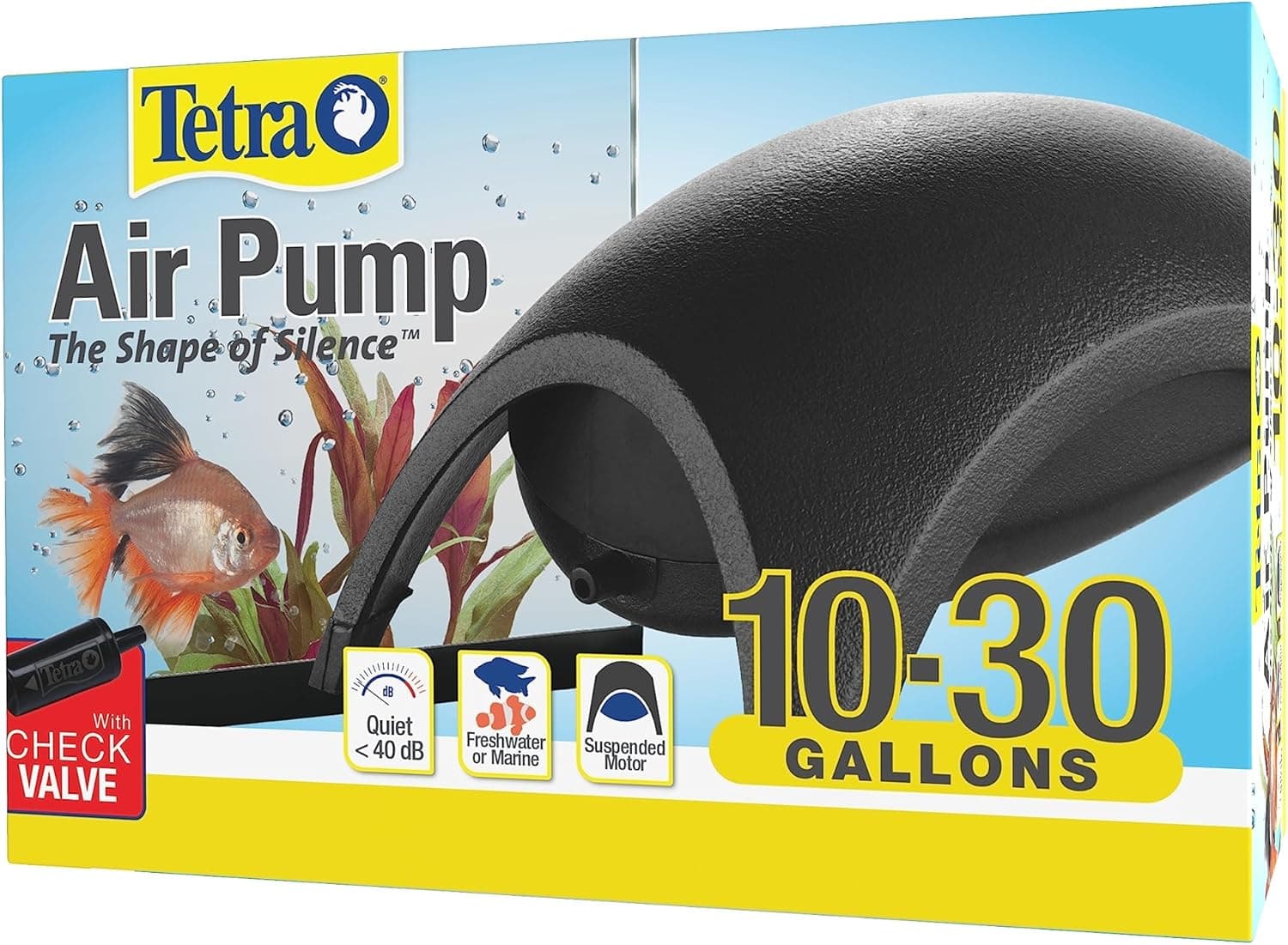
View all3 products available from Danaqua Live Fish & More

Clown Knifefish
The Clown Knifefish, also known as the Clown Featherback, is a unique freshwater fish with a distinctive knife-like shape, characterized by its elongated, laterally compressed body and silvery-grey coloration. It's further distinguished by black spots (or dark vertical bands in juveniles) along its sides, a small dorsal fin, and a long anal fin that gives it its name and allows for both forward and backward movement. Native to Southeast Asia, it has also become established in some Florida waterways as an invasive species.

African knifefish
The African knifefish, scientifically known as Xenomystus nigri, is a distinctive freshwater fish characterized by its elongated, knife-like body and unique swimming style. It is a nocturnal, solitary creature that inhabits slow-moving waters in tropical Africa. African knifefish are known for their ability to generate a weak electric field and their reliance on this field for navigating and hunting.

Black Ghost Knifefish
The black ghost knifefish is a black, tropical South American freshwater fish that grows to 18-20 inches and is characterized by its blade-like appearance due to a lack of dorsal and caudal fins, replaced by a long, wavelike anal fin for maneuverability. It has a white blaze on its nose and two white rings on its tail, and uses an electric organ to navigate and find food. These nocturnal and timid fish require a large, dimly lit aquarium with plenty of hiding places, and can become tame enough to eat from their owner's hands.
Koi
View all3 products available from Danaqua Live Fish & More

GRADE A Imported Koi
Imported Koi, primarily from Japan, are renowned for their vibrant colors, unique patterns, and overall quality. They are often categorized by specific color and pattern variations, such as Kohaku (red and white), Showa (black, red, and white), and Ogon (metallic). These fish are highly valued by enthusiasts for their aesthetic appeal and are often more expensive than domestic Koi.

Butterfly koi
Butterfly koi, also known as longfin koi, are a variety of koi fish prized for their flowing, long fins that resemble butterfly wings. These fins, along with their vibrant colors and patterns, make them a popular choice for ponds. They are known for their interactive personalities and can become long-term companions.

Mayan koi short body 6”-7”
Short body Mayan Koi, also known as Butterfly Koi, are a type of koi fish characterized by their shorter, more compact body compared to standard koi, and their vibrant, butterfly-like fins. They typically reach an adult size of 6-10 inches. These fish are known for their peaceful temperament and can live for 25-35 years or longer with proper care
Live Stock
View all2 products available from H2O Plants

Olive Nerite Snails
IMPORTANT INFO: Snails will come in a plastic bag with a little water and air. When you open the snails, smell the inside of the container. If there is no rancid or rotting smell the snails should all be alive. A slight smell could mean there is some that didn't make the trip. Place all snails in one area in your tank so you can keep track of them. Make sure the opening of their shells are facing down. They will usually start moving within a few hours but could take a few days. Sizes of snails will vary between 1/4"-1/2" in size. Please read DOA policy below. Nerite snails are some of the best algae eaters to keep your glass, wood, rocks, and equipment free from brown and green algae that build up over time. These snails may lay eggs in your tank but the eggs cannot hatch unless they are in brackish water. Olive Nerite Snail Care: Best kept between 70°f and 78°f. Will eat leftover food from feeding your fish, algae, and detritus.They won't eat healthy plants, any dying plant mater they will clean up for you. Will need calcium in diet or water. DOA Policy: We will only replace, refund, or partial refund these snails if more then 50% are DOA, and that you ordered a heat pack or cold pack if it was needed. We will ask though that you place snails in your tank for up to a week to see if they are in fact dead or not.

Mystery Snails
IMPORTANT INFO: Mind your weather. Snails will come in a plastic bag with air. When you open the snails, smell the inside of the bag. If there is no rancid or rotting smell the snails should all be alive. A slight smell could mean there is some that didn't make the trip. Place all snails in one area in your tank so you can keep track of them. Make sure the opening of their shells are facing down. They will usually start moving within a few hours but could take a few days. Sizes of snails will vary between 1/4"-1/2" in size. Please read DOA policy below. Mystery snails are some of the best algae eaters to keep your glass, wood, rocks, and equipment free from brown and green algae that build up over time. These snails can reproduce in freshwater aquariums. They will lay an egg sack at the top but will need to stay moist to hatch. Please note: "Black snails" can have a purple color to their shells. "Blue snails" have white shells but blue bodies. Mystery Snail Care: Best kept between 70°f and 78°f. Will eat leftover food from feeding your fish, algae, and detritus.They won't eat healthy plants, any dying plant mater they will clean up for you. Will need calcium in diet or water. DOA Policy: We will only replace, refund, or partial refund these snails if more then 50% are DOA. We will ask though that you place snails in your tank for up to a week to see if they are in fact dead or not.
Loaches
View all6 products available from Danaqua Live Fish & More

Clown loaches
Clown loaches are a popular, colorful, and active freshwater fish known for their vibrant orange and black banded pattern, elongated body, and playful behavior. They are native to Indonesia and can grow to a large size (10-12 inches) in aquariums, requiring ample space and a varied diet. They are generally peaceful but benefit from being kept in groups.

Hill Stream Loach
Hillstream loaches, also known as reticulated hillstream loaches, are small, flattened fish known for their unique appearance and algae-eating habits. They have a flattened body, large pectoral and pelvic fins, and a distinctive black and yellow spotted or striped pattern. These fish are peaceful, active, and thrive in well-oxygenated, fast-flowing water, often mimicking their natural habitat in streams and rivers

Hi-Fin Banded Loach (Myxocyprinus asiaticus)
The Hi-Fin Banded Loach (Myxocyprinus asiaticus) is a freshwater fish native to the Yangtze River basin in China, known for its striking appearance when young, with a gold or brown body and distinct dark vertical stripes. It features a prominent, triangular dorsal fin and thick, fleshy lips, but its body shape and color change significantly as it ages. While juveniles have a tall fin and a banded pattern that fades in adulthood, the adults become more elongated with darker coloration, leading to the nickname "ugly duckling in reverse". These peaceful, omnivorous fish are bottom-dwellers and are well-suited for large ponds due to their potential to grow over three feet long.

Kuhli Loach
Kuhli loaches are small, eel-like freshwater fish, roughly 3-4 inches long, with a slender, segmented body featuring dark brown or black vertical stripes on a salmon-pink or yellowish background. They have a smooth, scaleless body with a distinctive head featuring barbels (whiskers) for foraging and small eyes covered by a transparent layer of skin. These nocturnal, peaceful, and communal bottom-dwellers are known for their active behavior in aquariums, particularly when kept in groups.

COLORED BOTIA (LOACH)
The Blue Botia, also known as the Redtail Botia (Yasuhikotakia modesta), is a Southeast Asian freshwater fish characterized by its stocky, bluish-gray body and vibrant red to orange fins. These bottom-dwellers grow large (up to 8 inches or more) and require a large, spacious aquarium with hiding places due to their territorial and semi-aggressive nature. They are natural snail predators and need to be kept with other similarly sized, semi-aggressive tank mates.

Pakistani Loach Yoyo Loach (Botia almorhae)
The Pakistani Loach, also known as the Yoyo Loach (Botia almorhae), is a freshwater fish native to northern India and surrounding areas. It is characterized by its distinctive "yoyo" pattern on its sides as a juvenile, which fades with age. These are social, bottom-dwelling, omnivorous fish, typically growing to 4-5 inches, and are known for their active, playful, and sometimes audible clicking communication. They are generally peaceful but should be kept in groups of five or more and require a well-structured aquarium with hiding spots and a secure lid to prevent jumping.
Miscellaneous
View all27 products available from Danaqua Live Fish & More, H2O Plants

Fahaka Puffer Fish (Tetraodon Lineatus) 5”-6”
Also known as the Nile puffer, lineatus puffer (Tetraodon lineatus). The Fakaha is a large puffer that can’t be seen in aquarist tanks quite often. This is a freshwater fish which in the wild inhabits in the Nile river and also it’s known as Nile puffer fish. Fahaka puffer has a very curious and intelligent nature and it becomes domesticated quite easily, however at that the fish is rather aggressive towards other fishes. Its very likely that fahaka puffer will kill or hurt other fishes that will inhabit in the same tank with it. All tetraodon fishes have strong teeth and fakaha puffer uses them to tear the pieces from its tank mate bodies. This tetraodon is a predator, in the wild it feeds on all types of snails, spineless and insects.

Polypterus bichir lapradei 8"-10"
The Lapradei Bichir, Polypterus lapradei is a lobe-finned Pike originating from Africa. With an elongated eel-like body that is highly colored, it has a striking appearance. Its body displays a yellow and gray checkered pattern with dark gray horizontal striations running along its body.

Halfbeak fish 1”-1.5”
Halfbeak fish, particularly the Albino Platinum Halfbeak (Dermogenys pusilla), are known for their striking white or silver coloration, often described as shimmering under aquarium lights. They have an elongated lower jaw and a slender body, with some varieties exhibiting a platinum sheen.

Alligator gar (Atractosteus spatula)
The alligator gar (Atractosteus spatula) is a large, ancient fish species known for its long, slender body, long snout, and diamond-shaped scales. It is the largest of the gar species and can grow up to 10 feet long and weigh over 300 pounds, according to the U.S. Fish & Wildlife Service and Texas Parks and Wildlife. The name "spatula" refers to its broad, spoon-like snout. Gars are easily distinguished from other freshwater species by their long, slender, cylindrical bodies, long snouts, and diamond-shaped interlocking (ganoid) scales. The tail fin is rounded. Dorsal and anal fins are placed well back on the body and nearly opposite each other.

Spiney Eel
Spiny eels are elongated, freshwater fish, known for their unique eel-like shape and the rows of spines along their backs. They are not true eels, but rather belong to the family Mastacembelidae and are found in tropical regions across Africa, Asia, and parts of Australia. Spiny eels are typically nocturnal, bottom-dwelling fish, preferring sandy or muddy substrates where they can burrow and hide.

Puffer Green Spotted
The Green Spotted Puffer, also known as the Leopard Puffer or Korean Spotted Puffer, is a popular freshwater fish known for its vibrant green coloration and distinctive black spots. These scaleless fish have a rounded body, a beak-like mouth, and a white or yellowish belly. They are native to Southeast Asia and can be found in coastal areas, rivers, and even the sea.

Bumble Bee Goby
Bumblebee gobies are small, distinctive fish named for their black and yellow banded coloration. They are known for their territorial and somewhat shy nature, preferring to inhabit the bottom of the tank and use hiding places according to a pet store website. While they can thrive in freshwater, they are often kept in brackish water and are generally peaceful but can be territorial towards their own kind.

Mbu Puffer Fish (Tetraodon Mbu)
Tetraodon mbu is a freshwater puffer and does not require the addition of salt to its tank. This is the king of puffers. They can reach 24 inches and they have great personalities. The color is magnificent also with a back yellow maze pattern. We suggest a sandy substrate, with smooth rocks and driftwood pieces for decoration. Leave plenty of open space for swimming. You can plant the aquarium if you wish but be prepared for bite marks to appear in the leaves if the puffer spots any morsels of food on them.A generally aggressive and intolerant species that really should be kept alone. Its beak-like mouth can easily bite chunks from other fish, or in extreme cases rip them to pieces. However, some specimens are less aggressive than others and it is down to the individual fish as to how it will react to tankmates. If you decide to take the risk, you will need a huge tank and tankmates that swim too quickly for the puffer to catch them easily. It is also very aggressive towards conspecifics and should never be kept in groups.

African Pike (Hepsetus odoe)
The African Pike, or Hepsetus odoe, is an intriguing predatory freshwatr fish from Central and West Africa, primariliy in Nigeria and Cameroon. Its name comes from its long, slender, and elongates body which resembles a pike. Its sharp teeth, slim and pointed snout, and its long dorsal fin make this fish look striking. It's exceptional predatory behavior makes this species especially interesting, as its impressive speed makes them particularly fascinating when on the prowl for prey. This species is considered semi-aggressive, and may exhibit overall more aggressive behavior during breeding or when placed in smaller tanks. It's crucial to select tankmates that are similar or larger in size than the pike, and the species also needs to be quite robust and assertive in order to hold their own. Larger barbs, some larger catfish, other larger predatory fish, and even robust and assertive species of cichlids could work, but only in optimal conditions.

Galaxy Pleco
The Galaxy Pleco, also known as the Vampire Pleco or Tooth-Nose Pleco, is a striking freshwater catfish from South America characterized by a dark, black body covered in bright white or yellow spots, resembling a starry night sky. It can grow to about 9-10 inches (23-25 cm) and is known for its territorial nature, particularly towards other plecos. The fish requires a stable freshwater environment with hiding places like rocks and driftwood, and a diet rich in protein. Key Characteristics Appearance: A dark body (black to dark brown) with bright white or yellowish spots. Common Names: Galaxy Pleco, Vampire Pleco, Tooth-Nose Pleco, or Tusken Pleco. Scientific Name: Leporacanthicus galaxias. Origin: Native to the Amazon and Orinoco River basins in South America. Behavior & Temperament Territorial: Like many armored catfish, they are territorial and can become aggressive towards conspecifics (similar fish), especially when it comes to establishing territory, though they are generally peaceful with different species. Bottom Dweller: They spend most of their time on the aquarium floor, scavenging for food. Aquarium Environment Tank Size: A minimum tank of 50 gallons is recommended to house this fish. Habitat: A planted aquarium with rocks, driftwood, and dense vegetation provides a healthy environment and hiding spaces to reduce stress. Water: Stable water parameters are crucial, and high aeration is beneficial. Diet Carnivorous: The Galaxy Pleco is a carnivorous fish and needs a high-protein diet. Food: A varied diet of sinking carnivore pellets, freeze-dried bloodworms, and tubifex is recommended.

Leaf Fish Amazon Leaf Fish (Monocirrhus polyacanthus)
Leaf fish are known for their exceptional camouflage abilities, resembling dead leaves to ambush prey. They are found in freshwater habitats like the Amazon River basin and slow-moving rivers and creeks, often among submerged vegetation. These fish are typically brown, gray, or mottled, with a flattened body shape and a filament on the lower jaw that enhances their leaf-like appearance. They are ambush predators with a large, extendable mouth for quickly capturing prey like small fish and insects.

Golden Wonder Panchax
The Golden Wonder Panchax, also known as the Yellow Panchax or Striped Panchax, is a popular aquarium fish with a vibrant yellow or golden body and dark horizontal stripes. It's a type of killifish known for its peaceful nature in a community tank, but it can be predatory towards smaller fish. According to online resources, it prefers the top level of the aquarium and enjoys a well-planted environment.

African Butterfly Fish (Pantodon buchholzi)
The African Butterfly Fish (Pantodon buchholzi) is a unique freshwater fish known for its distinctive appearance and surface-dwelling habits. They have large pectoral fins that resemble butterfly wings and are typically brownish or grayish with a silver sheen. They are ambush predators, with upward-facing eyes and a large upturned mouth adapted for catching insects and small fish at the water's surface. They are relatively hardy and can live for up to 10 years in captivity with proper care.

Cryptocoryne spiralis 'Tiger'
Cryptocoryne Spiralis ‘Tiger’ is a beautiful aquarium plant with long, ribbon-like leaves marked by striking tiger-stripe patterns. Colors range from olive green to bronze or reddish tones under stronger lighting. A hardy mid- to background choice, it thrives in nutrient-rich substrate with moderate light and benefits from root tabs or CO₂ for the best growth and color. Perfect for adding height, texture, and movement to your aquascape. Sold as: Potted Key Features & Care Tips: Long, narrow leaves with unique tiger-stripe patterns Colors range from olive green to bronze or reddish under stronger light Great for midground to background placement Thrives in nutrient-rich substrate; root tabs recommended if using inert substrate Moderate lighting; stronger light + nutrients enhance color CO₂ not required but helps with faster growth and richer tones Hardy and beginner-friendly, though may “melt” when first introduced before regrowing

Florida Ruffle (Green Hedge)
Florida Ruffle (Green Hedge) is a compact terrarium plant with vibrant green, ruffled foliage that grows into a dense, bushy hedge. Its lush texture makes it perfect for creating natural borders or adding depth to tropical setups. Why You’ll Love It Compact growth ideal for hedges and accents Bright green ruffled leaves add texture and depth Great for terrariums, vivariums, or tropical displays Suitable for small reptiles and amphibians like dart frogs or geckos Care Tips Thrives in warm, humid environments with moderate to bright indirect light. Keep soil moist but well-drained and trim to maintain shape. Easy to grow, making it a great choice for both beginners and terrarium enthusiasts

Bacopa myriophylloides
Soft Texture and Graceful Movement for Your Aquascape Bacopa myriophylloides is a delicate-looking stem plant known for its fine, feathery foliage and flowing, bushy appearance. Its soft green tones and unique texture make it an excellent choice for adding contrast and natural movement to planted aquascapes. This plant thrives under moderate to high light and benefits from CO₂ and regular fertilization for optimal growth. As it grows, it forms a lush, wispy cluster that looks stunning in the midground or background of any aquascape. Highlights: Fine, feathery foliage with soft green tones Adds texture and gentle movement to aquascapes Best in moderate to high light with CO₂ Easy to propagate through stem cuttings Bacopa myriophylloides is a graceful and eye-catching addition that brings a sense of depth and softness to planted tanks.

Samolus Parviflorus 'Red'
Samolus parviflorus ‘Red’ Add a splash of vibrant color to your aquascape with Samolus parviflorus ‘Red’, a striking aquarium plant prized for its reddish-pink tones and lush rosette growth. This plant is perfect for creating contrast against green foliage while staying compact and easy to manage. Why You’ll Love It: Bright red and pink hues that stand out in any aquascape Compact growth makes it ideal for the foreground or midground Hardy and adaptable, thriving in a wide range of water conditions Works well in both low-tech and high-tech aquariums Provides natural cover for shrimp and small fish Care Requirements: Temperature: 68–82°F pH: 6.0–7.5 Lighting: Medium to high for best color Growth Rate: Moderate With its bold coloration and easy care, Samolus parviflorus ‘Red’ is a must-have plant for aquarists who want to add warmth and contrast to their aquarium.

Eriocaulon Vietnam
Eriocaulon Vietnam is a rare and highly sought-after aquarium plant prized for its striking starburst rosette and bright green, needle-like leaves. Native to Southeast Asia, this premium aquatic plant makes a dramatic centerpiece in any aquascape and is especially popular in Iwagumi and high-end planted layouts. Its compact, symmetrical growth adds strong contrast to traditional stem plants, creating a truly eye-catching focal point. This plant thrives in nutrient-rich substrate and benefits from root tabs, fertilizers, and CO₂ injection to maintain its vivid color and compact form. While it can adapt to a range of conditions, medium to high lighting and stable water parameters will bring out its best growth. Whether used as a single specimen or grouped for a starburst carpet effect, Eriocaulon Vietnam provides unique structure, natural shelter for shrimp and small fish, and long-lasting beauty when properly cared for. Plant Information: Lighting: Low to high (best under medium-high) CO₂: Recommended for healthy, vibrant growth Temperature: 72–82°F pH Range: 6.0–7.0 Growth Rate: Moderate (steady rosette formation) Tank Placement: Foreground to Midground Why Choose Eriocaulon Vietnam? Rare, premium aquarium plant ideal for advanced hobbyists Distinctive starburst shape that enhances aquascape balance Compact rosette growth makes it a perfect centerpiece plant Thrives in minimalistic, rock-based, and nature-style layouts

Hygrophila pinnatifida on Driftwood
Hygrophila pinnatifida on Driftwood – Easy Aquascape Plant Looking for a ready-to-go aquascape centerpiece? Hygrophila pinnatifida on driftwood is a stunning plant that combines unique texture with convenience. Its deeply lobed, reddish-brown to green leaves contrast beautifully against aquarium greenery, making it an eye-catching focal point. Already attached to natural driftwood, this plant is perfect for both beginners and advanced aquascapers. Simply place it in your aquarium and let it thrive—no planting required. Hygrophila pinnatifida is versatile, growing well in low to high-tech tanks, and its roots will naturally anchor deeper into the wood over time. Ready to use—no hassle planting Works in low-tech and CO2 setups Provides unique color and leaf texture Great for aquascaping focal points or midground placement Add Hygrophila pinnatifida on driftwood to your tank for a natural, professional aquascape look without the effort of attaching plants yourself.

Dragon's Tongue | Hemigraphis repanda
Hemigraphis repanda (Dragon’s Tongue) is a striking terrarium plant with narrow, rippling leaves in deep green to purple hues. Its unique texture and bold color add contrast and drama to any terrarium or vivarium design. Why You’ll Love It Distinctive sword-like leaves with rich tones Adds texture and contrast to terrarium layouts Perfect accent plant for tropical or woodland setups Safe for small reptiles and amphibians like dart frogs or geckos Care Tips Dragon’s Tongue thrives in high humidity with moderate to bright indirect light. Keep soil evenly moist but never soggy, and trim as needed to maintain shape. A hardy and adaptable plant that works beautifully for both beginners and advanced terrarium keepers.

Cuphea anagalloidea
Cuphea anagalloidea – Unique Stem Plant for Aquascaping Introduce a rare and eye-catching species to your aquascape with Cuphea anagalloidea. Known for its fine, compact leaves and rich green to reddish tones under high light, this plant adds texture and contrast to any planted tank. Though not commonly found in the aquarium trade, Cuphea anagalloidea adapts well to submerged conditions with proper care. Aquascaping Benefits: Unique Leaf Structure: Adds a delicate, soft texture to midground or background layouts. Color Variation: Displays reddish hues with high light and CO₂. Ideal for Trimming: Encourages bushy growth when trimmed regularly. Aquascape Versatility: Great for nature-style or Dutch-style layouts. Care Tips: Lighting: Medium to high CO₂: Recommended for best coloration and growth Temperature: 68–82°F (20–28°C) Growth Rate: Moderate

Anubias on Small Driftwood
Anubias on Small Driftwood Anubias on Small Driftwood is the perfect ready-to-use aquarium decoration, combining the beauty of hardy Anubias with natural driftwood. Its compact size makes it an excellent choice for nano tanks, shrimp tanks, or as an accent in larger aquascapes. Why You’ll Love It Pre-attached for easy placement—no tying or gluing needed Thrives in low to medium light and requires no CO₂ Very hardy and low-maintenance, ideal for beginners Provides natural shelter for shrimp and small fish Slow-growing plant that won’t overtake your aquascape Care Requirements Lighting: Low to medium CO₂: Not required Temperature: 68–82°F pH: 6.0–7.5 Placement: Foreground to midground, great for smaller aquariums Aquascaping Tips Place Anubias on Small Driftwood directly into your aquarium for an instant natural look. It works beautifully in nano aquascapes or as a decorative accent in larger planted tanks. Avoid burying the rhizome in substrate to ensure healthy growth.

Bacopa salzmannii 'Purple'
Vivid Color for a Dynamic Aquascape Bacopa salzmannii 'Purple' is a stunning stem plant that displays rich purple and burgundy tones when grown under high light and proper nutrients. Its vibrant color and upright growth make it a standout choice for midground to background placement in aquascapes. This plant is relatively easy to grow with CO₂ supplementation and regular trimming, which encourages bushier, denser growth. Whether used as a colorful accent or to create bold contrast against green foliage, Bacopa 'Purple' adds depth to any planted tank. Highlights: Intense purple hues under high light Great for midground or background placement Responds well to trimming and propagates easily Best with CO₂ and rich nutrient dosing Bring a burst of color to your aquascape with Bacopa salzmannii 'Purple'—a must-have for vibrant, dynamic layouts.

Anubias on Large Driftwood
Bring natural beauty to your aquarium with Anubias mounted on large driftwood. This hardy, low-maintenance plant is perfect for beginners and experts alike. The deep green leaves create a bold contrast against the wood, adding texture and a natural look to any aquascape. Why Choose Anubias on Driftwood? Ready to place directly in your aquarium Thrives in low to medium light conditions No CO2 required and very easy to care for Provides hiding spots for fish and shrimp Slow-growing, so it won’t take over your tank Care Requirements: Temperature: 72–80°F pH: 6.0–8.0 Lighting: Low to moderate Placement: Midground or attached décor This piece is ideal for anyone looking to add a low-maintenance centerpiece to their aquascape. Simply place it in your tank and enjoy!

Cold Pack Shipping Add On
You only need to add 1 of these to your order. Are you in a region that is exceeding 90°F? Well make sure you add this item onto your order so we can ensure your plants stay at a temperature that they will be ok in. Please note Cold Packs can only work up to 105°F effectively. If temperatures exceed that we may hold back the package until temperature are below 105°F. These cold packs are reusable and are completely safe for human skin contact or too cool your cooler at the beach!

Hygrophila Araguaia 'Chai'
Bring a touch of rare beauty to your aquascape with Hygrophila araguaia ‘Chai’, a stunning variant of the beloved Araguaia. Unlike the typical green form, Chai shows off delicate soft pink to blush tones under water, making it one of the most striking stem plants available for planted tanks. This slow-growing aquarium plant features narrow, grass-like leaves that create a graceful, flowing texture—perfect for adding contrast against deep greens and reds in your aquascape. Once submerged, its pink shades become even more vibrant, especially with strong lighting and nutrient-rich conditions. Growth Rate: Slow to moderate Lighting Needs: Medium to high CO₂: Not required, but helps enhance coloration Placement: Foreground to midground accent in aquascapes Whether you’re creating a nature aquarium, Dutch-style scape, or minimalist layout, Hygrophila araguaia ‘Chai’ is a must-have plant that adds both rarity and elegance. Its unique coloration makes it a centerpiece that immediately draws the eye. Ideal for aquascapers looking for something beyond the usual greens. Easy to maintain compared to many red or pink plants. Perfect choice for aquascaping beginners and experts alike.

Java Fern Mats
Java Fern Mats on Coco Fiber Enhance your aquarium with the timeless beauty of Java Fern (Microsorum pteropus), carefully grown and attached to natural coco fiber mats. This setup makes it easy to create an instant aquascape wall, carpet, or background feature while providing excellent coverage for shrimp and small fish. Why You’ll Love It Easy to place – simply set the mat on your substrate or attach it to rocks or driftwood Hardy and low-maintenance, perfect for beginners and experienced aquascapers Thrives in low to medium light and does not require CO₂ injection Coco fiber mat promotes healthy root growth and natural spread Creates a lush, green backdrop while offering hiding spaces for aquarium inhabitants Care Requirements Lighting: Low to medium CO₂: Not required Temperature: 68–82°F pH: 6.0–7.5 Placement: Midground to background, or as a living aquarium wall Aquascaping Uses Java Fern Mats on Coco Fiber are versatile and can be laid flat as a carpet, placed vertically for a living wall, or cut into smaller pieces for creative aquascaping designs. Their hardy nature makes them one of the best low-tech aquarium plants available.
Mollies
View all8 products available from Danaqua Live Fish & More

Marble Mollies
Marble Mollies are a color variation of the Molly fish, characterized by a marbled or mottled pattern of black, white, and grey. They are essentially a type of Dalmatian molly, and can also include orange or yellow in their coloration. These fish are known for their peaceful nature and can be kept in community tanks, though they do best in hard, alkaline water conditions.

Silver Mollies
Silver Mollies are a popular and peaceful freshwater fish known for their shimmering silver coloration and livebearing nature. They are relatively hardy and adaptable, making them a good choice for beginner aquarists. Silver Mollies are often found in community tanks, where they coexist well with other peaceful fish.

Yucatan Molly
The Yucatan Molly, scientifically known as Poecilia velifera, is a fish characterized by its large, sail-like dorsal fin in males and its ability to thrive in both fresh and brackish water environments. These mollies are native to the Yucatan Peninsula, specifically in coastal waters and cenotes. They are known for their distinctive appearance, with males displaying vibrant colors and a prominent dorsal fin, while females have a more muted coloration.

Balloon Lyretail Mollies
Balloon Lyretail Mollies are a visually striking aquarium fish known for their unique body shape and finnage. They have a rounded, "balloon-like" body, a large, distinctive dorsal fin, and a lyretail (forked tail). These fish are generally peaceful and well-suited for community tanks, and they are livebearers, meaning they give birth to live young.

Black Lyretail Molly
The Black Lyretail Molly (Poecilia sphenops) is a popular freshwater aquarium fish known for its vibrant black coloration and flowing, lyre-shaped tail fin. These peaceful, livebearing fish are relatively easy to care for and adapt well to various water conditions, making them a great choice for both beginners and experienced hobbyists. They are native to Central America and are captive-bred for the aquarium trade.

Gold Dust Mollies
Gold Dust Mollies are a vibrant and peaceful freshwater aquarium fish known for their striking gold speckled pattern and adaptability. They are popular among both beginners and experienced aquarists due to their easy care requirements and livebearing nature. These fish thrive in warm, planted tanks and add a splash of color to any aquarium.

Gold Dust Lyretail Mollies
Gold Dust Lyretail Mollies are vibrant, peaceful freshwater fish known for their striking appearance and livebearing nature. They feature a golden-yellow body with black speckles, and males often have a distinctive lyretail (forked tail fin). They are relatively easy to care for and adapt well to various tank conditions, making them a popular choice for both beginner and experienced aquarists.

Assorted Leopard Molly
A Leopard Molly is a colorful variant of the livebearer fish Poecilia sphenops, characterized by a golden or white base with distinctive black, leopard-like spots on its body and fins. These hardy, peaceful, and social fish are excellent for beginner aquarists, preferring community tanks with other peaceful fish and thriving when kept in groups of at least three. They are omnivores, accepting a diet of flakes, pellets, algae, and vegetables, and can tolerate brackish water environments.
Nigerian
View all2 products available from Danaqua Live Fish & More

Elephant Nose 3”-4”
The Elephant Nose is an intriguing fish that starts from the Niger River and its tributaries in Western Africa. Its body is for the most part dark and is sporadically formed with a long tight tail and what seems to be its nose anyway this is really an augmentation of the fish’s mouth. The Elephant nose utilizes its trunk-like augmentation to search for sustenance, convey, travel through the water and self protection. It has a frail electrical organ at the caudal peduncles which is utilized to find nourishment.

ROPE FISH
Rope fish, also known as reedfish or snakefish, are long, slender, and eel-like freshwater fish native to West and Central Africa. They are characterized by their unique appearance, with thick, bony scales that form a reticulated pattern, and their ability to breathe both air and water thanks to a modified swim bladder. Rope fish are generally peaceful, nocturnal, and prefer to inhabit slow-moving or standing water with plenty of hiding places.
PEX Plumbing
View all5 products available from SharkBite, iCrimp

SharkBite 1/2" PEX-B Tubing — 100ft, Red
Flexible PEX-B water tubing for aquarium plumbing, AWC systems, and water top-off lines. Easy to cut and route. Compatible with push-fit and crimp fittings.
both
SharkBite 1/2" 90-Degree Elbow — 4 Pack, Push-to-Connect
Push-fit brass elbows — no tools, no soldering. Connect PEX tubing around corners for aquarium plumbing runs. Removable and reusable.
both
SharkBite 1/2" Copper Crimp Rings — 100 Pack
Standard copper crimp rings for PEX connections. Use with a PEX crimp tool for permanent, leak-free joints on aquarium water lines.
both
iCrimp PEX Crimp Tool — 1/2" & 3/4" with Cutter & Go/No-Go Gauge
Angle-head PEX crimping tool with built-in cutter and calibration gauge. Essential for DIY aquarium plumbing and AWC system installs.
both
SharkBite 1/2" Push-to-Connect Ball Valve
Quarter-turn ball valve for PEX lines. Push-fit connection — no tools required. Use as shutoff valve for aquarium water lines and AWC systems.
bothPlants
View all137 products available from H2O Plants, SubstrateSource, Marcus Fish Tanks

Rotala Orange Juice
Rotala Orange Juice Brighten your aquascape with the vibrant tones of Rotala Orange Juice — a stunning stem plant known for its warm orange to peach coloration under strong light. Its slender leaves and compact growth pattern make it perfect for creating colorful contrast among green and red plants alike. Under good lighting and CO2, Rotala Orange Juice develops a rich gradient of yellow, orange, and pink hues that bring life and depth to any layout. It’s an excellent choice for Dutch-style aquascapes or anyone looking to add a soft, glowing pop of color. Highlights: Distinct orange-to-peach coloration Compact and upright growth pattern Ideal for midground or background placement Fast-growing and easy to trim for shaping Stunning contrast plant in high-tech aquariums Care Tips: Lighting: Medium to high for best color CO2: Recommended for vibrant growth Placement: Midground to background Growth Rate: Moderate to fast

Dwarf Hairgrass | Eleocharis Acicularis
Dwarf Hairgrass is a smaller version of the ever-popular Giant Hairgrass. Dwarf Hairgrass is a little more difficult and prefers co2 to carpet more fully. The best way to plant Dwarf Hairgrass is to separate it into a few clumps and plant it a few inches apart so as they grow they fill in areas in-between each clump. Scientific Name: Eleocharis sp. 'Mini' Care Level: Medium Lighting Requirement: Medium Co2: Recommended Growth Rate: Medium Origin: Unknown Tank Placement: Foreground carpet

Ammannia Gracilis
Ammannia Gracilis is a beautiful red/pink plant that needs high lighting in order to survive. If you can provide Ammannia Gracilis with the right amount of light, co2, and nutrient rich substrate it will flourish. Ammannia Gracilis grows pretty fast, and you are able to propagate it by trimming the top and planting it. Also Known: Pink Ammannia Care Level: Medium Lighting Requirement: Medium Co2: Not Needed Growth Rate: Fast Origin: Africa Tank Placement: Midground-Background For more information on this plant watch the video below: Most plants are sold as trimmings from rooted plants unless otherwise stated. All trimmings will be at least 3" in height unless otherwise noted.

Bacopa Caroliniana
Bacopa Caroliniana is a super easy plant to grow and is great for any tank. Bacopa Caroliniana has much larger leaves than its close relative "Moneywort". Bacopa Caroliniana‘s leaves are a bit translucent, and depending on your lighting the leaves closest to the top may turn either a reddish or white color. Care Level: Easy Lighting Requirement: Low Co2: Not Needed Growth Rate: Fast Origin: North and South America Tank Placement: Mid-ground-Background For more information about this plant, watch this video: Most plants are sold as trimmings from rooted plants unless otherwise stated. All trimmings will be at least 3" in height unless otherwise noted.

Anubias Lanceolata
Anubias Lanceolata has very tall leaves compared to the rest of the Anubias varieties. The Anubias Lanceolata plant grows by having a horizontal rhizome and producing vertical leaves. When planting, do not bury the rhizome in your substrate. Only bury the roots, attach to driftwood, or attach to rocks. You can propagate this plant by cutting the rhizome in half and moving the cutting to another area. This will allow both cuttings to keep growing. Much like other Anubias, Anubias Lanceolata can be easily attached to driftwood or rocks. You can also plant it, however, make sure the horizontal rhizome or stem is above the substrate. It can also be easily propagated by cutting the rhizome into smaller sections. We recommend leaving 2-3 leaves per section. Sold As: 1 Plant. Plant rhizome will be at least half an inch long with a minimum of 3 leaves. Care Level: Easy Lighting Requirement: Low Co2: Not Needed Growth Rate: Medium Origin: Africa Tank Placement: Foreground - Mid-ground Most plants are sold as trimmings from rooted plants unless otherwise stated. All trimmings will be at least 3" in height unless otherwise noted.

Giant Hairgrass (Vivipara)
Scientific Name: Eleocharis Vivipara Care Level: Easy Lighting Requirement: Low-Med Co2: Not Needed Growth Rate: Fast Origin: North America Tank Placement: Midground-Background A beautiful grass background plant for any aquarium. These leaves can reach upward of 18" tall in the right conditions. They are easily propagated as they send out lots of runners. Each order you will receive a clump that can be picked apart into smaller plants. Most plants are sold as trimmings from rooted plants unless otherwise stated. All trimmings will be at least 3" in height unless otherwise noted.

Banana Plant - Nymphoides Aquatica
Banana Plant Scientific Name: Nymphoides Aquatica Common Names: Banana Plant The banana plant is a beginner plant that is common in the aquarium hobby. It gets its name from the banana resembling roots. When planting this plant it is important not to bury the roots. It is easier to just allow the plant to root itself by placing it above the substrate. Temperature range – 70 to 80 F Caring for the Banana Plant Care Level: Easy Light: Medium CO2: Not Necessary Propagation: Leaves that are trimmed and left floating on the water's surface will start to grow roots. Note: Please do additional research on your plant to ensure its health. *All Plants may contain snails or snail eggs. We keep them in all of our tanks for the benefits they provide.*

Red Flame Sword | Echinodorus
Red Flame Sword Scientific Name: Echinodorus "Red Flame" Common Name: Red Flame Sword, Echinodorus schlueteri x E. barthii hybrid The Red Flame Sword is similar to other Echinodorus variations in its easiness to keep. This variation will provide you with a great red color under the correct conditions. If using an inert substrate it is wise to supplement with root tab fertilizers underneath the plant. This species of plant thrives best using nutrient-rich soil with additional fertilization. If not provided with enough nutrients, it can decrease the ability of this plant to spread. The use of CO2 in the aquarium will increase the plant's ability to grow but is not necessary. *Rapid changes in tank parameters can result in the melting of the plant Caring for Red Flame Sword Care Level: Easy Light: Low-Medium CO2: Not necessary but can be beneficial Propagation: Separate the runners from the plant and replant Note: Please do additional research on your plant to ensure its health. For more information on this plant watch the video below: Most plants are sold as trimmings from rooted plants unless otherwise stated. All trimmings will be at least 3" in height unless otherwise noted.

Broadleaf Sagittaria
Broadleaf Sagittaria is a great mid-ground plant for those low tech tanks. Broadleaf Sagittaria is a bit bigger than its commonly known relative Dwarf Sag but grows the same way. Similar to Vallisneria, Broadleaf Sagittaria send off runners. Scientific Name: Sagittaria Platyphylla Sold As: Individual rooted plants Care Level: Easy Lighting Requirement: Low-Med Co2: Not Needed Growth Rate: Medium Origin: North America Tank Placement: Mid-ground For more information on this plant watch the video below:

Alternanthera Reineckii |Scarlet Temple
Alternanthera reineckii Scientific Name: Alternanthera reineckii Common Names: Scarlet Temple, AR, AR Plant The Alternanthera reineckii, also known as Scarlet Temple, is a striking addition to any aquarium, offering vibrant red-purple leaves that create contrast. Unlike many plants in its family, this species is relatively easy to care for, making it suitable for aquarists of all experience levels. While it will thrive in most setups, providing a bit of extra care can result in thicker growth and even more vivid colors. While these plants can tolerate suboptimal conditions, they prefer soft, slightly acidic water with temperatures ranging from 68 to 75 °F. Additionally, they exhibit more vibrant colors under intense lighting, although they can still thrive in moderate light. Under optimal growing conditions, this plant can easily grow a few inches a week. Caring for Alternanthera reineckii Care Level: Moderate Light: Low - High CO2: Not Needed Propagation: Cut stem and relocate *All Plants may contain snails or snail eggs. We keep them in all of our tanks for the benefits they provide.*

Anacharis - Elodea Najas - Water Weed
Anacharis Najas Scientific Name: Anacharis Najas Common Names: Anacharis, Elodea Najas, Water Weed Anacharis Najas is a great beginner plant if you have medium to high light in your aquarium. Anacharis is super easy to grow, either planted or floating. Anacharis has nice transparent green leaves. It is great at absorbing excess waste for the tank inhabitants. Caring for Anacharis Najas Care Level: Easy Light: Medium-high CO2: Not Necessary but can promote growth Propagation: Cut stem and replant Note: Please do additional research on your plant to ensure its health. *All Plants may contain snails or snail eggs. We keep them in all of our tanks for the benefits they provide.* Most plants are sold as trimmings from rooted plants unless otherwise stated. All trimmings will be at least 3" in height unless otherwise noted. Photos are examples not exactly what will be sent.

Anubias Nana
Anubias Nana Scientific Name: Anubias Nana Anubias Nana is a plant that is extremely easy to grow and a great beginner plant. It does not require much attention and can be floated in the tank or attached to decorations. Its thick structure allows it to be placed even with some aggressive fish. Anubias nana is a rosette plant which means that all the leaves grow to the same size and the root system will sit toward the top of the soil or substrate. Anubias nana leaves can get as large as 5 to 8 inches. We keep Anubias Nana in a fair amount of our breeding tanks here at Flip Aquatics. It is an easy-to-grow plant that prefers to not be rooted in the substrate. We typically float the plant or attach it to a rock or a piece of Malaysian driftwood. To attach it, we use a rubber band for two weeks or so and then remove it. Anubias nana is very hardy and can tolerate many aquarium conditions. Therefore, it will make a great addition to any shrimp tank. Caring for Anubias Nana Care Level: Easy Light: Low CO2: Not Necessary but can promote growth Propagation: Separate by rhizome To propagate anubias nana, simply cut the rhizome and leave 4-5 leaves on each section. The rhizome will continue to grow and the plant will eventually thrive. Also, under good conditions anubias nana will propagate itself by sending out horizontal rhizomes with additional leaves. There is a myth on the internet that if you cut the rhizome of an anubias plant the sap will make the water toxic, this is not true. We have propagated anubias nana in shrimp tanks and have never had a problem. *All Plants may contain snails or snail eggs. We keep them in all of our tanks for the benefits they provide.*

Cryptocoryne Retrospiralis
Sold As: Individual rooted plants Care Level: Easy Lighting Requirement: Medium Co2: Not Needed Growth Rate: Medium Origin: Asia Tank Placement: Midground - Background Another great crypt for those beginners. It's leaves grow long and crimped and provide a nice contrast and texture to the midground of any scape. Most plants are sold as trimmings from rooted plants unless otherwise stated. All trimmings will be at least 3" in height unless otherwise noted.
Water Sprite Lace | Indian Fern
Water Sprite Lace | Indian Fern Scientific Name: Ceratopteris Siliquosa Common Names: Water Sprite, Lace Leaf Water sprite is an amazing stem plant that can be propagated easily through trimming stems and replanting in the substrate. Water sprite is easy to care for and a great plant to help protect fry. It grows fast and can easily fill in areas of an aquascape. Water sprite can also be used as a floating plant. Scientific Name: Ceratopteris thalictroides Light Requirements: Low to Medium Care Level: Easy Caring for Water Sprite Lace Care Level: Easy Light: Low-Medium CO2: Not Needed Propagation: Stem plant - cut and replant Note: Please do additional research on your plant to ensure its health. *All Plants may contain snails or snail eggs. We keep them in all of our tanks for the benefits they provide.*

Rotala Wallichii
Sold As: Bunch Care Level: Medium Lighting Requirement: Medium Co2: Required Growth Rate: Fast Origin: Asia Tank Placement: Midground-Background Rotala Wallichii is a very beautiful plant for any experience hobbyist. While it need a good amount of light, co2, and fertlization to grow this plant is super easy and fast growing if you give it what it likes. Most plants are sold as trimmings from rooted plants unless otherwise stated. All trimmings will be at least 3" in height unless otherwise noted.

Glossostigma Elatinoides
Scientific Name: Glossostigma Elatinoides Sold As: Bunched, Portion Cup Care Level: Intermediate Lighting Requirement: Med - High (High light required to carpet) Co2: Recommended Growth Rate: Fast Origin: Australia Tank Placement: Foreground as carpet or mid-ground. A great small plant for those smaller sized tanks. This plant will best form a carpet when grown with higher light. It will grow tall if you're lighting isn't adequate and can be used as a midground stem plant. It will both be able to reproduce through runners and propagating the stems when trimming. It is a very small delicate plant and needs to be kept with smaller sized fish. Bigger fish like Boesemani Rainbow eat it. (I know from experience!) Most plants are sold as trimmings from rooted plants unless otherwise stated. All trimmings will be at least 3" in height unless otherwise noted.

Anubias Congensis
Sold As: 1 Plant. Plant rhizome will be at least half an inch long with a minimum of 3 leaves. Care Level: Easy Lighting Requirement: Low Co2: Not Needed Growth Rate: Medium Origin: Africa Tank Placement: Foreground - Mid-ground This is another form of Anubias that has entered the hobby within the last few years. Its leaves are more a bit more broad then other anubias but not quiet long. This plant grows by having a horizontal rhizome and producing vertical leaves. When planting do not bury the rhizome in your substrate only the roots or attached to drift wood or rocks. You can propagate this plant by cutting the rhizome in half and moving the cutting to another area. This will allow both cutting to keep growing. Most plants are sold as trimmings from rooted plants unless otherwise stated. All trimmings will be at least 3" in height unless otherwise noted.

Baby Tears
Scientific Name: Hemianthus Glomeratus Sold As: Bundle of 10-15 Stems Care Level: Easy Lighting Requirement: Medium Co2: Not Needed Growth Rate: Fast Origin: North America Tank Placement: Foreground as carpet or mid-ground. There are many different forms of "Baby Tears" this happens to be the regular variety (Not "Dwarf", "HC", or "Cuba"). Its similar to Pearlweed except its leaves are a different structure and don't require high lighting. It will still need a decent amount of light and but can get by with no Co2 unless you want to make it carpet. It can be used both as a midground plant or a foreground carpet. To get it to carpet you will need to heavily trim the stems to encourage horizontal growth. Be sure to replant what you trim off though to get more plants growing. Most plants are sold as trimmings from rooted plants unless otherwise stated. All trimmings will be at least 3" in height unless otherwise noted.

Amazon Sword | Echinodorus Amazonicus
Amazon Sword Scientific Name: Echinodorus amazonicus Common Name: Amazon Sword, sword plant Amazon swords are one of those plants that every hobbyist must own at some point or another. If given proper root fertilization this plant can grow tall. It can reach heights of up to two feet! The Amazon sword is an amazing background plant and can fill in any empty spots left in your aquascape. Caring for Amazon Sword Care Level: Easy Light: Low to Medium CO2: Not necessary but can help it grow faster Propagation: Adventitious shoots *All Plants may contain snails or snail eggs. We keep them in all of our tanks for the benefits they provide.*

Ludwigia Ovalis
Ludwigia Ovalis is a super fast growing and hardy plant. Ludwigia Ovalis changes colors based on lighting, co2, and fertilization. Ludwigia Ovalis can survive in almost any type of freshwater aquarium, so it is great for beginners. This plant will need trimming more often than others, but it allows you to propagate more plants with the trimmings. Sold As: Bunch Care Level: Easy Lighting Requirement: Low Co2: Not Needed Growth Rate: Fast Origin: Asia Tank Placement: Midground-Background For more information on this plant watch the video below: Most plants are sold as trimmings from rooted plants unless otherwise stated. All trimmings will be at least 3" in height unless otherwise noted.

Dwarf Four Leaf Clover | Easy Carpeting Aquarium Plant
Dwarf Four Leaf Clover is an extremely easy carpeting aquatic plant. Dwarf Four Leaf Clover is a very small aquarium plant making it perfect for both nano tanks and larger tanks. Dwarf Four Leaf Clover produces leaf stalks with 3-4 small leaves on top. It grows by producing horizontal runners beneath the substrate. To propagate its best to cut the runners and relocate to where you want in the tank. Dwarf Four Leaf Clover does not need co2 to grow but if you want to speed up its growth it will certainly help Scientific Name: Marsilea Crenata Care Level: Easy Lighting Requirement: Low Co2: Not Required but will carpet faster Growth Rate: Slow Origin: Asia Tank Placement: Foreground as carpet Want to learn more, check out this video:

Potted Anubias Nana Petite
Anubias Nana Petite Scientific Name: Anubias Nana "Petite" Common Names: Anubias Nana Petite, Small Anubias Anubias Nana "Petite" is a plant that is extremely easy to grow and a great beginner plant. It does not require much attention and can be floated in the tank or attached to decorations. Its thick structure allows it to be placed even with some aggressive fish. Anubias nana petite is a rosette plant which means that all the leaves grow to the same size and the root system will sit toward the top of the soil or substrate. The difference between nana and nana petite is the leaf size. Nana petite has leaves of about 1 to 2 inches while anubias nana can get as large as 5 to 8 inches. We keep Anubias Nana petite in a fair amount of our breeding tanks here at Flip Aquatics. It is an easy-to-grow plant that prefers to not be rooted in the substrate. We typically float the plant or attach it to a rock or a piece of Malaysian driftwood. To attach it, we use a rubber band for two weeks or so and then remove it. Anubias nana petite is very hardy and can tolerate many aquarium conditions. Therefore, it will make a great addition to any shrimp tank. Caring for Nana Petite Care Level: Easy Light: Low CO2: Not Necessary but can promote growth Propagation: Separate by rhizome To propagate anubias nana petite, simply cut the rhizome and leave 4-5 leaves on each section. The rhizome will continue to grow and the plant will eventually thrive. Under good conditions anubias nana will propagate itself by sending out horizontal rhizomes with additional leaves. There is a myth on the internet that if you cut the rhizome of an anubias plant the sap will make the water toxic, this is not true. We have propagated anubias nana petite in shrimp tanks and have never had a problem. Note: Please do additional research on your plant to ensure its health. *All Plants may contain snails or snail eggs. We keep them in all of our tanks for the benefits they provide.*

Mermaid Weed
Mermaid Weed – Delicate, Flowing Aquatic Plant Mermaid Weed adds a delicate, feathery texture to your aquarium with its graceful, fan-like leaves. Its unique structure creates a soft, flowing effect, making it perfect for midground or background planting in freshwater tanks. This versatile plant grows well both submerged and emersed, thriving in a range of conditions while providing a natural, serene look to your aquascape. Care Requirements: Lighting: Moderate to high light for best growth Temperature: 68–82°F (20–28°C) pH: 6.0–7.5 CO₂: Optional, encourages fuller growth Why You’ll Love It: Lacy, flowing foliage for visual interest Easy to grow and maintain Perfect for creating natural, layered aquascapes

Dwarf Sagittaria | Easy Carpeting Aquarium Plant
Dwarf Sagittaria (Sagittaria subulata) Dwarf Sagittaria is a hardy and versatile aquatic plant that’s perfect for creating lush, green foregrounds or carpets in aquariums. With its slender, grass-like leaves and compact growth, this plant is a favorite among aquarists for its low-maintenance nature and ability to thrive in various conditions. Features and Benefits: Lush Foreground Cover: Ideal for creating natural, meadow-like carpets or low-profile greenery in aquascapes. Easy to Grow: Beginner-friendly and adaptable to a wide range of lighting and water conditions. Fast Growth: Propagates quickly through runners, making it an excellent choice for filling spaces. Versatile Placement: Suitable for foregrounds, carpets, or even midground in nano tanks. Dwarf Sagittaria thrives in moderate to bright lighting and nutrient-rich substrate. It can tolerate lower lighting but may grow slightly taller under such conditions. With proper care, this plant spreads rapidly, creating a dense, vibrant green cover that adds life and texture to any aquarium. Add Dwarf Sagittaria to your tank for a touch of natural beauty that’s as durable as it is visually appealing! Scientific Name: Sagittaria Subulata Care Level: Easy Lighting Requirement: Low-Med Co2: Not Needed Growth Rate: Medium Origin: North America Tank Placement: Foreground - Mid-ground Tank Size: Dwarf Sagittaria's leaves usually stay between 3-8 inches in height. It can be used in nano aquarium and large aquariums. Want to learn more, check out this video:

Anubias Barteri
Anubias Barteri Scientific Name: Anubias BarteriCommon Names: Anubias barteri, Anubias broadleaf Anubias Barteri is a great beginner plant for any tank. You can't kill this plant unless you go out of your way to do it. Anubias Barteri grows by having a horizontal rhizome and producing vertical leaves. It is similar to Anubias Nana, but it gets bigger leaves. When planting the Anubias Barteri, do not bury the rhizome in your substrate. Only bury the roots or attach them to driftwood or rocks. Caring for Anubias Barteri Care Level: Easy Light: Low CO2: Not Necessary but can promote growth Propagation: Separate by rhizome You can propagate this plant by cutting the rhizome in half and moving the cutting to another area. We recommend leaving 2-3 leaves per section. This will allow both cuttings to keep growing. Note: Please do additional research on your plant to ensure its health. *All Plants may contain snails or snail eggs. We keep them in all of our tanks for the benefits they provide.*

Ludwigia Arcuata 'Needle Leaf'
Ludwigia Arcuata is a super fast growing and hardy plant. It's much like Ludwigia Repens however its leaves are very narrow. It changes colors based on lighting, co2, and fertilization. It can survive in almost any type of freshwater aquarium so its great for beginners. This plant will need trimming more often than others, but it allows you to propagate more plants with the trimmings. Also know as: Ludwigia Needle Leaf Sold As: Bunched Care Level: Easy Lighting Requirement: Low Co2: Not Needed Growth Rate: Fast Origin: North America Tank Placement: Midground-Background Most plants are sold as trimmings from rooted plants unless otherwise stated. All trimmings will be at least 3" in height unless otherwise noted.

Cryptocoryne Balansae
Cryptocoryne Balansae is a great Crypt for beginners. Cryptocoryne Balansae's leaves grow long and crimped. The leaves provide a nice contrast and texture to the midground of any scape. Sold As: Individual rooted plants Care Level: Easy Lighting Requirement: Medium Co2: Not Needed Growth Rate: Medium Origin: Asia Tank Placement: Midground - Background Most plants are sold as trimmings from rooted plants unless otherwise stated. All trimmings will be at least 3" in height unless otherwise noted.

Cryptocoryne Wendtii (Red, Green, or Brown)
Cryptocoryne Wendtii Cryptocoryne Wendtii is a low light plant that grows rather slow. Although, once the plant is established it will spread and grow in a large clump around the mother plant. Crypt wendtii is a great mid-ground plant. With most Crypts, you will need a nutrient rich substrate or root tabs to keep them happy. Scientific Name: Cryptocoryne wendtii Caring for Cryptocoryne Wendtii Care Level: Easy Light Requirements: Low to Medium Note: Crypts are usually grown emmersed (above water). This means most ofthe leaves will melt away after the plant sprouts 2-3 new submerged (below water) leaves. *All Plants may contain snails or snail eggs. We keep them in all of our tanks for the benefits they provide.*

Anubias Coffeefolia
This is another form of Anubias that has entered the hobby within the last few years. Its leaves are very large and have ruffles to them. Due to its large leaves its a great choice for a Cichlids or Goldfish tank. This aquarium plant grows by having a horizontal rhizome and producing vertical leaves. When planting do not bury the rhizome in your substrate only the roots or attached to drift wood or rocks. You can propagate this plant by cutting the rhizome in half and moving the cutting to another area. This will allow both cutting to keep growing. Sold As: 1 Plant. Plant rhizome will be at least half an inch long with a minimum of 3 leaves. Care Level: Easy Lighting Requirement: Low Co2: Not Needed Growth Rate: Medium Origin: Africa Tank Placement: Foreground - Mid-ground plants are sold as trimmings from rooted plants unless otherwise stated. All trimmings will be at least 3" in height unless otherwise noted.

Contortion Val (Giant Corkscrew Val)
Contortion Val is a larger form of Corkscrew Val. Contortion Val is very similar to regular Val, except it has twisting leaves which add a nice element to any tank. Contortion Val is a very easy and hardy plant that can go in almost any type of tank. Contortion Val will shot out runners along the substrate, which you can trim off and replant elsewhere in the tank. Scientific Name: Vallisneria Americana 'Asiatica' Sold As: Individual rooted plants Care Level: Easy Lighting Requirement: Low-Med Co2: Not Needed Growth Rate: Medium Origin: Asia Tank Placement: Midground-Background For more information on this plant watch the video below: Most plants are sold as trimmings from rooted plants unless otherwise stated. All trimmings will be at least 3" in height unless otherwise noted.

Hydrocotyle Tripartita Japan
Hydrocotyle Tripartita Japan Hydrocotyle tripartita "Japan" is a very popular aquarium plant made famous by aquacapers such as Takashi Amano. It remains a great choice for aquascapers today. This plant is a great addition to your aquarium due to its versatility. It can be used in the foreground, mid-ground, and background of your aquarium. This species of plant thrives best using a nutrient rich soil with additional fertilization (our preference is the Brightwell line of soil which can be found by clicking here). If not provided with enough nutrients, it can decrease the ability of this plant to spread. The use of CO2 in the aquarium will increase the plants ability to grow but is not necessary. *Rapid changes in tank parameters can result in the melting of the plant Scientific Name: Hydrocotyle tripartita Caring for Hydrocotyle Tripartita Japan Care Level: Easy/Medium Light Requirements: Medium to High Note: Please do additional research on your plant to ensure its health. Propagation of this plant is achieved by cutting horizontal runners and moving them to a new place or allow them to travel naturally beneath the substrate. *All Plants may contain snails or snail eggs. We keep them in all of our tanks for the benefits they provide.*

Moneywort | Bacopa Monnieri
Bacopa Moneywort Scientific Name: Bacopa Monnieri Common Name: Water Hyssop, Moneywort Bacopa is a very easy-to-grow stem plant which makes it great for beginners. It does not demand much as far as dosing and high light. Although, proper fertilization will always benefit plant growth. Bacopa is a great mid-ground plant and will grow as tall as you let it. Caring for Bacopa Moneywort Care Level: Easy Light: Medium-High CO2: Not necessary but would most likely yield more growth Propagation: Stem plant, cut and replant new stem Bacopa can be grown above water or submerged underwater. Note: Please do additional research on your plant to ensure its health. *All Plants may contain snails or snail eggs. We keep them in all of our tanks for the benefits they provide.* For more information about this plant, watch this video:

Aponogeton Madagascar Lace
Madagascar Lace is a great plant for those bigger tanks as its leaves can get rather large. As it grows its new leaves are a light green color and are perforated hence the lace name. If you give this plant the right conditions it will grow very fast. Don't bury the bulb all the way when planting. Sometimes the plant will go into a dormant stage where the leaves will die off for a few months, as long as the bulb is solid it will come back. Sold As: 1 Plant (Bulb and 3+ Leaves) Care Level: Easy Lighting Requirement: Low - Med Co2: Not Required Growth Rate: Fast Origin: Africa Tank Placement: Midground-Background

Duckweed
Duckweed is an extremely fast growing floating plant. It is great to use in aquarium to help prevent algae, provide shade for inhabitants, increase surface area and to reduce nitrates. Duckweed can also be use for shrimp food when blended into a paste and dried (add in spirulina powder to enrich it). You will receive one (1) portion of duckweed. One portion is equivalent to a ping pong ball size. One portion is a good start for a 10 gallon aquarium. Main Benefits: Fast growing to absorb nitrates Easy to grow Increase surface area for shrimp to graze Promotes oxygen rich water Provides hiding places for shrimp and baby shrimp *All Plants may contain snails or snail eggs. We keep them in all of our tanks for the benefits they provide.*

Java Fern | Microsorum Pteropus
Meet the Java Fern – A Hardy Classic for Any Aquarium Java Fern is one of the best plants for beginner aquarists, thanks to its resilience and adaptability. It has been a staple in aquariums for years, thriving in a variety of conditions with minimal care. With its long, textured green leaves, Java Fern creates a natural, jungle-like aesthetic in any tank. These leaves grow from a rhizome at the base of the plant, giving it a unique structure. You may even notice small orange or black dots forming on the leaves—these are part of its natural reproduction process, eventually developing into new baby plants. Planting & Care When adding Java Fern to your tank, it's important to avoid burying the rhizome, as this can cause rot. Instead, attach it to driftwood or rocks, or let it anchor naturally over time. Java Fern thrives in low-light conditions and does not require CO2 supplementation, making it a low-maintenance choice for aquarists of all experience levels. Its slow and steady growth makes it ideal for midground or background placement in a tank. If you have a nano tank, consider using potted Java Fern for a more compact setup. In larger tanks (10 gallons or more), mat-style Java Fern provides broader coverage and enhances the aquascape with lush greenery. Key Features: Resilient & Adaptable – Thrives in a variety of conditions with minimal maintenance. Distinctive Growth – Grows from a rhizome with long, flowing leaves that add depth to an aquascape. Natural Reproduction – Develops baby plants directly on its leaves, creating new growth over time. Easy to Plant – Can be attached to driftwood, rocks, or left free-floating; avoid burying the rhizome. Low Maintenance – Requires little light and no CO2, making it perfect for beginners. Whether you're setting up a new aquarium or looking for an easy, attractive addition to an established tank, Java Fern is a fantastic choice. Its durability and lush appearance make it a favorite among aquarists of all levels.

Azolla Caroliniana
Sold As: 4oz Portion Care Level: Easy Lighting Requirement: Medium Co2: Not Needed Growth Rate: Fast Origin: Cosmopolitan Tank Placement: Floating Azolla Caroliniana is an extremely fast growing floating plant that would be great for any aquarium. Under correct lighting it will actually change colors to an orange or red color. It's an excellent nitrate absorbing plant. Its roots will also make great cover for fry. Most plants are sold as trimmings from rooted plants unless otherwise stated. All trimmings will be at least 3" in height unless otherwise noted.

Hygrophila Willow
Hygrophila Willow (Hygrophila angustifolia) is a beautiful freshwater aquarium plant that’s both hardy and beginner-friendly. Known for its long, narrow leaves that sway gracefully in the current, this plant resembles the flowing branches of a willow tree and adds elegant movement to any aquascape. Hygrophila Willow is fast-growing and produces numerous side shoots, making it easy to propagate and fill your tank with lush greenery. While it shares the same adaptability as other Hygrophila species, this variety benefits from medium lighting to maintain healthy growth and vibrant leaves. Perfect for midground to background placement, Hygrophila Willow provides height, texture, and natural shelter for fish and shrimp. Its fast growth also makes it a great choice for helping control algae in planted tanks. Plant Information: Also Known As: Hygrophila angustifolia Care Level: Easy Lighting Requirement: Low - High CO₂: Not required Growth Rate: Fast Origin: Asia Tank Placement: Midground to Background For more information on this plant watch the video below: Most plants are sold as trimmings from rooted plants unless otherwise stated. All trimmings will be at least 3" in height unless otherwise noted.

Hygrophila Pinnatifida
Hygrophila pinnatifida Hygrophila pinnatifida is a distinctive and highly sought-after aquatic plant, known for its unique, deeply lobed leaves and rich color variations. With shades of green, brown, and hints of red or purple under optimal conditions, this plant adds a striking, textured look to aquascapes. Its versatility and elegant appearance make it a favorite among aquarists. Features and Benefits: Unique Leaf Shape: Deeply lobed, fern-like leaves provide a dramatic and natural aesthetic. Color Variations: Displays a mix of green, brown, and reddish tones, enhancing aquascape depth and vibrancy. Versatile Placement: Can be grown in substrate or attached to hardscapes like rocks and driftwood. Moderate Growth: Easy to maintain with occasional trimming to shape its growth. Hardy Nature: Adapts to a range of lighting and water conditions, thriving in both high-tech and low-tech setups. Hygrophila pinnatifida grows best under moderate to high lighting and benefits from CO2 supplementation to develop its rich coloration. Regular fertilization enhances its growth and appearance. With proper care, it produces side shoots that can be trimmed and replanted, allowing for easy propagation. Elevate your aquascape with Hygrophila pinnatifida, a plant that combines beauty, versatility, and ease of care for a truly unique underwater environment. Care Level: Easy Lighting Requirement: Low-High Co2: Not Needed Growth Rate: Medium Origin: India Tank Placement: Midground-Background Most plants are sold as trimmings from rooted plants unless otherwise stated. All trimmings will be at least 3" in height unless otherwise noted.

Dwarf Baby Tears (HC)
Dwarf Baby Tears (Hemianthus callitrichoides) Dwarf Baby Tears, scientifically known as Hemianthus callitrichoides, is a popular and visually stunning aquatic plant prized for its ability to create vibrant, lush green carpets in aquariums. With its tiny, round leaves and dense growth, it adds a natural, polished look to aquascapes of all sizes. Features and Benefits: Beautiful Carpeting Effect: Perfect for creating dense, vibrant green carpets that mimic natural landscapes. Compact Size: One of the smallest aquarium plants, ideal for nano tanks and intricate aquascapes. Versatile Growth: Can be planted in substrate or attached to rocks and driftwood for unique designs. Moderate Maintenance: Thrives with consistent lighting and CO2 supplementation for optimal growth. Dwarf Baby Tears grow best under bright lighting and in nutrient-rich substrates. For robust growth and a thick carpet effect, CO2 injection and regular trimming are recommended. This plant prefers stable water parameters and gentle currents to spread evenly across the tank. Bring the beauty of nature into your aquarium with Dwarf Baby Tears, a perfect choice for aquascaping enthusiasts looking to achieve a lush, green underwater paradise! Scientific Name: Hemianthus Callitrichoides Sold As: Potted, Coco Mat Care Level: Difficult Lighting Requirement: High Co2: Needed Growth Rate: Fast Origin: Cuba Tank Placement: Foreground as carpet

Staurogyne Repens
Sold As: 3 Individual stems between 1/2"-2" tall. Care Level: Easy Lighting Requirement: Low-Med Co2: Preferred Growth Rate: Medium Origin: Brazil Tank Placement: Foreground Staurogyne Repens also known as S. Repens is a compact lush stem plant. It is closely related to the Hygrophila family however its max height is about 2"-4". This plant is very hardy and we have had experience where all the leaves melted away and it still came back bigger and better then before. It will benefit from heavy trimming to promote new growth and thicken your carpet, along with allowing you to plant the trimmings you cut. Most plants are sold as trimmings from rooted plants unless otherwise stated. All trimmings will be at least 3" in height unless otherwise noted.

Java Moss | Vesicularia Dubyana
Java moss is a must have for all freshwater shrimp aquariums. Its many benefits to an aquarium lead to healthy shrimp which means more success when trying to breed shrimp. Java moss is also great for other freshwater tank inhabitants. You will receive one portion of Java Moss. Usually, this is around the size of a golf ball. Portion size will vary. Main Benefits: Helps convert toxins in the water and heavy metals into safe organics Promotes oxygen rich water Provides hiding places for shrimp and baby shrimp Creates a natural feeding ground for baby shrimp Reduces the stress on shrimp by providing more surface area More Information: When asked, “What is the most essential part to a successful shrimp tank?” we will always respond with three key factors: leaf matter, java moss, and a piece of driftwood. Of the three key factors, Java Moss is our number one. Java moss provides many benefits to an aquarium and even more benefits when keeping shrimp. Java Moss, like other aquarium plants, will help convert an aquarium into an ecosystem. Java moss will help reduce ammonia, nitrates and nitrites but its main benefit is in baby shrimp survival rates. Java moss provides great refuge for young shrimp and also increases the surface area in which shrimp can graze. It is reported that java moss is a great breeding ground for microorganisms which are essential to baby shrimp survival. On top of the many benefits, java moss is extremely easy to keep and propagate. Although it grows slow, once established it is hard to kill. So if someone lacks a green thumb, java moss is a great place to start. *All Plants may contain snails or snail eggs. We keep them in all of our tanks for the benefits they provide.*

Anubias Hastifolia
Anubias Hastifolia has much broader leaves than other Anubias. Their leaves also form into a triangular shape which makes for a great focal point of an aquarium. The Anubias Hastifolia plant grows by having a horizontal rhizome and producing vertical leaves. When planting Anubias Hastifolia, do not bury the rhizome in your substrate. Only bury the roots, attached to driftwood, or rocks. You can propagate this plant by cutting the rhizome in half and moving the cutting to another area. This will allow both cuttings to keep growing. Much like other Anubias, Anubias Hastifolia can be easily attached to driftwood or rocks. You can also plant Anubias Hastifolia, however, make sure the horizontal rhizome or stem is above the substrate. It can also be easily propagated by cutting the rhizome into smaller sections. We recommend leaving 2-3 leaves per section. Sold As: Potted / Loose Care Level: Easy Lighting Requirement: Low Co2: Not Needed Growth Rate: Medium Origin: Africa Tank Placement: Foreground - Mid-ground Most plants are sold as trimmings from rooted plants unless otherwise stated. All trimmings will be at least 3" in height unless otherwise noted.

Rotala Macrandra Red
Rotala Macandra is an absolutely stunning plant for an aquarium. When growing healthily, Rotala Macandra is a nice pink/red color. Rotala Macandra needs co2 and high light to really flourish. This plant may look like it died back after you put it in your tank, but if the stem is still standing it will come back. Once it gets going it will grow very quickly. Care Level: Hard Lighting Requirement: High Co2: High Growth Rate: Fast Origin: India Tank Placement: Midground-Background Most plants are sold as trimmings from rooted plants unless otherwise stated. All trimmings will be at least 3" in height unless otherwise noted.

Ludwigia White
Sold As: Bunched, Pottted Care Level: Medium Lighting Requirement: Med-High Co2: Recommended, but not needed Growth Rate: Medium Origin: Unknown Tank Placement: Midground-Background Ludwigia White is a super rare plant. Little information is available publicly. From our experience this plant does need a medium to high light tank and co2. This is not recommended for beginners. If in the correct conditions the plants new leaves will be a light pink that will later turn into white leaves. This plant is not as fast growing as its other relatives like Ludwigia Repens. Most plants are sold as trimmings from rooted plants unless otherwise stated. All trimmings will be at least 3" in height unless otherwise noted.

Crinum Calamistratum
Crinum calamistratum The Crinum Calamistratum is a very graceful bulbous plant with dark green leaves that are strongly curled and crimped at the edges. The numerous firm and leathery leaves are reminiscent of the arms of an octopus. The bulbous appearance of the leaves will add a unique touch to the green in your aquarium, and on top of that, they are incredibly easy to care for, making them suitable for beginners. For whom is the Crinum Calamistratum suited? This aquatic plant is absolutely suited for beginners, especially for those who do not want their plants to dominate their tanks fully. They grow at a rather slow pace and do not require any special care to be healthy. What are they like? When the Crinum Calamistratum reaches the surface in open aquaria, they sometimes form beautiful white flowers, adding a gracious touch to the appearance of your tank. Their slow growth allows them to easily co-exist with other plants, so long as they can receive sufficient lighting. The ideal conditions for the Crinum Calamistratum The Crinum Calamistratum is very forgiving when it comes to the conditions in your aquarium. They can thrive in both slightly acidic and alkaline waters at temperatures between 12 °C – 30 °C, and the hardness of your water doesn't really matter much. They don't require intensive lighting, and supplementation with fertilizer is generally not required. *All Plants may contain snails or snail eggs. We keep them in all of our tanks for the benefits they provide.* For more information on this plant watch the video below:

Jungle Val - Vallisneria Americana
Jungle Val, or Vallisneria Americana, the must-have in every beginner's tank. This plant isn't just a green companion; it's the easygoing, resilient superstar that can thrive in virtually any tank setup. Imagine this: leaves that can gracefully stretch up to a whopping 6 feet, making it the perfect fit for tanks of all sizes, especially those grand ones. But here's the cool part—Jungle Val doesn't just stay put. It sends out runners along the substrate, creating a lush carpet of greenery. And guess what? You can play gardener by trimming those runners and relocating them elsewhere in the tank. It's like growing your own aquatic jungle! Now, here's a little heads up: when you introduce Jungle Val to your tank, don't be surprised if some of the older leaves decide to take a break. It's a normal process. But here's the good news—keep an eye out for new growth within a few days. That's the plant telling you, "I'm good, let the green party continue!" Ready to turn your tank into a lush, vibrant paradise? Jungle Val is the green ticket for beginners and seasoned aquarists alike, promising a hassle-free, jungle-inspired underwater world. Appearance: Elegant ribbons: Jungle Val boasts long, ribbon-like leaves that can reach up to 2 feet in length, gracefully swaying with the water current. These tall, slender leaves create a sense of movement and depth in your aquascape, adding a touch of natural elegance. Emerald glow: Under moderate lighting, the leaves radiate a vibrant emerald green hue, contrasting beautifully with colorful fish and darker backgrounds. Higher lighting can even bring out hints of yellow and golden tones. Subtle details: While the long leaves steal the show, the base of the plant reveals intricate patterns and textures on the submerged stems. These subtle details add another layer of visual interest to your underwater world. Adaptability and Care: Undemanding friend: The Jungle Val is a true survivor! It thrives in a wide range of water conditions, tolerating temperatures between 68-82°F (20-28°C), moderate to high lighting, and a slightly acidic to neutral pH range. This makes it ideal for beginners and experienced aquascapers alike. Fast grower: This plant readily sends out runners, quickly forming dense clumps of long leaves. Regular trimming is crucial to prevent overgrowth and maintain its desired shape. However, trimming also provides you with plenty of propagules to share with friends or expand your jungle! Nutrient needs: While not high-maintenance, Jungle Val appreciates occasional fertilization with root tabs or liquid nutrients to maintain its vibrant green color and support its rapid growth. Benefits: Visual impact: The tall, swaying leaves of Jungle Val create a stunning focal point in any aquascape. They add a sense of verticality and elegance, mimicking the underwater meadows of natural environments. Fish haven: The dense foliage provides excellent hiding places and security for fish fry, shrimp, and other small aquatic creatures. They'll feel safe and comfortable exploring the underwater jungle. Water purifier: This plant helps absorb excess nutrients from the water, preventing algae growth and maintaining good water quality for a healthy ecosystem. Oxygen provider: Jungle Val contributes to oxygenation in the water column, further benefitting the health of your aquatic inhabitants. Here are some additional tips for caring for Jungle Val: Avoid planting Vallisneria crowns too deep in the substrate, as this can hinder growth. Ensure sufficient nutrients and moderate-to-high lighting for optimal leaf size and coloration. Regular trimming promotes healthy growth and desired shape. Don't be surprised if your Jungle Val occasionally goes through periods of slower growth or leaf shrinkage. This is often a natural response to changes in lighting or nutrient levels, and the plant will usually bounce back once conditions stabilize. TLDR: Scientific Name: Vallisneria Americana Gigantea Sold As: Individual rooted plants Care Level: Easy Lighting Requirement: Low-Med Co2: Not Needed Growth Rate: Medium Origin: Asia Tank Placement: Midground-Background Most plants are sold as trimmings from rooted plants unless otherwise stated. All trimmings will be at least 3" in height unless otherwise noted.

Water Wisteria | Hygrophila Difformis
Water Wisteria | Hygrophila Difformis Scientific Name: Hygrophila Difformis Common Names: Water Wisteria Wisteria is a great beginner stem plant for those in the aquarium hobby. It can grow compact or tall depending on the amount of times it is trimmed. It has a very leafy and broad structure at the tops of the stems. *Rapid changes in tank parameters can result in the melting of the plant Caring for Water Wisteria Care Level: Easy Light: Medium CO2: Not necessary Propagation: Cut their shoots Note: Please do additional research on your plant to ensure its health. *All Plants may contain snails or snail eggs. We keep them in all of our tanks for the benefits they provide.*

Jungle Val (Ruby Red)
Jungle Val Ruby Red is a variation of regular Jungle Val. The leaves turn a red color under medium to high light. Jungle Val Ruby Red can grow in low light tanks, however, it won't have the red color. Jungle Val Ruby Red is a very easy, and hardy, plant that can go in almost any type of tank. The leaves of this plant can get upwards of 6' long, so it is good for any tank, especially large ones. It will shoot out runners along the substrate, which you can trim off and replant elsewhere in the tank. One thing to note, when you get it in your tank, most of the older leaves will melt. This is normal. Look to see if there is new growth coming up within a few days. That is a sign that the plants going to be ok. Scientific Name: Vallisneria gigantea Sold As: Individual rooted plants Care Level: Easy Lighting Requirement: Low-Med Co2: Not Needed Growth Rate: Medium Origin: Asia Tank Placement: Midground-Background For more information on this plant watch the video below: Most plants are sold as trimmings from rooted plants unless otherwise stated. All trimmings will be at least 3" in height unless otherwise noted.

Trident Java Fern
If you are just starting out with plants in your aquarium, Trident Java Fern is the plant for you. You can't kill this plant unless you really go out of your way to do it. Trident Java Fern grows by having a horizontal rhizome and producing vertical leaves. When planting the Trident Java Fern, do not bury the rhizome in your substrate. Only bury the roots, attach it to driftwood, or attach to rocks. The leaves on the Trident Java Fern may turn black and start to disintegrate, but this is normal; leave the plant and within a few days to few weeks you will see little baby plants coming out of the dying leaves. This is how Trident Java Fern adjusts and propagates to new tank conditions. Also Known: Microsorum Pteropus 'Trident' Care Level: Easy Lighting Requirement: Low Co2: Not Needed Growth Rate: Medium Origin: North America Tank Placement: Midground Most plants are sold as trimmings from rooted plants unless otherwise stated. All trimmings will be at least 3" in height unless otherwise noted.

Red Melon Sword
Scientific Name: Echinodorus barthii Sold As: Individual rooted plants Care Level: Medium Lighting Requirement: Medium Co2: Not Needed Growth Rate: Medium Origin: Unknown Tank Placement: Midground-Background Red melon sword is a great sword plant for those that are looking to add some color. It grows at a decent pace and does like a bit more light then typical swords. Of course in higher light the colors will really come out but even under low light it will maintain some of its coloration. Just like other swords it will do well either in a nutrient rich substrate or use root tabs to give it some nutrients at its roots. Most plants are sold as trimmings from rooted plants unless otherwise stated. All trimmings will be at least 3" in height unless otherwise noted.

Pearlweed | Micranthemum Micranthemoides
Pearl Weed Scientific Name: Micranthemum Micranthemoides Common Names: Pearl Weed Pearl weed is a great plant for sucking up nitrites. It grows rather quickly especially when letting it grow vertically. It can be floated or planted into the substrate. We usually float Pearl Weed for a week or two to let it get some extra light. Caring for Pearl Weed Care Level: Easy Lighting: Low-High Co2: Not Needed Propagation: Trim stem, replant new stem Note: Please do additional research on your plant to ensure its health. *All Plants may contain snails or snail eggs. We keep them in all of our tanks for the benefits they provide.* Main Benefits: Medium-light plant for easy maintenance Easy to grow vertically Helps convert toxins in the water and heavy metals into safe organics Promotes oxygen-rich water Provides hiding places for shrimp and baby shrimp

Cryptocoryne Lutea
Cryptocoryne Lutea likes to stand up, as opposed to flopping over horizontally. Cryptocoryne Lutea requires a bit more light than the typical Crypt. Depending on lighting, either the leaves will grow tall towards the light or more horizontal. Lutea can be propagated by uprooting the whole plant and plucking baby plants from the side of the main root. Care Level: Easy Lighting Requirement: Med Co2: Not Needed Growth Rate: Slow Origin: India Tank Placement: Foreground - Midground

Water Sprite (Indian Fern)
Please not; Often times this plant may have some browning leaves on it, we normally would remove these but they usually produce baby plants. So we like to leave them on so you get extra plants. You can remove the browning leaf and toss if you'd like. Scientific Name: Ceratopteris Thalictroides Sold As: 1 Rooted Plant Care Level: Easy Lighting Requirement: Low - Medium Co2: Low Growth Rate: Fast Origin: Asia Tank Placement: Mid-ground-Background Next to Water Wisteria this would be the next easiest plant to grow in your tank. This plant can become a plant similar to a sword with many stems coming from a central location. However most people float this plant in their aquarium because its difficult to keep rooted sometimes. This plant will grow in just about any tank, but with a decent light and a little co2 it will take over. Its an excellent source to absorb Nitrates from fish waste out of the water. Its also great for Fry to hide in. It will propagate similar to Java Fern where it will send out baby Water Sprite from its leaves. You can either let it float or put the stem in the substrate and wait for baby plants to emerge from the leaves. You will have so much you won't know what to do with it all. Most plants are sold as trimmings from rooted plants unless otherwise stated. All trimmings will be at least 3" in height unless otherwise noted.

Water Spangle | Salvinia Minima
Salvinia Minima | Water Spangle Scientific Name: Salvinia Minima Common Names: Salvinia, water sprangle Salvinia is an extremely fast-growing floating plant with a unique textured leaf. It is great to use in aquariums to help prevent algae, provide shade for inhabitants, increase surface area, and reduces nitrates. You will receive one (1) portion of salvinia. One portion is equivalent to 10+ leaves. One portion is a good start for a 10-gallon aquarium. Caring for Salvinia Minima Care Level: Easy Light: Medium-High CO2: Not Necessary Fertilizer or Shrimp Safe Fertilizer Propagation: From side shoots Note: Please do additional research on your plant to ensure its health. *All Plants may contain snails or snail eggs. We keep them in all of our tanks for the benefits they provide.*

Hornwort | Ceratophyllum Demersum
Hornwort (Ceratophyllum demersum) Hornwort is a versatile and fast-growing aquatic plant, popular for its vibrant green, feathery foliage that provides excellent cover and oxygenation for aquariums and ponds. Its adaptability and hardy nature make it an ideal choice for beginners and seasoned aquarists alike. Features and Benefits: Rapid Growth: Quickly fills spaces, providing a lush, natural look to aquariums or ponds. Excellent Oxygenator: Improves water quality by releasing oxygen and absorbing excess nutrients. Versatile Use: Can be planted in the substrate or left floating for a more natural appearance. Fish-Friendly: Offers hiding spots for fry and small fish, as well as grazing surfaces for shrimp. Low Maintenance: Thrives in a wide range of water parameters and requires minimal care. Hornwort grows well in moderate to bright lighting and does not require substrate, making it perfect for tanks with bare bottoms or ponds. Its hardy nature allows it to tolerate a variety of temperatures, from tropical aquariums to outdoor setups in temperate climates. Enhance your aquatic environment with the natural beauty and practicality of Hornwort—a resilient plant that complements any aquascape! Caring for Hornwort Care Level: Easy Lighting Requirement: Medium CO2: Not needed Propagation: Cut and plant stem Note: Please do additional research on your plant to ensure its health. *All Plants may contain snails or snail eggs. We keep them in all of our tanks for the benefits they provide.*

Weeping Moss | Vesicularia Ferriei
Weeping Moss | Vesicularia Ferriei Scientific Name: Vesicularia Ferriei Common Names: Weeping Moss Weeping moss is popular in the hobby because it grows downward, giving it a unique look. It's pretty rare, so it's not always easy to find. Its hanging growth style works great for giving aquariums a different look you don't see too often, especially when you're decorating with driftwood or rocks. Moss in general is super flexible; you can stick it onto stuff or let it float around freely. It's easy to take care of and can handle different aquarium setups, making it a good choice for beginners, experts, and anyone in between. Caring for Weeping Moss Care Level: Easy Light: Low-Medium CO2: Not necessary Propagation: Cut and replant Note: Please do additional research on your plant to ensure its health. *All Plants may contain snails or snail eggs. We keep them in all of our tanks for the benefits they provide.*

Creeping Jenny
Creeping Jenny is a beautiful stem plant that is ideal for the background. Creeping Jenny has a nice green color and round leaves. Creeping Jenny gets taller, as opposed to bushier like other stem plants. It also can be grown emersed or outside if you want. Scientific Name: Lysimachia Nummularia Sold As: 1 Bunch Care Level: Easy Lighting Requirement: Low Co2: Not Needed Growth Rate: Fast Origin: Unknown Tank Placement: Background Most plants are sold as trimmings from rooted plants unless otherwise stated. All trimmings will be at least 3" in height unless otherwise noted. Many customers have been waiting for certain plants to grow. We like to sell already converted stems, however, due to high demand and slow growth, we decided to offer select stem plants that are grown emersed or are partially converted. There may be some melting or loss of leaves. This is fine, typically you'll see new submerged growth coming in.

Red Ozelot Sword
Red Ozelot Sword is a fantastic beginner plant for those just getting into plants. Red Ozelot Sword grows at a decent pace, and it doesn't require any special lighting conditions. Of course, in higher light, the colors will really come out. However, even under low light, it will maintain some of its colorations. Just like other Swords, Red Ozelot Sword will do well in either a nutrient rich substrate or the use of root tabs to give it some nutrients at its roots. Scientific Name: Echinodorus 'Ozelot' Red Sold As: Individual rooted plants Care Level: Easy Lighting Requirement: Low Co2: Not Needed Growth Rate: Medium Origin: North America Tank Placement: Midground-Background Most plants are sold as trimmings from rooted plants unless otherwise stated. All trimmings will be at least 3" in height unless otherwise noted.

Cryptocoryne Parva
Cryptocoryne parva (Crypt Parva) Cryptocoryne parva, commonly known as Crypt Parva, is one of the smallest Crypt species, making it a fantastic choice for foreground planting in aquariums. With its compact size and bright green, lance-shaped leaves, this plant adds a touch of elegance and realism to aquascapes. Features and Benefits: Compact Growth: Ideal for creating dense, lush carpets in small or large tanks. Low Maintenance: Slow-growing and requires minimal care, making it perfect for beginners and seasoned aquarists alike. Hardy and Adaptable: Thrives in a wide range of water parameters and lighting conditions. Natural Appearance: Complements a variety of aquascape styles, from natural to minimalist setups. Crypt Parva grows best in nutrient-rich substrate and under moderate to high lighting, although it can adapt to lower light conditions. While it may grow slowly, its resilience and beauty make it a rewarding addition to any tank. Add Crypt Parva to your aquarium for a touch of greenery that’s as durable as it is visually appealing! Sold as: Single Rooted Plant Scientific Name: Cryptocoryne parva Light Requirements: Low to Medium Care Level: Easy Note: Crypts are usually grown emmersed (above water). This means most of the leaves will melt away after the plant sprouts 2-3 new submerged (below water) leaves.

Cryptocoryne Lucen
Cryptocoryne Lucen is a lot like Lutea, except it is smaller and requires a little less light. Cryptocoryne Lucen stands up, as opposed to flopping over horizontally. Depending on the lighting, either the leaves will grow tall towards the light or more horizontal. Cryptocoryne Lucen can be propagated by uprooting the whole plant and plucking baby plants from the side of the main root. Sold As: Potted, Bare root Care Level: Easy Lighting Requirement: Low Co2: Not Needed Growth Rate: Slow Origin: India Tank Placement: Foreground - Midground

Peacock Moss
A beautiful moss that has become more and more popular in the hobby. It has a unique look to it that resembles flame moss a little but has its own characteristics. Scientific Name: Taxiphyllum "Peacock" Sold As: Portion Cup Care Level: Easy Lighting Requirement: Low Co2: None Growth Rate: Slow Origin: Southeast Asia Tank Placement: Foreground-midground Most plants are sold as trimmings from rooted plants unless otherwise stated. All trimmings will be at least 3" in height unless otherwise noted.

Pogostemon Helferi Downoi
Sold As: 1 Stem Pogostemon Helferi – Unique Compact Aquascape Plant Add bold texture and vibrant greenery to your aquascape with Pogostemon helferi, a striking foreground plant known for its curly leaves and compact growth. Native to Thailand, this aquatic gem—also known as "Downoi"—thrives in both low and high-tech setups, making it a favorite for beginners and experienced aquascapers alike. Key Features: Distinctive Appearance: Curled, star-shaped leaves create a lush, rosette-style cluster. Compact Growth: Perfect for foreground placement or carpeting effect with regular trimming. Versatile Conditions: Grows well in medium to high light; CO₂ enhances growth but not required. Great for Aquascaping: Adds depth, contrast, and texture to planted tanks. Care Tips: Light: Medium to High CO2: Optional, but promotes fuller, faster growth Placement: Foreground or midground Growth Rate: Moderate Whether you're building a nature-style aquascape or a modern hardscape layout, Pogostemon helferi adds a dynamic, eye-catching element that enhances your tank’s visual appeal! Most plants are sold as trimmings from rooted plants unless otherwise stated. All trimmings will be at least 3" in height unless otherwise noted.

Ludwigia Repens
Ludwigia Repens is a super fast growing and hardy plant. Ludwigia Repens has green leaves that typically will change color under more intense light. Ludwigia Repens can survive in almost any type of freshwater aquarium, so it is great for beginners. This plant will need trimming more often than others, but it allows you to propagate more plants with the trimmings. Care Level: Easy Lighting Requirement: Low Co2: Not Needed Growth Rate: Fast Origin: Asia Tank Placement: Midground-Background For more information on this plant watch the video below: Most plants are sold as trimmings from rooted plants unless otherwise stated. All trimmings will be at least 3" in height unless otherwise noted.

Fissidens Nobilis
Fissidens Nobilis Fissidens Nobilis is a stunning moss species prized for its fine, feathery texture and structured, layered growth. Known for its slow growth and deep green coloration, this moss brings a refined, natural elegance to aquascapes. Whether attached to driftwood, rocks, or substrate, it creates an enchanting underwater forest effect. Features and Benefits: Unique Texture: Soft, feathery fronds create a delicate, sophisticated look in any aquarium. Low Maintenance: Requires minimal trimming and thrives in a variety of water conditions. Versatile Placement: Easily attaches to hardscapes, making it ideal for creating naturalistic aquascapes. Hardy Growth: Adapts well to both high and low lighting setups, with CO2 supplementation enhancing growth. Fissidens Nobilis thrives in stable water conditions with moderate lighting and nutrient supplementation. While it grows slowly, this characteristic ensures that it maintains its neat and compact appearance over time. Perfect for aquarists seeking a long-lasting, visually appealing moss to elevate their tank’s aesthetics. Introduce the elegance of Fissidens Nobilis to your aquarium for a timeless addition that complements any aquascape design. Caring for Fissidens Nobilis Care Level: Easy Lighting: Low-Medium CO2: Not required but will help Propagation: Will start spreading once established Note: Please do additional research on your plant to ensure its health. *All Plants may contain snails or snail eggs. We keep them in all of our tanks for the benefits they provide.*

Christmas Moss
Christmas Moss (Vesicularia montagnei) Christmas Moss is a popular and versatile aquatic plant that brings a lush, natural aesthetic to any aquarium. Named for its resemblance to the branches of a Christmas tree, this moss features vibrant green, triangular fronds that create a cascading effect as it grows. Features and Benefits: Aesthetic Appeal: Adds a rich, textured look to aquascapes, whether attached to driftwood, rocks, or as a carpet. Easy to Maintain: Perfect for beginners and experts alike, thriving in a wide range of water conditions. Natural Habitat for Aquatic Life: Provides hiding spots for small fish and shrimp, making your tank more dynamic and lively. Low Lighting Requirements: Grows beautifully even under low to moderate lighting conditions. Christmas Moss thrives in water temperatures of 68-77°F (20-25°C) and benefits from occasional pruning to maintain its desired shape. It’s a hardy, slow-growing plant that adapts well to both high-tech and low-tech setups. Bring life and elegance to your aquarium with Christmas Moss, a perfect choice for aquarists of all levels! Scientific Name: Vesicularia montagnei Sold As: Cup Portion Care Level: Easy Lighting Requirement: Low-Med Co2: Low Growth Rate: Low Origin: Brazil Tank Placement: Foreground/Midground

Anubias Frazeri
Sold As: 1 Plant. Plant rhizome will be at least half an inch long with a minimum of 3 leaves. Care Level: Easy Lighting Requirement: Low Co2: Not Needed Growth Rate: Medium Origin: Africa Tank Placement: Foreground - Mid-ground Another great beginner plant for any tank. You can't kill this plant unless you really go out of your way to do it. This plant grows by having a horizontal rhizome and producing vertical leaves. It has taller leaves then regular Anubias so its great for tall tanks. When planting do not bury the rhizome in your substrate only the roots or attached to drift wood or rocks. You can propagate this plant by cutting the rhizome in half and moving the cutting to another area. This will allow both cutting to keep growing. Most plants are sold as trimmings from rooted plants unless otherwise stated. All trimmings will be at least 3" in height unless otherwise noted.

Monte Carlo | Micranthemum Tweediei
Monte Carlo Scientific Name: Micranthemum 'Monte Carlo' Common Name: Micranthemum Tweediei Pearl White, Micranthemum Monte Carlo White Monte Carlo is a variation of dwarf baby tears. Monte Carlo is easier to grow and under low light, it tends to grow tall whereas under high light it will grow horizontally creating a carpet. Caring for Monte Carlo Care Level: Medium Light: Medium-High CO2: Recommended Propagation: Spreads horizontally, but can be cut ad replanted Note: Please do additional research on your plant to ensure its health. *All Plants may contain snails or snail eggs. We keep them in all of our tanks for the benefits they provide.*

Pennywort | Hydrocotyle leucocephala
Brazilian Pennywort Scientific Name: Hydrocotyle Leucocephala Common Name: Brazilian Pennywort Brazilian Pennywort (Hydrocotyle Leucocephala) is a very easy-to-grow stem plant which makes it great for beginners. It does not demand much as far as dosing and high light. Although, proper fertilization will always benefit plant growth. Pennywort is a great mid-ground plant and will grow as tall as you let it. Caring for Brazilian Pennywort Care Level: Easy Light: Low-Medium CO2: Recommended if carpeting effect is desired Propagation: Stem plant, cut and replant stem Note: Please do additional research on your plant to ensure its health. *All Plants may contain snails or snail eggs. We keep them in all of our tanks for the benefits they provide.*

Anubias Minima
Anubias Minima is another great beginner plant for any tank. You can't kill this plant unless you really go out of your way to do it. Anubias Minima grows by having a horizontal rhizome and producing vertical leaves. It is similar to Anubias Lanceolata, but its leaves are wavy. When planting Anubias Minima, do not bury the rhizome in your substrate. Only bury the roots, attach to driftwood, or attach to rocks. You can propagate this plant by cutting the rhizome in half and moving the cutting to another area. This will allow both cuttings to keep growing. Much like other Anubias, Anubias Minima can be easily attached to driftwood or rocks. You can also plant Anubias Minima, however, make sure the horizontal rhizome or stem is above the substrate. It can also be easily propagated by cutting the rhizome into smaller sections. We recommend leaving 2-3 leaves per section. Sold As: 1 Plant. Plant rhizome will be at least half an inch long with a minimum of 3 leaves. Care Level: Easy Lighting Requirement: Low Co2: Not Needed Growth Rate: Medium Origin: North America Tank Placement: Foreground - Mid-ground Most plants are sold as trimmings from rooted plants unless otherwise stated. All trimmings will be at least 3" in height unless otherwise noted.

Anubias Nana Golden
Anubias Nana Golden Scientific Name: Anubias Nana Golden Common Names: Yellow Anubias, Golden Anubias, Gold Anubias This is the golden version of the popular Anubias Nana plant. If you're new to keeping plants in tanks and want to give it a shot for the first time, this one's a good choice to start with. It's super easy to grow and can handle a wide range of water conditions. Like other Anubias plants, it can thrive in both aquariums and terrariums, whether they're underwater or above the surface. Anubias Nana is a flowering plant that does best when its root-like rhizome is attached to hard surfaces like wood or stones. It doesn't need a ton of light, just low to medium levels, and giving it some fertilizer now and then can help. While it doesn't need CO2, adding some can make it grow faster and have sturdier leaves. Since it grows slowly, too much bright light can lead to algae on its leaves. Caring for Anubias Nana Golden Care Level: Easy Light: Low CO2: Not Necessary but can promote growth Propagation: Separate by rhizome To propagate anubias, simply cut the rhizome and leave 4-5 leaves on each section. The rhizome will continue to grow and the plant will eventually thrive. Under good conditions anubias nana will propagate itself by sending out horizontal rhizomes with additional leaves. There is a myth on the internet that if you cut the rhizome of an anubias plant the sap will make the water toxic, this is not true. We have propagated anubias nana petite in shrimp tanks and have never had a problem. Note: Please do additional research on your plant to ensure its health. *All Plants may contain snails or snail eggs. We keep them in all of our tanks for the benefits they provide.*

Cryptocoryne Undulata
Cryptocoryne undulata (Crypt Undulata) Cryptocoryne undulata, or Crypt Undulata, is a striking midground plant known for its wavy-edged leaves and vibrant color variations. With shades ranging from green to reddish-brown, this versatile plant brings depth and texture to aquascapes, making it a favorite among aquarists. Features and Benefits: Dynamic Appearance: Its wavy, elongated leaves and varied hues create a natural and dynamic focal point. Low Maintenance: Easy to care for and thrives in a wide range of conditions, ideal for beginners and experts alike. Hardy Nature: Adapts well to different water parameters, including moderate to low lighting environments. Versatile Placement: Perfect for midground placement, blending seamlessly with other aquatic plants. Crypt Undulata grows best in nutrient-rich substrate and stable water conditions. It benefits from moderate lighting but can adapt to lower light settings, although higher light may enhance its reddish tones. Occasional pruning ensures it maintains its desired size and shape. Enhance your aquarium with the natural elegance of Crypt Undulata—a durable, eye-catching plant that complements any aquascape! Sold As: Individual rooted plants Care Level: Easy Lighting Requirement: Low Co2: Not Needed Growth Rate: Slow Origin: Asia Tank Placement: Foreground - Midground

Rosette Sword
Scientific Name: Echinodorus parviflorus 'Tropica' Care Level: Easy Lighting Requirement: Medium Co2: Not Needed Growth Rate: Medium Origin: South America Tank Placement: Midground-Background Rosette Sword is a nice light green color similar to amazon swords, however the leaves are more textured and rigid. This plant will also usually have more compact growth then other swords. Most plants are sold as trimmings from rooted plants unless otherwise stated. All trimmings will be at least 3" in height unless otherwise noted.

Micro Sword | Liliaeopsis Brasiliensis
Micro Sword Scientific Name: Lilaeopsis brasiliensis Common Name: Micro Sword Micro swords are a great plant for the foreground of an aquarium. They grow at a steady rate and spread through rhizomes. Micro swords do require a little more light than most plants we sell but are rather hardy considering. We recommend planting in small clumps and watch as the micro swords take over the foreground of an aquarium. It will start to become a ground cover and look similar to grass in your tank. Caring For Micro Sword Care Level: Easy-Medium Light: Medium-High CO2: Recommended Propagation: Spread through rhizomes or cut and replant Note: Please do additional research on your plant to ensure its health. *All Plants may contain snails or snail eggs. We keep them in all of our tanks for the benefits they provide.*

Anubias Nancon
Sold As: 1 Plant. Plant rhizome will be at least half an inch long with a minimum of 3 leaves. Care Level: Easy Lighting Requirement: Low Co2: Not Needed Growth Rate: Medium Origin: Hybrid Tank Placement: Foreground - Mid-ground Another great beginner plant for any tank. You can't kill this plant unless you really go out of your way to do it. This plant grows by having a horizontal rhizome and producing vertical leaves. When planting do not bury the rhizome in your substrate only the roots or attached to drift wood or rocks. You can propagate this plant by cutting the rhizome in half and moving the cutting to another area. This will allow both cutting to keep growing. Most plants are sold as trimmings from rooted plants unless otherwise stated. All trimmings will be at least 3" in height unless otherwise noted.

Narrowleaf Sagittaria
Narrowleaf Sagittaria is a great mid-ground plant for those low tech tanks. Narrowleaf Sagittaria is a bit bigger than its commonly known relative Dwarf Sag but it grows the same way. Similar to Vallisneria, Narrowleaf Sagittaria send off runners. Scientific Name: Sagittaria subulata Sold As: Individual rooted plants Care Level: Easy Lighting Requirement: Low-Med Co2: Not Needed Growth Rate: Medium Origin: North America Tank Placement: Mid-ground For more information on this plant watch the video below:

Taiwan Moss | Taxiphyllum Alternans
Taiwan Moss Scientific Name: Taxiphyllum Alternans Common Name: Taiwan Moss, mini Taiwan moss A rather fast-growing moss when compared to others. Its fronds grow into a triangular shape or Christmas tree pattern. It doesn't need high light but under high light, it gets a beautiful coloration. Caring for Taiwan Moss Care Level: Easy Light: Low CO2: Not necessary but will promote growth Propagation: Easy to propagate, can just be cut or ripped apart and relocated Note: Please do additional research on your plant to ensure its health. *All Plants may contain snails or snail eggs. We keep them in all of our tanks for the benefits they provide.*

Cryptocoryne Pontederiifolia
Sold As: Individual rooted plants Care Level: Easy Lighting Requirement: Low Co2: Not Needed Growth Rate: Medium Origin: Asia Tank Placement: Midground-Background A nice green crypt, but it has wider leaves than wendtii and has a textured leaf. Like many other crypts they may melt back once in your tank. Just leave them be. Also they are heavy root feeders so proper nutrient rich substrate or root tabs are recommended. Most plants are sold as trimmings from rooted plants unless otherwise stated. All trimmings will be at least 3" in height unless otherwise noted.

Subwassertang
Subwassertang (Lomariopsis sp.) is a unique and versatile freshwater plant that resembles delicate, translucent green fronds. Despite its moss-like appearance, it is actually a type of liverwort, making it an interesting addition to aquariums and shrimp tanks. This slow-growing plant thrives in low to moderate lighting and does not require CO₂ supplementation, making it ideal for beginner and low-tech setups. Subwassertang can be attached to driftwood, rocks, or left floating freely, providing excellent shelter for small fish, shrimp, and fry. It also helps improve water quality by absorbing excess nutrients and offering biofilm for shrimp to graze on. With its soft, flowing structure and ease of care, Subwassertang is a fantastic choice for aquascapers looking to add a natural, lush touch to their tanks. Sold As: 4x5" Mat Care Level: Easy Lighting Requirement: Low-Med Co2: Not Required Growth Rate: Low Origin: South East Asia Tank Placement: Foreground-midground Most plants are sold as trimmings from rooted plants unless otherwise stated. All trimmings will be at least 3" in height unless otherwise noted.

Anacharis (Densa)
Anacharis Densa is a great beginner plant if you have a low light in your tank. Densa is easy to grow, either planted or floating. Anacharis Densa has nice transparent green leaves. It is great at absorbing excess waste for the tank inhabitants. Also Known: Elodea Densa Care Level: Easy Lighting Requirement: Medium Co2: Not needed Growth Rate: Fast Origin: North and South America Tank Placement: Midground-Background Or Floating

Cryptocoryne Spiralis
Crypt Spiralis is a low light plant that grows rather slow. It is unique as it is one of the few tall crypt species. It is similar to jungle val but has dense leaves and grows slower. With most Crypts, you will need a nutrient rich substrate or root tabs to keep them happy. Scientific Name: Cryptocoryne spiralis Light Requirements: Low to Medium Care Level: Easy Note: Crypts are usually grown emmersed (above water). This means most of the leaves will melt away after the plant sprouts 2-3 new submerged (below water) leaves.

Hygrophila araguaia
Araguaia Hygrophila Hygrophila lancea "Araguaia"is an unique variation of hygrophila that is named after the Brazilian river it was found in. When grown in the right parameters this plant can develop reddish brown coloration. This plant has a unique shape that gives off the appearance of a bush but has a stem like plant construction. This species of plant thrives best using a nutrient rich soil with additional fertilization. If not provided enough nutrients it can decrease the ability of this plant to grow. Inclusion of CO2 will help this plant grow rapidly. *Rapid changes in tank parameters can result in the melting of the plant Scientific Name: Hygrophila lancea "Araguaia" Light Requirements: Medium - High Care Level: Easy Note: Please do additional research on your plant to ensure its health. Propagation of this plant is achieved by cutting horizontal runners/shoots and moving them to a new place or allow them to travel naturally beneath the substrate. In addition to cutting stems and replanting them in the substrate *All Plants may contain snails or snail eggs. We keep them in all of our tanks for the benefits they provide.* For more information on this plant watch the video below: Most plants are sold as trimmings from rooted plants unless otherwise stated. All trimmings will be at least 3" in height unless otherwise noted.

Ludwigia Dark Red
Ludwigia Dark Red is a super fast growing and hardy plant. It changes colors based on lighting, co2, and fertilization. It can survive in almost any type of freshwater aquarium so its great for beginners. This plant will need trimming more often then others, but it allows you to propagate more plants with the trimmings. Care Level: Easy Lighting Requirement: Low Co2: Not Needed Growth Rate: Fast Origin: Asia Tank Placement: Midground-Background Most plants are sold as trimmings from rooted plants unless otherwise stated. All trimmings will be at least 3" in height unless otherwise noted.

Cryptocoryne Costata
Cryptocoryne Costata is uncommon compared to those you would typically find at your Local Fish Store. Crypt Costata is relatively easy, like most other crypts, however, it will range in color from red to bright green depending on the lighting. Care Level: Easy Lighting Requirement: Low Co2: Not Needed Growth Rate: Slow Origin: Asia Tank Placement: Midground Most plants are sold as trimmings from rooted plants unless otherwise stated. All trimmings will be at least 3" in height unless otherwise noted.

Cardamine Lyrata
Cardamine Lyrata – Graceful Green Aquatic Plant Cardamine lyrata brings a touch of elegance to any aquarium with its long, flowing green leaves. Its gentle movement adds life and texture, making it perfect for creating a natural, serene underwater scene. This adaptable plant grows well both submerged and emersed, making it easy to care for whether you’re just starting out or enhancing an established aquascape. Plant it in the background or midground to complement driftwood, rocks, and other greenery, and watch your tank transform. Care Requirements: Lighting: Moderate to high light for optimal growth Temperature: 64–78°F (18–26°C) pH: 6.0–7.5 CO₂: Optional, but enhances growth and leaf density Substrate: Nutrient-rich substrate recommended Why You’ll Love It: Lush, flowing greenery that adds depth Fast-growing and easy to maintain Perfect for creating natural aquascapes

Green Ozelot Sword
Ozelot Green Sword (Echinodorus ‘Ozelot Green’) The Ozelot Green Sword is a striking and hardy aquatic plant, renowned for its vibrant green leaves adorned with unique dark spots, resembling the patterns of an ocelot. Its bold appearance and robust growth make it a standout choice for aquarists seeking a low-maintenance plant that adds character and depth to their aquascape. Features and Benefits: Distinctive Patterning: Eye-catching dark spots on bright green foliage create a captivating visual effect. Robust and Hardy: Perfect for beginners and experts alike, thriving in a wide range of water conditions. Versatile Placement: Ideal as a midground or background plant, depending on tank size. Low Maintenance: Requires minimal care, with moderate lighting and nutrient-rich substrate enhancing growth. The Ozelot Green Sword grows best in nutrient-rich substrates and benefits from regular trimming to maintain its shape. It adapts well to various lighting levels but develops more intense coloration under moderate to bright light. This plant can tolerate both low-tech and high-tech setups, making it a versatile addition to any aquarium. Transform your tank with the bold beauty of the Ozelot Green Sword—a plant that combines elegance with ease of care! Scientific Name: Echinodorus 'Ozelot' Sold As: Individual rooted plants Care Level: Easy Lighting Requirement: Low Co2: Not Needed Growth Rate: Medium Origin: Africa Tank Placement: Midground-Background Most plants are sold as trimmings from rooted plants unless otherwise stated. All trimmings will be at least 3" in height unless otherwise noted.

Bolbitis Heteroclita
Scientific Name: Bolbitis Heteroclita Sold As: Bare root Care Level: Easy Lighting Requirement: Low Co2: Not Needed Growth Rate: Slow! Origin: Africa Tank Placement: Midground-Background Similar to other Bolbitis, this plant has one stand out difference and that its leaves are very broad, much like anubias. It's a truly beautiful but slow growing plant. It grows similar to Anubias and Java Fern. It likes to be tied to rocks or driftwood. Propagation is easy just cut the rhizome after you have a portion you want to move. I recommend only propagating after it has 3 leaves on both sides. Most plants are sold as trimmings from rooted plants unless otherwise stated. All trimmings will be at least 3" in height unless otherwise noted.

Dwarf Aquarium Lily
Dwarf Aquarium Lily is a great, easy lily plant. Do not bury the bulb, only the roots. Dwarf Aquarium Lily is a hog though, and it will absorb a lot of nutrients. Be careful and make sure you are dosing fertilizer so the other plants will have that available to them. Dwarf Aquarium Lily will send up new leaves that will get taller and taller each time a new one pops up, until eventually reaching the surface. Once Dwarf Aquarium Lily reaches the surface there is a possibility it will sprout a flower. If you don't want the lilies to float on the surface, trim the tallest leaves off to encourage more compact growth. Also Known: Nymphaea Stellata Care Level: Easy Lighting Requirement: Low-Medium Co2: Not Required Growth Rate: Fast Origin: Unknown Tank Placement: Midground-Background For more information on this plant watch the video below: Most plants are sold as trimmings from rooted plants unless otherwise stated. All trimmings will be at least 3" in height unless otherwise noted.

Anubias on Lava Rock (Randomly Selected)
Take the hassle out of having to attach your own Anubias to rock and let us do it for you! These Anubias are inserted into the lava rock and kept in place with a piece of rockwool. Each piece of lava rock is unique making these the perfect scape ready additions to your tank! Each piece is chosen by random. All the Anubias will be easy to keep but species, shape, and size will vary. Pictures are just examples of what you could get. Care Level: Easy Lighting Requirement: Low Co2: Not Needed Growth Rate: Medium Origin: North America Tank Placement: Foreground - Mid-ground

Cryptocoryne Beckettii
Cryptocoryne beckettii is a hardy and versatile aquarium plant, well-loved for its attractive green to brown foliage and ability to adapt to a wide range of conditions. It does well in both low and moderate lighting, making it a great choice for aquascapers of all experience levels. This slow-growing plant is ideal for the foreground or midground of an aquascape, where it adds natural texture and contrast. Like other Cryptocoryne, it may go through a short adjustment period when first introduced, but once established it becomes a reliable and easy-to-maintain addition to your tank. Sold As: Individual rooted plants Placement: Foreground to midground Lighting: Low to medium Growth Rate: Slow Difficulty: Easy, beginner-friendly Color: Green to brown foliage with wavy leaves Special Notes: May “melt” when first introduced but will regrow and stabilize Care Tips:Cryptocoryne beckettii does best in stable water conditions with a temperature range of 72–82°F and a pH between 6.0–7.5. While it tolerates low light, moderate lighting helps bring out richer coloration. Root tabs or nutrient-rich substrate are recommended to support healthy growth. Trim older leaves occasionally to encourage new growth and maintain a tidy appearance in the aquascape.

Ludwigia Peruensis
Ludwigia peruensis (Ludwigia glandulosa), also known as Ludwigia Glandulosa, is a striking aquatic plant admired for its vibrant red to deep burgundy leaves. Its bold coloration makes it a standout choice for aquascapers looking to create contrast in planted tanks. This slow-growing stem plant thrives in moderate to high lighting, with intense lighting and nutrient supplementation—especially iron—enhancing its rich coloration. CO₂ injection is recommended for optimal growth, though it can survive in low-tech setups with slightly slower development. Ludwigia peruensis is best planted in the background or midground of an aquarium, where its vertical growth adds depth and structure to the layout. Regular trimming encourages bushier growth and prevents excessive shading of lower leaves. With proper care, Ludwigia peruensis can become a centerpiece in any aquascape, adding a dramatic and natural beauty to freshwater tanks. Also known as: Ludwigia glandulosa Sold As: Bunch Care Level: Easy Lighting Requirement: Medium-High Co2: Recommend Growth Rate: Medium Origin: Americas, North Africa, Europe, Asia Tank Placement: Midground-Background Most plants are sold as trimmings from rooted plants unless otherwise stated. All trimmings will be at least 3" in height unless otherwise noted.

Giant Hairgrass (Thick Leaf)
Scientific Name: Eleocharis Montevidensis Sold As: Potted Care Level: Easy Lighting Requirement: Low-Med Co2: Not Needed Growth Rate: Fast Origin: North America Tank Placement: Midground-Background A beautiful grass background plant for any aquarium. These leaves can reach upward of 18" tall in the right conditions. They are easily propagated as they send out lots of runners.

Italian Val
Italian Val Scientific Name: Vallisneria spiralis Common Names: Vallisneria, Italian Vallisneria The Italian Val is a popular and widely recognized aquarium plant known for its rapid growth and ease of care, making it suitable for aquarists of all skill levels. With its band-shaped leaves and dense green stands, it quickly fills up the tank, providing a lush green backdrop. This plant requires minimal maintenance and is often chosen by beginners as their first aquatic plant. Regular trimming may be necessary to prevent it from overtaking the tank. For optimal growth, the Italian Val requires sufficient lighting and the presence of trace elements in the water, which may necessitate occasional fertilizer supplementation. It thrives in temperatures ranging from 18°C to 28°C and prefers slightly alkaline water with moderate hardness. Overall, the Italian Val is an excellent choice for aquarists looking to add vibrant greenery to their aquarium without the need for specialized care. Caring for Italian Val Care Level: Easy Light: Low - Medium CO2: Not necessary Note: Please do additional research on your plant to ensure its health. *All Plants may contain snails or snail eggs. We keep them in all of our tanks for the benefits they provide.*

Rotala Vietnam
Rotala Vietnam: A Stunning Aquarium Plant for Aquascaping Rotala Vietnam is a beautiful aquatic plant cherished by aquarists and aquascapers worldwide. Known for its vibrant green to reddish hues, this versatile plant thrives in both submerged and emersed conditions. Its delicate, needle-like leaves create a lush, textured appearance, making it perfect for midground or background placement in aquariums. Native to Vietnam, this Rotala species flourishes in well-maintained aquariums with moderate to high lighting and CO2 supplementation. Its fast growth and adaptability make it a favorite for creating dense clusters or intricate aquascape designs. Whether you're a beginner or an experienced aquarist, Rotala Vietnam is an excellent choice to enhance your underwater paradise. Key Features: Ideal for aquascaping and planted tanks. Vibrant green to reddish coloration adds a natural aesthetic. Thrives with proper lighting and CO2 levels. Easy to maintain and propagate for all skill levels. Enhance your aquarium's beauty with Rotala Vietnam and watch your aquascape come to life! Sold As: Bunched Care Level: Easy Lighting Requirement: Medium-High Co2: Not Needed Growth Rate: Fast Origin: Unknown Tank Placement: Midground-Background Most plants are sold as trimmings from rooted plants unless otherwise stated. All trimmings will be at least 3" in height unless otherwise noted.

Red Tiger Lotus - Nymphaea Zenkeri
Red Tiger lotus Scientific Name: Nymphaea Zenkeri Common Names: Red Tiger Lotus, Nymphaea Tiger Lotus The Red Tiger Lotus is a beloved tropical lily among aquarium enthusiasts for its striking appearance. These solitary plants feature vibrant reddish leaves and can even produce fragrant flowers under optimal conditions. Surprisingly easy to care for, they thrive in well-lit spaces without requiring specific care. Although fertilizer can promote growth, it may lead to the development of long-stalked floating leaves that can block light from other plants. However, these leaves can also bear beautiful white flowers, enhancing the tank's aesthetics. The Red Tiger Lotus adapts well to various water conditions, tolerating both acidic and alkaline environments, as well as temperatures ranging from 15°C to 30°C. Regular removal of long-stalked leaves ensures that lower plants receive adequate light, maintaining a balanced aquarium ecosystem. You should not bury the bulb of this plant deeper than 1/4 of the bulb or it can decay/rot Caring for Red Tiger Lotus Care Level: Easy Light: Medium CO2: Not Necessary Propagation: Cut from side shoots that form Note: Please do additional research on your plant to ensure its health. *All Plants may contain snails or snail eggs. We keep them in all of our tanks for the benefits they provide.* For more information on this plant watch the video below:

Sarracenia Mix
Sarracenia sp. is a beautiful carnivorous plant for bog gardens. Sarracenia sp has many different colored pitchers. It will require wet soil during its growing months and then damp soil during its winter dormancy period. The dormancy period will start around 45°F - 30°F but will depend on your region. With Carnivorous plants it is recommended you used distilled or RO water. We personally like to make sure our TDS is around 100 by mixing some tap water (This is optional) Sold As: 2" Pot Care Level: Easy Lighting Requirement: Full Sun - Partial Shade Growth Rate: Moderate Origin: North America

Bolbitis heteroclita Difformis
Bolbitis heteroclita 'Difformis' (Mini Bolbitis) is a unique and delicate aquatic fern known for its finely divided, lace-like leaves. This slow-growing epiphyte thrives when attached to driftwood or rocks, making it a popular choice for aquascaping. Unlike many other ferns, it prefers slightly cooler temperatures and soft, slightly acidic water for optimal growth. With its compact size and intricate foliage, Mini Bolbitis adds a touch of elegance to nano tanks and shaded areas of larger aquariums. Regular trimming and stable water parameters help maintain its health, while CO₂ supplementation and gentle water flow encourage lush growth. Scientific Name: Bolbitis heteroclita difformis Sold As: Potted, Bare root Care Level: Easy Lighting Requirement: Low Co2: Not Needed Growth Rate: SLLLOOOWWWWWW! Origin: Asia Tank Placement: Midground Most plants are sold as trimmings from rooted plants unless otherwise stated. All trimmings will be at least 3" in height unless otherwise noted.

Red Root Floater | Phyllanthus Fluitans
Red Root Floaters Scientific Name: Phyllanthus Fluitans Red Root Floater Common Names: Red Root Floaters Red Root Floaters, scientifically known as Phyllanthus Fluitans, are prized for open aquariums, featuring slender stems and distinctively hairy, centrally arched floating leaves. Their reddish roots draw nutrients directly from the water, though they require careful maintenance, demanding specific lighting and water conditions along with additional fertilizer for optimal growth. Despite their water-repellent leaves, they're sensitive to dripping water, thriving best in open tanks with no lids. Enhanced lighting intensifies their red hue and accelerates growth, but they require harder water as light increases. Successful cultivation may yield rare white flowers and green fruits, rewarding enthusiasts. Maintaining constant high humidity, low-flow water and regular fertilization with trace elements sustains their robust growth, ensuring their vitality in aquarium settings. Caring for Red Root Floaters Care Level: Easy Light: Low-High CO2: Not Necessary Propagation: Side shoots Note: Please do additional research on your plant to ensure its health. *All Plants may contain snails or snail eggs. We keep them in all of our tanks for the benefits they provide.*

Rotala Rotundifolia Green
Bright, Bushy Growth for Lush Aquascapes Rotala Green is a popular stem plant loved for its bright lime-green leaves and dense, bushy growth. Unlike its red-toned relatives, this variety stays green even under high light, making it perfect for creating vibrant contrast and fullness in midground or background areas of your aquascape. It thrives with medium to high light and benefits from CO₂ and nutrient dosing, but it's forgiving enough for low-tech setups as well. With regular trimming, Rotala Green grows thick and compact, allowing you to shape it into beautiful, lush hedges or clusters. Highlights: Bright green foliage with compact, bushy growth Great for midground to background aquascaping Responds well to trimming and shaping Thrives in a range of setups, with or without CO₂ Rotala Green is a versatile, fast-growing plant that adds structure and color to planted tanks—an excellent choice for aquascapers of all experience levels. Scientific Name: Rotala rotundifolia "green" Light Requirements: Low to High Care Level: Easy *All Plants may contain snails or snail eggs. We keep them in all of our tanks for the benefits they provide.*

Broad Leaf Chain Sword
Broad Leaf Chain Sword is a lot like Dwarf Sag or Pygmy Chain Sword. The biggest difference would be that the leaves are thicker and don't seem to grow as tall. Broad Leaf Chain Sword is a small sword plant that sends off runners which makes it easy to propagate. It spreads so fast that this plant can eventually form a carpet. It is great for beginners as it doesn't require a lot to keep it healthy. Scientific Name: Helanthium bolivianum 'Quadricostatus' Sold As: Individual rooted plants or potted Care Level: Easy Lighting Requirement: Low-High Co2: Not Needed Growth Rate: Medium to Fast Origin: North America Tank Placement: Foreground-Midground For more care information on this chain swords, watch the video below:

Bucephalandra Mix (Pack of 3)
Can't decide which bucephalandra you want? Let us take over and choose what looks best from our selection with this 3 pack! We'll make sure you get 3 of the nicest looking plants from our collection. This plant grows similar to Anubias, as it grows along a rhizome and sends off leaves from it. They do best when tied or glued to rocks or driftwood and should not be planted in the substrate. They are extremely slow growers and take up too 2 years to fully convert in their "submerged" form. As the plant matures in your aquarium the new leaves will become more delicate and have a more intense color to them. To propagate just trim a portion of the rhizome with leaves off and place somewhere. Please note each piece is selected at random. Sold As: 1x3" Mat Care Level: Easy Lighting Requirement: Low to Medium Co2: Not Needed but a plus Growth Rate: Slow Origin: Borneo Tank Placement: Foreground - Mid-ground Most plants are sold as trimmings from rooted plants unless otherwise stated. All trimmings will be at least 3" in height unless otherwise noted.

Bucephalandra Mini Boyan
This plant grows similar to Anubias, as it grows along a rhizome and sends off leaves from it. They do best when tied or glued to rocks or driftwood. They are extremely slow growers like Anubias, but once settled will growth rate will increase. As the plant matures in your aquarium the, new leaves will become more delicate and have a more intense color to them. To propagate, just trim a portion of the rhizome and let it float till roots are present. Sold As: Single Piece Care Level: Easy Lighting Requirement: Low to Medium Co2: Not Needed but a plus Growth Rate: Slow Origin: Borneo Tank Placement: Foreground - Mid-ground Most plants are sold as trimmings from rooted plants unless otherwise stated. All trimmings will be at least 3" in height unless otherwise noted.

Bucephalandra Red Central
Bucephalandra Red Central This plant grows similar to Anubias, as it grows along a rhizome and sends off leaves from it. They do best when tied or glued to rocks or driftwood. They are extremely slow growers like Anubias, but once settled will growth rate will increase. As the plant matures in your aquarium the, new leaves will become more delicate and have a more intense color to them. To propagate, just trim a portion of the rhizome and let it float till roots are present. Sold As: Single Piece Care Level: Easy Lighting Requirement: Low to Medium Co2: Not Needed but a plus Growth Rate: Slow Origin: Borneo Tank Placement: Foreground - Mid-ground Most plants are sold as trimmings from rooted plants unless otherwise stated. All trimmings will be at least 3" in height unless otherwise noted.

Cryptocoryne Wendtii 'Tropica'
This beautiful variety with the dark, hammered leaves is named after Tropica . When grown in an open space the leaves will virtually lie on the bottom. It is suitable for small aquariums with leaves from 10-20 cm, and a rosette from 1-2 cm wide. Like most other Sri Lanka Cryptocorynes, it also grows well in hard water.

Bucephalandra Artemis
This plant grows similar to Anubias, as it grows along a rhizome and sends off leaves from it. They do best when tied or glued to rocks or driftwood. They are extremely slow growers like Anubias, but once settled will growth rate will increase. As the plant matures in your aquarium the, new leaves will become more delicate and have a more intense color to them. To propagate, just trim a portion of the rhizome and let it float till roots are present. Sold As: Single Piece Care Level: Easy Lighting Requirement: Low to Medium Co2: Not Needed but a plus Growth Rate: Slow Origin: Borneo Tank Placement: Foreground - Mid-ground Most plants are sold as trimmings from rooted plants unless otherwise stated. All trimmings will be at least 3" in height unless otherwise noted.

Venus Fly Traps | Dionaea muscipula
Venus Fly Trap (Dionaea muscipula) – The Ultimate Carnivorous Plant Bring home one of nature’s most fascinating plants—the Venus Fly Trap! Known for its jaw-like traps and quick reflexes, this carnivorous plant captures and digests insects, making it a unique addition to any plant collection. Easy to care for with the right conditions, it thrives in nutrient-poor soil with distilled water and bright, indirect light. Perfect for beginners and experienced growers alike, the Venus Fly Trap is both a conversation starter and an effective natural pest controller. Features: Insect-Eating – Naturally controls gnats, flies, and other small bugs Low Maintenance – Requires only distilled water and proper lighting Live Plant – Grown and shipped with care for a healthy arrival Add a touch of the extraordinary to your home or garden with a Venus Fly Trap today!

Lagenandra Keralensis
Lagenandra keralensis Add a touch of rarity and elegance to your aquascape with Lagenandra keralensis, a beautiful species native to India that closely resembles Cryptocoryne in both appearance and growth habit. Its elongated, slightly wavy leaves feature rich green to bronze tones, giving it a natural texture that blends perfectly into any planted setup. Much like a crypt, Lagenandra keralensis grows slowly and stays compact, making it ideal for midground placement or as a standout accent in smaller tanks. It thrives in low to medium light and adapts easily once established, rewarding aquascapers with subtle beauty and a unique leaf shape that sets it apart from more common species. Highlights: Resembles Cryptocoryne in form and growth pattern Wavy green-to-bronze leaves add natural texture Excellent for midground or accent placement Hardy and slow-growing, ideal for stable setups Care Tips: Lighting: Low to medium CO2: Not required, but enhances color and growth Placement: Midground or foreground accent Growth Rate: Slow

Bucephalandra Velvet
Bucephalandra Velvet This plant grows similar to Anubias, as it grows along a rhizome and sends off leaves from it. They do best when tied or glued to rocks or driftwood. They are extremely slow growers like Anubias, but once settled will growth rate will increase. As the plant matures in your aquarium the, new leaves will become more delicate and have a more intense color to them. To propagate, just trim a portion of the rhizome and let it float till roots are present. Sold As: Single Piece Care Level: Easy Lighting Requirement: Low to Medium Co2: Not Needed but a plus Growth Rate: Slow Origin: Borneo Tank Placement: Foreground - Mid-ground Most plants are sold as trimmings from rooted plants unless otherwise stated. All trimmings will be at least 3" in height unless otherwise noted.

Alternanthera Rosanervig
Alternanthera Rosanervig – Vibrant Pink Aquatic Plant Enhance your aquarium with the stunning Alternanthera Rosanervig, a striking aquatic plant known for its deep pink and red hues. Its compact growth and vividly colored leaves make it a perfect choice for creating contrast in planted tanks. Ideal for midground or background placement, this hardy stem plant thrives under moderate to high lighting and benefits from CO₂ supplementation for optimal coloration and growth. Features: Bright Pink Foliage – Adds a bold splash of color to any aquascape Compact Growth – Perfect for midground or background placement Easy to Maintain – Thrives in nutrient-rich substrate with moderate to high light Healthy Live Plant – Grown and shipped with care for strong, vibrant growth Bring your aquascape to life with Alternanthera Rosanervig, the perfect plant for adding color and texture to your tank! Scientific Name: Alternanthera reineckii 'Rosanervig' Light Requirements: Low to High Care Level: Easy Note: Please do additional research on your plant to ensure its health. Propagation of this plant is achieved by cutting stems and replanting them in the substrate. *All Plants may contain snails or snail eggs. We keep them in all of our tanks for the benefits they provide.*

Java Fern on Lava Rock
Effortless Greenery for Any Aquarium Java Fern (Microsorum pteropus) is a classic, beginner-friendly aquatic plant known for its hardy nature and elegant, textured green leaves. Pre-attached to natural lava rock, this Java Fern is ready to place directly into your tank—no planting required. Perfect for low-tech setups or shaded areas, Java Fern thrives in low to moderate light without the need for CO₂. Its slow, steady growth makes it ideal for filling in midground or background spaces with minimal maintenance. Highlights: Pre-attached to lava rock for easy aquascaping Grows well in low to moderate light No substrate or CO₂ required Great for beginners and experienced hobbyists alike Bring timeless beauty and simplicity to your aquarium with Java Fern on lava rock—an easy, elegant solution for lush underwater landscapes. Care Level: Easy Lighting Requirement: Low Co2: Not Needed Growth Rate: Medium Origin: North America Tank Placement: Foreground - Mid-ground

Uruguayensis Sword
Uruguayensis Sword is a easy aquarium sword plant to grow. Uruguayensis Sword has narrow dark green leaves with light green veins. It can also vary in coloration sometimes with reddish tips. For more on this plant you can watch this video: Sold As: Individual rooted plants Care Level: Easy Lighting Requirement: Medium Co2: Not Needed Growth Rate: Medium Origin: Unknown Tank Placement: Midground-Background

Cryptocoryne Flamingo
Cryptocoryne wendtii 'Flamingo' is one of the most sought-after types of Cryptocoryne. Flamingo has beautiful pink foliage making it really pop in any aquarium. Cryptocoryne Flamingo is a very slow growing plant. Once you plant this Cryptocoryne, leave it be. Moving them around after planting will increase the chance of them not surviving. Sold As: Potted / Loose Care Level: Crypts are generally easy but this one is a little more difficult than others. Lighting Requirement: Medium Co2: Not Needed, but will help! Growth Rate: Slow Origin: Tank Placement: Mid-ground

Rotala Red Cross
Rotala Red Cross Bring bold color and refined texture to your aquascape with Rotala Red Cross — a stunning stem plant recognized for its thin, delicate leaves and vibrant red coloration. The narrow leaves grow in neat, cross-like pairs along the stem, creating a graceful, airy appearance that adds depth and movement to your layout. Under high light and CO2, Rotala Red Cross develops rich shades of red and pink, forming dense clusters that make an excellent background or accent plant. Its fast growth and easy propagation make it a favorite for hobbyists looking to fill space with vivid color and fine detail. Highlights: Elegant, thin leaves with vibrant red tones Creates soft texture and natural flow in aquascapes Responds beautifully to strong lighting and CO2 Easy to trim and replant for dense growth Care Tips: Lighting: High for best coloration CO2: Recommended for optimal growth Placement: Midground to background Growth Rate: Moderate to fast

Bucephalandra Catherinae Dark Carpet
Bucephalandra Dark Carpet This plant grows similar to Anubias, as it grows along a rhizome and sends off leaves from it. They do best when tied or glued to rocks or driftwood. They are extremely slow growers like Anubias, but once settled will growth rate will increase. As the plant matures in your aquarium the, new leaves will become more delicate and have a more intense color to them. To propagate, just trim a portion of the rhizome and let it float till roots are present. Sold As: Single Piece Care Level: Easy Lighting Requirement: Low to Medium Co2: Not Needed but a plus Growth Rate: Slow Origin: Borneo Tank Placement: Foreground - Mid-ground Most plants are sold as trimmings from rooted plants unless otherwise stated. All trimmings will be at least 3" in height unless otherwise noted.

Rotala Blood Red
Rotala Blood Red Add bold color and contrast to your aquascape with Rotala Blood Red — one of the most striking stem plants available. Known for its deep crimson tones under high light, this plant brings intensity and vibrance to any layout, especially when grouped in the background or midground. When grown under strong lighting and with good CO₂ and nutrients, Rotala Blood Red develops rich, saturated red hues that instantly draw attention. Its compact growth pattern makes it ideal for dense, colorful clusters that balance green plants beautifully. Highlights: Vivid red coloration under high light and CO₂ Great for background or midground contrast Fast growing and easy to trim for shape Perfect for Dutch or nature-style aquascapes Care Tips: Lighting: High for best red color CO₂: Recommended for vibrant growth Placement: Background or midground Growth Rate: Moderate to fast

Bolbitis Heudelotti Narrow Leaf | African Water Fern
Bolbitis heudelotii: The Elegant African Water Fern Bolbitis heudelotii, commonly known as the African Water Fern, is a popular choice among aquarists for its unique, lace-like fronds and striking green color. Native to the tropical regions of Africa, this slow-growing plant thrives in freshwater aquariums, adding a touch of elegance and natural beauty to any aquascape. This hardy plant is perfect for attaching to driftwood or rocks, making it a versatile option for aquascaping. Bolbitis heudelotii prefers low to moderate lighting and does best in soft, slightly acidic water. Its low maintenance requirements and ability to adapt to various tank conditions make it an excellent choice for beginners and seasoned aquarists alike. Key Features: Distinctive lace-like fronds for a unique aesthetic. Perfect for attaching to hardscapes like rocks and driftwood. Thrives in low to moderate light and soft water conditions. Low-maintenance and ideal for diverse aquascapes. Bring a sense of tranquility and elegance to your aquarium with Bolbitis heudelotii, the perfect addition to any aquatic setup! Scientific Name: Bolbitis Heudelotii Sold As: Bare root, Potted Care Level: Easy Lighting Requirement: Low Co2: Not Needed Growth Rate: Slow Origin: Asia Tank Placement: Midground Most plants are sold as trimmings from rooted plants unless otherwise stated. All trimmings will be at least 3" in height unless otherwise noted.

12 Plant - Beginner Aquarium Plant Pack
Introducing our Beginner Aquarium Plant Pack - a carefully curated assortment of aquatic plants that will transform your aquarium into a lush underwater paradise! Whether you're new to the world of aquatic gardening or a seasoned enthusiast, this bundle offers a variety of plants to enhance the beauty and health of your aquarium. Valued at $50, this incredible pack is an unbeatable value for aquarists of all levels. Each Beginner Aquarium Plant Pack includes a diverse selection of aquatic plants, chosen to provide a dynamic and visually appealing aquatic environment. While specific plant varieties may vary based on availability, rest assured that we handpick each plant to ensure it meets our high-quality standards. Please note that we are unable to accommodate specific plant requests for this pack, as it is designed to offer a delightful surprise and variety to your aquatic landscape. Here's what you can expect in your Beginner Aquarium Plant Pack: 1 x Floating Plant: Add dimension to your aquarium with a captivating floating plant. It provides shelter and shade for your aquatic inhabitants, creating a natural and soothing ambiance. 1 x Fern Plant: An elegant fern plant adds a touch of grace and charm to your underwater world. Its delicate fronds sway gently with the water's current, creating a mesmerizing effect. 1 x Red Tiger Lotus Bulb: Enjoy the vibrant hues of a red tiger lotus as it produces eye-catching lily pads and radiant flowers, bringing a burst of color to your tank. 1 x Sword Plant: The sword plant adds a lush, bushy appearance to your aquarium, providing hiding spots and a naturalistic backdrop for your aquatic pets. 2 x Crypt Plant: Crypts are versatile, low-maintenance plants that offer both beauty and functionality. They enhance the aesthetics of your tank while contributing to the overall health of your aquatic ecosystem. 4 x Carpeting Plant: Create a stunning foreground with a carpeting plant, which spreads its lush foliage across the substrate, offering shelter and a natural look 2 x Stem Plant: Stem plants provide vertical interest and help maintain water quality by absorbing excess nutrients, promoting a balanced ecosystem. With our Beginner Aquarium Plant Pack, you'll have everything you need to kickstart your aquatic garden and create a captivating underwater world for your fish and aquatic creatures.

Anubias Nana Petite on Lava Rock
Anubias Nana Petite Scientific Name: Anubias Nana "Petite" Anubias Nana "Petite" is a plant that is extremely easy to grow and a great beginner plant. It does not require much attention and can be floated in the tank or attached to decorations. Its thick structure allows it to be placed even with some aggressive fish. Enhance your aquarium with Anubias Nana Petite, securely attached to a natural lava rock. This hardy, low-light plant is perfect for all skill levels and adds a touch of elegance to any aquascape. Ideal as a foreground or midground feature, it requires minimal care and thrives in a variety of tank conditions. Caring for Nana Petite Care Level: Easy Sold as: Plant on Lava Rock Light: Low CO2: Not Necessary but can promote growth Propagation: Separate by rhizome To propagate anubias nana petite, simply cut the rhizome and leave 4-5 leaves on each section. The rhizome will continue to grow and the plant will eventually thrive. Under good conditions anubias nana petite will propagate itself by sending out horizontal rhizomes with additional leaves. Note: Please do additional research on your plant to ensure its health. *All Plants may contain snails or snail eggs. We keep them in all of our tanks for the benefits they provide.*

Variegated Pennywort | Hydrocotyle leucocephala 'Variegated'
Variegated Brazilian Pennywort (Hydrocotyle leucocephala 'Variegated') is a striking aquatic plant known for its unique green leaves splashed with creamy white variegation. Perfect for adding a pop of contrast and texture to your aquascape, this plant can be grown submerged or emersed, offering flexibility in both aquariums and paludariums. It grows quickly under moderate to high light and can be left trailing along the substrate or trained to grow vertically with support. Whether you're filling in a background space or letting it creep over hardscape, this plant adds a beautiful, natural touch to any setup. Highlights: Fast-growing and adaptable Beautiful variegated foliage Suitable for submerged or emersed growth Great for aquascapes, terrariums, and paludariums Add a splash of variegated charm to your tank with this easy-care, visually stunning plant! Sold As: 2" Pot Care Level: Easy Light: Low-Medium CO2: Not Needed Propagation: cut and replant stem Scientific Name: Hydrocotyle Leucocephala 'Variegated' Common Name: Variegated Pennywort Note: Please do additional research on your plant to ensure its health. *All Plants may contain snails or snail eggs. We keep them in all of our tanks for the benefits they provide.*

Bucephalandra on Wire Mat
Looking for an immediate impact for your scape? Look no further than this bucephalandra mat. 1x3" mat of bucephalandra tied to wire mesh will easily sink in the tank and be the perfect scape ready addition This plant grows similar to Anubias, as it grows along a rhizome and sends off leaves from it. They do best when tied or glued to rocks or driftwood. They are extremely slow growers like Anubias, but once settled will growth rate will increase. As the plant matures in your aquarium the, new leaves will become more delicate and have a more intense color to them. To propagate, just trim a portion of the rhizome and let it float till roots are present. Please note each piece is selected at random. Sold As: 1x3" Mat Care Level: Easy Lighting Requirement: Low to Medium Co2: Not Needed but a plus Growth Rate: Slow Origin: Borneo Tank Placement: Foreground - Mid-ground Most plants are sold as trimmings from rooted plants unless otherwise stated. All trimmings will be at least 3" in height unless otherwise noted.

Guppy Grass | Najas Guadelupensis | Floating Aquarium Plant
Guppy Grass (Najas Grass) – A Versatile, Fast-Growing Aquarium Plant Guppy grass (Najas guadalupensis) is a fast-growing freshwater plant that can be rooted in the substrate or left floating, making it a versatile choice for any aquarium setup. It gets its name from its ability to provide excellent shelter for baby guppies, offering them protection from larger fish. This hardy plant is highly effective at absorbing excess nutrients and removing toxins, helping to maintain clean and balanced water conditions. With its dense, bushy growth, guppy grass enhances aquascapes while promoting a healthy environment for fish and shrimp. You will receive 1/4lb of Guppy Grass. Main Benefits: Medium light plant for easy maintenance Easy to grow when planted or floating Helps convert toxins in the water and heavy metals into safe organics Promotes oxygen rich water Provides hiding places for shrimp and baby shrimp

Bucephalandra Mix (Pack of 5)
Can't decide which bucephalandra you want? Let us take over and choose what looks best from our selection with this 5 pack! We'll make sure you get 5 of the nicest looking plants from our collection. This plant grows similar to Anubias, as it grows along a rhizome and sends off leaves from it. They do best when tied or glued to rocks or driftwood and should not be planted in the substrate. They are extremely slow growers and take up too 2 years to fully convert in their "submerged" form. As the plant matures in your aquarium the new leaves will become more delicate and have a more intense color to them. To propagate just trim a portion of the rhizome with leaves off and place somewhere. Please note each piece is selected at random. Sold As: 1x3" Mat Care Level: Easy Lighting Requirement: Low to Medium Co2: Not Needed but a plus Growth Rate: Slow Origin: Borneo Tank Placement: Foreground - Mid-ground Most plants are sold as trimmings from rooted plants unless otherwise stated. All trimmings will be at least 3" in height unless otherwise noted.

Cardinal Plant | Lobelia cardinalis
A Vibrant Addition to Any Aquascape Lobelia cardinalis is a beautiful aquatic plant known for its rich red stems and vibrant green foliage. A favorite among aquascapers, it creates a stunning contrast in midground or background placements. With moderate light and nutrient-rich water, this plant grows well and adds both vertical height and color to your aquarium. It is relatively easy to care for, making it suitable for both beginners and experienced hobbyists. Lobelia cardinalis also responds well to regular trimming, which promotes denser growth and keeps it looking lush. Highlights: Vibrant red stems and green leaves Perfect for midground or background aquascaping Thrives in moderate light and nutrient-rich water Ideal for creating contrast and height in your tank Enhance your aquascape with Lobelia cardinalis, a versatile and colorful plant that brings depth and beauty to any aquascape Scientific Name: Lobelia cardinalis Care Level: Easy to Moderate Lighting Requirement: Low to High Co2: Not Necessary Growth Rate: Moderate Origin: North America Tank Placement: Foreground or Mid-Ground

Bucephalandra Mini Phantom
Bucephalandra Mini Phantom This plant grows similar to Anubias, as it grows along a rhizome and sends off leaves from it. They do best when tied or glued to rocks or driftwood. They are extremely slow growers like Anubias, but once settled will growth rate will increase. As the plant matures in your aquarium the, new leaves will become more delicate and have a more intense color to them. To propagate, just trim a portion of the rhizome and let it float till roots are present. Sold As: Single Piece Care Level: Easy Lighting Requirement: Low to Medium Co2: Not Needed but a plus Growth Rate: Slow Origin: Borneo Tank Placement: Foreground - Mid-ground Most plants are sold as trimmings from rooted plants unless otherwise stated. All trimmings will be at least 3" in height unless otherwise noted.

Dwarf Baby Tears on Lava Rock
Lush Green Carpet with Easy Placement Dwarf Baby Tears (Hemianthus callitrichoides), one of the smallest aquarium plants, is loved for its vibrant green color and dense, carpeting growth. When pre-attached to natural lava rock, it becomes an easy, hassle-free option for aquascaping—no planting required! This setup is ideal for nano tanks, foregrounds, or accent areas where you want a pop of greenery without the challenge of rooting delicate plants. With medium to high light and CO₂, Dwarf Baby Tears will spread beautifully, forming a lush underwater lawn. Highlights: Pre-attached to lava rock for easy use Compact, bright green leaves form a dense carpet Ideal for nano tanks and foregrounds Thrives with CO₂ and moderate to high light Add instant charm and a natural feel to your aquarium with Dwarf Baby Tears on lava rock—perfect for beginners and experienced aquascapers alike. Scientific Name: Hemianthus Callitrichoides Sold As: Small Lava Rock Care Level: Difficult Lighting Requirement: Med-High Co2: Recommended Growth Rate: Fast Origin: Cuba Tank Placement: Foreground as carpet

Ammannia Senegalensis
Ammania Senegalensis is a beautiful red plant. Ammania senegalensis is much larger then normal stem plants and you can expect the leaf span from tip to tip to be around 6". Sold As: Bunched Care Level: Medium Lighting Requirement: Medium Co2: Low Growth Rate: Slow Origin: Unknown Tank Placement: Midground-Background For more information on this plant watch the video below: Most plants are sold as trimmings from rooted plants unless otherwise stated. All trimmings will be at least 3" in height unless otherwise noted.

Green Cabomba
Cabomba caroliniana is one of the most popular types of Cabomba available in the aquarium trade. It is an easy stem plant, suitable for beginners compared to some other harder to keep Cabomba types. It works great as a background or midground coverage when planted in dense clusters and can grow into a thick bush of delicate green leaves. This plant can be great for beginners because it is hardy and does not require CO2 injection. It does prefer a nutrient-rich environment and clean water. Cabomba can thrive in any light levels. It is propagated through cuttings that easily take root in the substrate. Cabomba can also alternatively used as a floating plant. Care: Easy Light: Low to High Co2: Not required but recommended

Bucephalandra Godzilla
This plant grows similar to Anubias, as it grows along a rhizome and sends off leaves from it. They do best when tied or glued to rocks or driftwood. They are extremely slow growers like Anubias, but once settled will growth rate will increase. As the plant matures in your aquarium the, new leaves will become more delicate and have a more intense color to them. To propagate, just trim a portion of the rhizome and let it float till roots are present. Sold As: Single Piece Care Level: Easy Lighting Requirement: Low to Medium Co2: Not Needed but a plus Growth Rate: Slow Origin: Borneo Tank Placement: Foreground - Mid-ground Most plants are sold as trimmings from rooted plants unless otherwise stated. All trimmings will be at least 3" in height unless otherwise noted.

Ludwigia sp. 'Super Red Mini'
Ludwigia sp. 'Super Red Mini' Ludwigia sp. 'Super Red Mini' is a fast growing stem plant that ranges in color from deep red to olive green. Given proper lighting, this plant will grow rather quickly. Other common names for Ludwigia sp. 'Super Red Mini' are super red ludwigia and red mini ludwigia. With a nutrient rich substrate, proper light and trimming, this plant will not disappoint in either color or in growth. For whom is Ludwigia sp. 'Super Red Mini' suited? The Ludwigia sp. 'Super Red Mini' is native to the United States and some parts of Mexico. It is forgiving when it comes to water conditions, making it suitable for beginners and experts alike. While it is not needed, added co2 and the addition of an aquarium fertilizer will created the ideal conditions for growth. To achieve red color in the leaves, high light and added iron is needed. The ideal conditions for Ludwigia sp. 'Super Red Mini' As mentioned before, Ludwigia sp. 'Super Red Mini' is rather forgiving and great for beginners. The ideal pH is between 6.0 and 7.0. The supplementation of iron and other trace elements is recommended for the best growth and color. As for lighting, this plant needs a lot of it to achieve it's best coloration. In areas with a lot of shade, the leaves will be less compact and display more of an olive green color. It grows best in soft water and thrives at a temperature between 72 – 78 °F. Scientific Name: Ludwigia sp. 'Super Red Mini' Light Requirements: Medium to High Care Level: Easy Note: Please do additional research on your plant to ensure its health. Propagation is similar to all other stem plants: cut the stem and replant into the substrate. *All Plants may contain snails or snail eggs. We keep them in all of our tanks for the benefits they provide.*

Dwarf Red Parrot's Feather
Dwarf Red Stem Parrot’s Feather (Myriophyllum brasiliensis) Dwarf Red Stem Parrot’s Feather is a unique and eye-catching aquatic plant, known for its feathery, delicate foliage and striking red-tinted stems. Its vibrant appearance and compact growth make it a fantastic choice for aquascaping, adding both color and texture to aquariums and water gardens. Features and Benefits: Vivid Red Stems: Adds a bold pop of color to aquascapes, contrasting beautifully with green plants. Feathery Foliage: Creates a soft, textured look, perfect for natural and artistic aquascape designs. Versatile Placement: Can be used as a midground or background plant, depending on your aquascape vision. Moderate Growth Rate: Easy to maintain with regular trimming to encourage bushy, compact growth. This plant thrives in nutrient-rich substrates and benefits from bright lighting to enhance its red hues. CO2 supplementation and stable water parameters will ensure optimal growth and vibrant coloration. While suitable for aquariums, Dwarf Red Stem Parrot’s Feather is also a popular choice for ponds, where it can grow partially submerged. Transform your aquascape with the stunning beauty of Dwarf Red Stem Parrot’s Feather—a plant that combines elegance, vibrancy, and versatility. Also known As: Myriophyllum brasiliensis Sold As: Bundle Care Level: Easy Lighting Requirement: Medium Co2: Not Required Growth Rate: Fast Origin: Unknown Tank Placement: Midground-Background

Hemigraphis Exotica | Purple Waffle
Purple Waffle Plant for Semi-Aquatic Setups Bring vibrant color & life to your paludarium with the Hemigraphis Exotica Plant! This unique terrarium plant, also known as the Purple Waffle, is a beautiful addition to your unique scape. Its purple leaves will bring a hint of drama and flair that will make your current setup come alive. Get this hard-to-find plant for your terrarium or paludarium today and enjoy its beauty & unique charm! For whom is the Purple Waffle suited? The Purple Waffle Terrarium Plant is an attractive and low-maintenance plant that is perfect for anyone looking to bring a bit of greenery into their setup. This plant is easy to care for and can thrive in almost any environment, making it ideal for both beginners and experienced plant keepers alike. Its purple foliage adds a unique touch of color to any room, making it an ideal choice for those looking to spruce up their terrarium or paludarium. Additionally, this plant requires minimal watering and sunlight, making it the perfect choice for busy people who don't have much time or energy to dedicate to caring for plants. What are they like? The Purple Waffle Plant is a unique, low-maintenance plant that is perfect for creating a vibrant scape in your setup. This plant is characterized by its beautiful purple foliage, which can be used as an accent piece in terrariums or as a stand-alone feature. The Purple Waffle Terrarium Plant requires minimal care and can thrive in indirect sunlight or artificial light sources. It can also tolerate some humidity, making it an ideal choice for terrariums or other enclosed spaces. With its vibrant color and easy maintenance, the Purple Waffle Terrarium Plant is sure to bring life to any home or office space. The ideal conditions for Purple Waffle Purple Waffle is an attractive and easy to care for plant that works well in terrariums or other enclosed spaces. In order to keep your Purple Waffle Terrarium Plant healthy and thriving, there are a few ideal conditions you should strive for. These include adequate light, humidity levels, temperature, water and soil type. By providing the right environment for your Purple Waffle Terrarium Plant, you can ensure it will remain healthy and vibrant. Scientific Name: Hemigraphis Exotica Light Requirements: Medium to High Care Level: Easy to Moderate Note: Please do additional research on your plant to ensure its health. Propagation of this plant is achieved by cutting stems and replanting them in the substrate. *All Plants may contain snails or snail eggs. We keep them in all of our tanks for the benefits they provide.*

Bucephalandra Theia
Bucephalandra Theia This plant grows similar to Anubias,as it grows along a rhizome and sends off leaves from it. They do best when tied or glued to rocks or driftwood. They are extremely slow growers like Anubias, but once settled will growth rate will increase. As the plant matures in your aquarium the, new leaves will become more delicate and have a more intense color to them. To propagate, just trim a portion of the rhizome and let it float till roots are present. Sold As: Single Piece Care Level: Easy Lighting Requirement: Low to Medium Co2: Not Needed but a plus Growth Rate: Slow Origin: Borneo Tank Placement: Foreground - Mid-ground Most plants are sold as trimmings from rooted plants unless otherwise stated. All trimmings will be at least 3" in height unless otherwise noted.

Nepenthes Mix
Nepenthes (Tropical Pitcher Plant) – Exotic Carnivorous Plant Experience the beauty and function of the Nepenthes, a captivating carnivorous plant known for its unique pitcher-shaped traps. These stunning tropical plants lure and digest insects, making them both fascinating and functional. With their elegant, hanging pitchers and vibrant colors, Nepenthes add an exotic touch to any collection. Thriving in warm, humid environments with bright, indirect light, they are perfect for greenhouses, terrariums, or indoor plant enthusiasts. Features: Natural Insect Control – Traps and digests flies, gnats, and other small bugs Exotic Appearance – Beautiful hanging pitchers with intricate patterns and colors Easy to Grow – Prefers high humidity, bright indirect light, and distilled water Live Plant – Grown and shipped with care for a healthy arrival Bring home a Nepenthes today and add a one-of-a-kind carnivorous plant to your collection!

Littorella Uniflora
Littorella Uniflora is a great foreground plant for those low tech tanks. If you have a low tech tank, you can make a carpet with this plant easily. It can also be used as a lush mid-ground plant. The plants put off runners a lot like vallisneria. Sold As: Clump Care Level: Easy Lighting Requirement: Low-Med Co2: Not Needed Growth Rate: Slow Origin: Cosmopolitan Tank Placement: Foreground - Mid-ground For more information about this plant, watch this video: Most plants are sold as trimmings from rooted plants unless otherwise stated. All trimmings will be at least 3" in height unless otherwise noted.

24 Plant - Beginner Aquarium Plant Pack
Introducing our Beginner Aquarium Plant Pack - a carefully curated assortment of aquatic plants that will transform your aquarium into a lush underwater paradise! Whether you're new to the world of aquatic gardening or a seasoned enthusiast, this bundle offers a variety of plants to enhance the beauty and health of your aquarium. Valued at $90, this incredible pack is an unbeatable value for aquarists of all levels. Each Beginner Aquarium Plant Pack includes a diverse selection of aquatic plants, chosen to provide a dynamic and visually appealing aquatic environment. While specific plant varieties may vary based on availability, rest assured that we handpick each plant to ensure it meets our high-quality standards. Please note that we are unable to accommodate specific plant requests for this pack, as it is designed to offer a delightful surprise and variety to your aquatic landscape. Here's what you can expect in your Beginner Aquarium Plant Pack: 2 x Floating Plant: Add dimension to your aquarium with a captivating floating plant. It provides shelter and shade for your aquatic inhabitants, creating a natural and soothing ambiance. 2 x Fern Plant: An elegant fern plant adds a touch of grace and charm to your underwater world. Its delicate fronds sway gently with the water's current, creating a mesmerizing effect. 2 x Red Tiger Lotus Bulb: Enjoy the vibrant hues of a red tiger lotus as it produces eye-catching lily pads and radiant flowers, bringing a burst of color to your tank. 2 x Sword Plant: The sword plant adds a lush, bushy appearance to your aquarium, providing hiding spots and a naturalistic backdrop for your aquatic pets. 4 x Crypt Plant: Crypts are versatile, low-maintenance plants that offer both beauty and functionality. They enhance the aesthetics of your tank while contributing to the overall health of your aquatic ecosystem. 6 x Carpeting Plant: Create a stunning foreground with a carpeting plant, which spreads its lush foliage across the substrate, offering shelter and a natural look 6 x Stem Plant: Stem plants provide vertical interest and help maintain water quality by absorbing excess nutrients, promoting a balanced ecosystem. With our Beginner Aquarium Plant Pack, you'll have everything you need to kickstart your aquatic garden and create a captivating underwater world for your fish and aquatic creatures.

Rotala Red
Rotala rotundifolia Red is an easy to keep stem plant. To achieve the red coloration, the addition of a plant fertilizer and strong light is recommended. This is a fast growing plant so frequent trimming is recommended. Like all stem plants, you can replant the trimming to start new plants. Rotala rotundifolia Red originates from from Southeast Asia. The plant is best used as in mid or background placement. Keep in mind that the coloration, size, and shape of this plant are subject to the conditions the plants are kept. The leaves on Rotala species can be fragile and it is recommended they are handled with care. Use of a high quality planted tank substrate and CO2 injection can help yield better growth. *Rapid changes in tank parameters can result in the melting of the plant Scientific Name: Rotala rotundifolia "red" Light Requirements: Low to High Care Level: Easy/Medium Note: Please do additional research on your plant to ensure its health. Propagation of Rotala is similar to all other stem plants: cut the stem and replant into the substrate. *All Plants may contain snails or snail eggs. We keep them in all of our tanks for the benefits they provide.*

Anubias Nana — Live Aquarium Plant, Potted
Hardy, low-light plant that thrives attached to driftwood or rocks. Do not bury the rhizome. Perfect for beginners — nearly impossible to kill.
freshwater
4 Potted Live Aquarium Plants Bundle — Anubias, Sword, Java Fern
Starter bundle with 4 potted live plants: Anubias, Amazon Sword, Java Fern variants. Low to moderate light requirements. Ships fast with insulated packaging.
freshwaterPlaties
View all4 products available from Danaqua Live Fish & More

Red Wag Hi-Fin Platies
Red Wag Hi-Fin Platies are vibrant freshwater fish known for their striking coloration and flowing fins. They have a bright red or orange body with contrasting black fins, including a prominent, elongated dorsal fin (the "Hi-Fin" part). These fish are popular in community aquariums due to their peaceful nature and ease of care, according to several aquarium websites.

Red & White Mickey Mouse
Red & White Mickey Mouse Platy fish, scientifically known as Xiphophorus maculatus, are a popular, peaceful, freshwater tropical fish known for their distinctive "Mickey Mouse" pattern on their tails. They are a hybrid color variation, typically featuring a white or cream base with red or orange accents, and the iconic black Mickey Mouse shape near the base of the tail.

Sunburst Platy
The Sunburst Platy, also known as the Sunset Platy, is a vibrant freshwater fish, a variation of the Xiphophorus maculatus species, known for its striking orange, red, and yellow coloration. This hardy and peaceful livebearer is popular in community tanks, especially among beginners, due to its adaptability and bright appearance.

Red Mickey Mouse
Red Mickey Mouse Platy fish are a vibrant, popular freshwater aquarium fish known for their bright red coloration and unique black markings on their tail that resemble Mickey Mouse's silhouette www.baybridgeaquarium.com. These fish are relatively small, typically reaching 2-3 inches in length, and are known for their peaceful and hardy nature, making them a good choice for beginners. They are omnivores and thrive in well-planted aquariums with plenty of swimming space.
Plecos
View all12 products available from Danaqua Live Fish & More

Green Phantom Pleco 4”+
The Green Phantom Pleco, scientifically known as Hemiancistrus subviridis, is a popular freshwater fish known for its vibrant green coloration and distinctive yellow spots. Originating from the Orinoco and Ventuari Rivers in Colombia and Venezuela, this pleco is a favorite among aquarium enthusiasts due to its unique appearance and algae-eating habits. They are generally peaceful but can be territorial, especially males, and require a varied diet of algae, sinking pellets, and fresh vegetables.

Albino Pleco (Ancistrus cf. cirrhosus)
The Albino Pleco (Ancistrus cf. cirrhosus) is a popular freshwater fish known for its unique appearance and algae-eating habits. They are relatively small, typically reaching 4-5 inches in length, and are known for their peaceful temperament and hardiness. Their defining feature is the bristly appendages around their mouths, especially prominent in males.

Common Pleco (Hypostomus plecostomus)
The common pleco (Hypostomus plecostomus) is a popular freshwater fish known for its armored body, sucker-like mouth, and algae-eating habits. These South American native fish are popular in the aquarium hobby, but can grow to be quite large (up to 24 inches) and require a large tank to thrive.

Galaxy Pleco (Vampire Pleco)
The Galaxy Pleco, also known as the Vampire Pleco, is a visually striking freshwater fish with a dark body adorned with bright white spots, resembling a starry night sky. Native to the fast-flowing rivers of South America, they are known for their territorial behavior and carnivorous diet, requiring a varied meaty diet and high water flow in aquariums.

Bushynose Pleco (Bristlenose Plecostomus) MEDIUM
The Bushynose Pleco, also known as the Bristlenose Plecostomus, is a popular and peaceful freshwater fish known for its algae-eating habits and unique appearance. They are relatively small, typically reaching 4-6 inches in length, and have a distinctive set of bristles or whiskers around their mouths, particularly prominent in males.

Gibbicep Pleco
The Gibbicep Pleco, also known as the Sailfin Pleco or Leopard Pleco, is a popular aquarium fish characterized by its large, sail-like dorsal fin and distinctive spotted pattern. It's a large pleco species, reaching up to 50 centimeters (19.7 in) in length, and is known for its peaceful nature and adaptability to various aquarium conditions.

Siamese Algae Eater
Siamese Algae Eaters (Crossocheilus siamensis) are popular freshwater aquarium fish known for their algae-eating abilities. They have a distinctive dark horizontal stripe running from snout to tail and a slender, elongated body. They are generally peaceful but can be territorial, especially when young, and are best kept in groups in larger tanks.

Colombian Zebra Pleco (L129)
The Colombian Zebra Pleco (L129) is a small (around 3 inches), reclusive freshwater fish known for its striking brown and cream or black and white stripes, resembling a zebra. Native to the Orinoco River basin, it is primarily nocturnal, preferring to hide in aquariums but becoming more active when provided with ample hiding spots like driftwood and caves. While peaceful with most community fish, it can be territorial with other plecos and requires a protein-rich diet with high-quality vegetable matter, and well-oxygenated water from a fast-moving river environment.

Royal Phantom Pleco LARGE
The Royal Phantom Pleco, also known as the Royal Panaque or Panaque nigrolineatus, is a large, wood-eating freshwater fish appreciated for its striking coloration and impressive size. They are known for their dark brown to black bodies adorned with white or cream-colored spots and stripes. These plecos are native to South America and can grow up to 17 inches (43 cm) in length.

Gibbiceps Albino Pleco (Albino Sailfin Pleco)
The Gibbiceps Albino, or Albino Sailfin Pleco, is a large, peaceful freshwater fish with a distinctive white body, red eyes, and a prominent, sail-like dorsal fin. It is a hardy bottom-dweller native to the Amazon Basin that acts as a valuable algae-eater and scavenger in community aquariums. This fish can grow up to 15-18 inches long, requiring a large, well-filtered aquarium with plenty of hiding spots provided by driftwood and rocks.

Royal Pleco
The Royal Pleco is a large freshwater armored catfish characterized by a heavy, armored body, often light grey to green with dark grey, squiggly patterns, and red eyes. Native to fast-flowing South American rivers, they are known for being wood-eaters, using specialized teeth and symbiotic gut bacteria to digest wood. They require a large aquarium, well-oxygenated water, and a diet rich in driftwood and vegetables, with a peaceful but territorial nature towards other bottom-dwellers. Physical Characteristics BodyCovered in heavy armor plates (not scales) with a bulky, football-like shape, except for a soft belly. ColorTypically a light grey or cement color with dark grey, irregular, or squiggly stripes. EyesDistinctive red eyes. FinsDorsal fins are often edged with cream or gold. SizeCan grow to over 16 inches (40 cm), with some species reaching up to 20 inches. Diet & Habitat Wood-Eaters:Unlike common algae-eating plecos, Royal Plecos have specialized teeth and symbiotic gut bacteria that allow them to digest wood. Dietary Needs:Requires driftwood in the aquarium for both grazing and shelter. They also consume algae, biofilm, and vegetables like cucumbers and spinach. Habitat:Native to fast-flowing, oxygen-rich waters of South American rivers, such as the Rio Orinoco and Amazon basins. Temperament & Tank Requirements Temperament:Generally peaceful towards other fish but can be territorial and aggressive towards other bottom-dwelling catfish species, requiring a large aquarium for multiple specimens. Tank Setup:Needs a large aquarium with robust filtration to handle their size and messy eating habits. Water:Requires warm, well-oxygenated water with a moderate to strong current to mimic their natural habitat. Variations Species & L-Numbers:Several variants exist, such as the L190 (standard Royal Pleco), the L191 (Broken Striped Royal), the L330 (Watermelon Royal), and the L027 (Platinum Royal), each with unique patterns.

L144 Blue Eye Lemon Bristlenose Pleco (Ancistrus sp)
The Blue Eye Lemon Bristlenose Pleco is a line bred variant of the Common Bristlenose or Bushynose Pleco (Ancistrus sp.) developed from the more common albino strain which features vivid blue eyes and deep yellow coloration throughout the body and fins. With their vibrant coloration they make a striking addition to a medium or large community or planted aquarium and are one of the most popular of the many color forms of Ancistrus available in the hobby. As with all Common Bristlenose Plecos, these fish are ideal aquarium inhabitants, grazing on diatom algae while still being safe with live plants and peaceful towards all tankmates. While these plecos will do an excellent job controlling nuisance algae in the aquarium, they should be fed regularly with a high quality diet like Fluval Bug Bites Pleco formula or herbivore formula Repashy gel diet.
Puffer
View all2 products available from Danaqua Live Fish & More

Dwarf Pea Puffer
The Dwarf Pea Puffer, or Indian Dwarf Puffer, is a tiny, freshwater aquarium fish (1-1.5 inches) with striking yellow and black iridescent patterns on its body. Known for its "spunk," intelligence, and tendency to be aggressive towards tank mates and even its own kind, this species is best kept in a heavily planted, low-flow aquarium to provide hiding places. While small, they are semi-aggressive, so groups of three or less in a 10-gallon tank are ideal.

Puffer Figure Eight
The Figure 8 Puffer is a small, entertaining fish native to Southeast Asia that has dark brown to green backs with yellow spots and lines, and a white underside. It is named for the distinctive markings, which can resemble a figure 8, especially on the tail. These curious and intelligent fish require a brackish water environment with hard-shelled food to wear down their continuously growing teeth and can be prone to fin-nipping, though generally less aggressive than other puffers.
Rainbowfish
View all4 products available from Danaqua Live Fish & More

Boesemani rainbowfish
Boesemani rainbowfish (Melanotaenia boesemani) are known for their striking bicolored appearance, with a vibrant blue or bluish-purple head and front half, transitioning to a bright orange or red posterior. They are a popular and peaceful community fish, often kept in planted aquariums, and typically reach a size of 3-4.5 inches.

Red Irian Rainbowfish (PAIR)
The Red Irian Rainbowfish, scientifically known as Glossolepis incisus, is a vibrant freshwater fish prized for its striking red coloration, especially in males. These fish are active, peaceful, and well-suited for community or planted aquariums.

Threadfin Rainbowfish
Threadfin Rainbowfish (Iriatherina werneri) are small, peaceful freshwater fish known for their distinctive, long, thread-like fins on males, hence the name. They are also called Featherfin Rainbowfish due to these ornate fins. These fish are native to New Guinea and Australia, inhabiting slow-moving streams and swamps.

Goyder River rainbowfish (Melanotaenia trifasciata) (PAIR)
The Goyder River rainbowfish (Melanotaenia trifasciata) is a lively, schooling fish native to Australia, growing up to 13 cm (5 inches) but commonly reaching 8 cm. It features a distinct mid-lateral blue-black stripe in males, with body and fins displaying vibrant colors like yellow, orange, and red that intensify with age and in the presence of females. These peaceful community fish are well-suited for beginners, thriving in planted tanks with groups of at least five, clear, oxygenated water, and can be kept with other peaceful community fish.
Salt Systems
View all3 products available from Instant Ocean, Generic

Instant Ocean Sea Salt — 50 Gallon Mix
The most trusted marine salt mix. Fast dissolving, provides essential ocean elements. For fish-only and reef aquariums.
saltwater
Instant Ocean Reef Crystals — 50 Gallon Mix
Enriched salt formula with extra calcium, trace elements, and vitamins for reef tanks. Supports coral growth and coloration.
saltwater
Salinity Refractometer — 0-100 PPT, Auto Temperature Compensation
Precision refractometer for measuring salinity and specific gravity. Essential for saltwater and reef tank maintenance. Auto temp compensation for accurate readings.
saltwaterSharks
View all7 products available from Danaqua Live Fish & More

Tri Color Shark
The "Tri Color Shark," also known as a Bala Shark or Silver Bala, is a popular freshwater fish known for its peaceful nature and striking appearance. They have a silvery body with a yellow and black dorsal and caudal fin. These fish are native to Southeast Asia and are often found in midwater depths of rivers and lakes. Despite their name, they are not true sharks but rather a type of cyprinid, resembling sharks in body shape

Redtail black Shark
Sharks are popular freshwater aquarium fish, known for their vibrant coloration and active behavior. They have an elongated, dark body (often black or dark blue) with bright red or orange fins. Despite their name, they are not true sharks but rather a type of cyprinid (minnow). They are generally peaceful but can be territorial, especially towards their own kind.

Roseline Shark Sahyadria denisonii
Roseline Sharks, also called Denison's Barbs, are one of the most popular aquarium fishes for a reason. These peaceful barbs shoal back and forth across the tank constantly and make great tankmates for Rainbowfish, most schooling fish, and peaceful cichlids. If kept in small numbers, it is likely for this fish to become stressed and nip the fins of tankmates. The best way to prevent this is to keep them in groups of 6 or more so they are preoccupied with displaying and sparring rather than harassing other species.

Albino Rainbow Shark
The Albino Rainbow Shark is a visually striking freshwater fish, known for its vibrant red or orange fins and albino (white) body. They are not true sharks, but rather a color variant of the Rainbow Shark (Epalzeorhynchos frenatum), belonging to the minnow family (Cyprinidae). These fish are active and can be territorial, especially towards similar-looking species. They are considered relatively easy to care for and are a popular choice for intermediate aquarists.

Iridescent Shark
The Iridescent Shark, also known as the Pangasius Catfish, is a freshwater fish with a shark-like appearance and an iridescent sheen on its skin. Despite its name, it is not a true shark but a catfish. These fish are known for their size, reaching up to 4 feet in length, and their skittish nature. They are native to Southeast Asia, particularly the Mekong and Chao Phraya rivers.

Gold Roseline Shark (Sahyadria denisonii)
A fish with many names, the Roseline Shark, Redline Torpedo Shark, or Denisonii Barb is a vividly colored schooling fish found in the fast moving streams of Western India. With their peaceful, active nature and vibrant red, yellow, and black coloration, this fish has become a favorite in the aquarium hobby – especially among planted tank hobbyists. Although hardy, these fish prefer well-oxygenated water with some current and will display their best colors when excellent water quality is maintained. As a shoaling fish in the wild, they are best kept in groups of 5 or more in the aquarium.

Albino iridescent sharks
Albino iridescent sharks, also known as albino pangasius catfish or albino siamese sharks, are a color variation of the common iridescent shark (Pangasianodon hypophthalmus). They are characterized by their white or pale coloration, red eyes, and a lack of the dark stripes seen in their non-albino counterparts. Despite the name, they are actually a type of catfish, not true sharks.
Shrimp
View all10 products available from Danaqua Live Fish & More

Snow Ball Shrimp
Snowball Shrimp are freshwater aquarium shrimp with a consistent, pure white or translucent body. They are a selectively bred Neocaridina davidi variety known for their uniform color, small size (0.75–1.25 inches), and peaceful demeanor. Their name comes from their pure white eggs, which, like the adults, resemble miniature snowballs. They are excellent scavengers, contributing to a clean and healthy aquarium environment. Physical Characteristics Color: Pure white or translucent, providing a beautiful contrast in planted aquariums. Size: Adults typically grow to about 0.75–1.25 inches. Eggs: The "snowball" name refers to the pure white eggs carried by the females. Behavior and Role in the Aquarium Peaceful: They have a gentle nature and coexist harmoniously with other small tank inhabitants. Scavengers: Snowball Shrimp are excellent at cleaning the tank by grazing on algae, biofilm, and uneaten food. Breeding: They reproduce in the tank, with babies being miniature versions of the adults and requiring specific care to avoid being eaten by other fish or sucked into filters. Care and Environment Tank Setup: A minimum tank size of 4 gallons is suggested, though 20 gallons is recommended for a thriving colony. A sponge-covered filter intake is important for tanks with baby shrimp. Temperature: A stable temperature range is crucial for maintaining their vibrant white color. Water Parameters: They tolerate a wide range of water parameters, making them suitable for beginners. Diet: A varied diet of algae, algae tablets, and shrimp pellets is recommended.

Black King Kong shrimp (pack of 6)
Black King Kong shrimp, also known as BKK or Black King Kong Panda Shrimp, are a type of Taiwan Bee shrimp known for their striking black and white coloration. They are a mutation of Crystal Black and Golden Bee shrimp, and while named after a giant ape, they are small, typically 1-1.5 inches in length. They thrive in stable, soft, acidic water conditions.

Amano shrimp
Amano shrimp, scientifically known as Caridina multidentata, are popular freshwater aquarium shrimp prized for their algae-eating capabilities and translucent appearance. They have a semi-transparent body with light brown or gray tint and a row of small reddish-brown dots along their sides. Amano shrimp are relatively large for freshwater shrimp, reaching up to 2 inches in length.

Yellow shrimp
Yellow shrimp, scientifically known as Neocaridina davidi var. "Yellow"*, are hardy, peaceful, freshwater invertebrates that are popular for aquariums due to their bright yellow coloration and ability to keep tanks clean. These selectively bred shrimp reach about 1 to 1.5 inches in size, are omnivorous, and readily breed in captivity. They are easy to care for, adapting to a wide range of water parameters, making them a great choice for beginners. Key characteristics: Scientific Name:Neocaridina davidi var. "Yellow" Appearance:Opaque, bright yellow to golden color Size:Grows up to 1.5 inches (approx. 1.2 cm) Temperament:Peaceful and non-aggressive Diet:Omnivorous, feeding on algae, detritus, and leftover food Breeding:Breed easily in captivity Tank Size:A 3-gallon tank is the minimum, but larger tanks are recommended Aquarium Care: Water Parameters:They are adaptable, thriving in a variety of water conditions, though a harder GH is often recommended for optimal color. Diet:Supplement their diet with high-quality shrimp food, algae tablets, and blanched vegetables like zucchini or spinach. Foraging Behavior:Yellow shrimp spend most of their time foraging for food on surfaces in the aquarium. Cleanup Crew:They are excellent scavengers, helping to control algae and keep the tank clean. Breeding & Grading: Yellow shrimp are a color morph of the wild type Neocaridina shrimp. They are selectively bred for their color, with completely opaque shrimp being more desirable than translucent ones. The females can carry a significant number of eggs, leading to easy breeding and population growth in a suitable environment.

Black & White Shrimp
"Black & White Shrimp" most often refers to the Crystal Black Shrimp, a small freshwater shrimp with a distinctive black and white striped or patterned body. Also known as a "Black Bee Shrimp" or "Cow Shrimp," it is a popular but intermediate-difficulty aquarium pet due to its sensitivity to water conditions. Physical Characteristics Coloration:Striking black and white patterns, often in stripes. Size:A dwarf shrimp variety, growing to a maximum length of about 1 to 1.5 inches (2.5-3.8 cm). Variations:The depth and consistency of the color and the number and shape of the stripes determine the shrimp's "grade" or quality. Care Requirements Water Parameters:They are sensitive to water quality and thrive in stable conditions with specific requirements, often best suited for water with a pH of 6.5 or lower. Tank Setup:Requires a well-planted freshwater aquarium with plants to provide hiding places, help regulate pH, and generate food in the form of biofilm. Diet:Omnivorous, feeding on biofilm, algae, and plant matter, supplemented with quality shrimp pellets, algae wafers, or blanched vegetables. Tank Mates:Peaceful and can be kept with other compatible species like snails or other peaceful invertebrates. Beginner Status:Their sensitivity to water changes makes them unsuitable for beginner aquarium keepers. Other Uses of the Term Culinary:While less common, the term could also refer to a type of large, cooked seafood, such as Black Tiger Shrimp or Vannamei shrimp, which have distinct flavors and appearances. These are typically large prawns, not small aquarium shrimp.

Ghost Shrimp (Pack of 25)
Ghost shrimp are small, translucent freshwater crustaceans, averaging 1.5 to 3 inches, known for their nearly invisible bodies and their role as scavengers and tank cleaners in aquariums. Also known as glass shrimp, they have a segmented body, feathery antennae, and a distinct rostrum, and they thrive in planted environments where they can find food and hide during molting.

Red Cherry Shrimp
Red Cherry Shrimp are small, peaceful, freshwater aquarium crustaceans, known for their vibrant red color and easy care. They originate from Taiwan and are a selectively bred color morph of the wild Neocaridina davidi species. These dwarf shrimp grow to about 1-1.5 inches (2.5-4 cm), with females being larger and more intensely colored than males. They are excellent scavengers, excellent at cleaning algae and biofilm, and their bright red color makes them a popular and decorative choice for planted and community tanks. Key Characteristics Size:Adults typically reach 2-4 cm (0.8-1.6 inches) in length. Color:While the wild type is brown, the popular red morph is selectively bred for a range of red intensities, with females being brighter. Anatomy:Like other shrimp, they have a segmented body, a rostrum (pointy nose), stalked eyes, antennae, and five pairs of legs. Lifespan:Under ideal conditions, they can live for one to two years. Habitat & Environment Origin:Native to Taiwan. Tank Environment:They thrive in freshwater aquariums and are known for being hardy and adaptable to a range of conditions. Diet & Behavior Diet:They are omnivores and primarily feed on algae, biofilm, and detritus, which makes them excellent cleaners. Behavior:Red Cherry Shrimp are active and peaceful, making them ideal for community tanks. They will explore new additions to their tank and clean them thoroughly. Breeding & Sex Differences Sex Differences:Females are generally larger and more vividly colored than males. Moulting:They shed their exoskeleton, or carapace, as they grow, a process called moulting, after which they seek a safe, hidden spot to allow their new shell to harden. Reproduction:They do not have a distinct larval stage, meaning they are born as miniature versions of the adult shrimp, a trait that makes them easier to breed in captivity.

African Fan Shrimp
African Fan Shrimp, also known as Vampire Shrimp or Atya gabonensis, are fascinating freshwater crustaceans known for their unique fan-like appendages used for filter feeding. They are peaceful and relatively large, growing up to 6 inches long, and can be a captivating addition to a community aquarium.

Bamboo shrimp (Atyopsis moluccensis)
Bamboo shrimp (Atyopsis moluccensis) are a fascinating filter-feeding species known for their large size and unique fan-like appendages used for catching food. They are peaceful, relatively hardy, and thrive in well-established community tanks. Their distinctive appearance and interesting feeding behavior make them a popular choice for aquarists.

Chocolate Shrimp
Chocolate Shrimp are Neocaridina shrimp characterized by their rich, dark brown to deep red, or even black, coloration, achieved through selective breeding from Red Cherry Shrimp. These hardy, peaceful invertebrates are ideal for planted freshwater aquariums, where they scavenge for algae and biofilm, helping to keep the tank clean. They are relatively easy to care for, grow to about 1.2 inches (3 cm), and are suitable for both beginner and experienced aquarists. Key Characteristics Appearance: They display a range of colors from deep red and reddish-brown to dark brown and black, with variations in color intensity and patterns. Size: Adults typically grow to about 1.2 inches (3 cm) in length. Origin: They are a selectively bred variety of the Neocaridina shrimp species, which originates from Taiwan. Behavior: They are active scavengers, feeding on algae, decaying plant matter, and biofilm. They are also peaceful and non-aggressive. Care and Environment Temperament: Peaceful and adaptable, making them excellent tank mates for other peaceful species, such as small fish or snails. Diet: Omnivorous, they thrive on a diet of algae, biofilm, and decaying plant matter found in a well-planted aquarium. High-quality shrimp pellets, blanched vegetables, and algae wafers can supplement their diet. Tank Environment: They prefer a well-established aquarium with plenty of hiding places, such as plants and driftwood. Water Parameters: They are hardy and can tolerate a range of water conditions, but thrive in temperatures between 65–80°F (18–27°C). Breeding Easy to Breed: Chocolate Shrimp are prolific breeders in suitable conditions. Reproduction: Females carry their eggs under their abdomen, which hatch into miniature versions of the adult shrimp. Benefits of Keeping Chocolate Shrimp Tank Cleaning: Their scavenging behavior helps control algae and detritus, contributing to a cleaner aquarium. Visual Appeal: Their vibrant, dark colors provide a striking contrast against lighter substrates and aquascaping. Beginner-Friendly: Their hardiness and easy care requirements make them an excellent choice for those new to the hobby.
Snails
View all4 products available from Danaqua Live Fish & More

Blue Mystery Snails (Pomacea bridgesii) PACK OF 6
Blue Mystery Snails (Pomacea bridgesii) are a popular freshwater snail known for their striking blue shells and bodies. They are peaceful algae eaters and active tank inhabitants, often seen cleaning algae from glass, plants, and decorations. They are relatively large, growing up to 2-3 inches in diameter.

Golden Mystery Snails (Pomacea bridgesii)
These large and striking snails are great for adding some color to your aquarium, but they also serve some very useful purposes. They clean algae off of glass, plants, and decorations, they eat hair algae, and they keep your substrate clean and the correct color. They are totally safe with any fish, shrimp, or plants, and are completely peaceful. These snails are quite large as adults, growing up to 3 inches in diameter! Golden Mystery Snails' shells are a bright and cheery golden yellow color. Their bodies are pearly white with iridescent markings that are truly breathtaking when they catch the light. Mystery Snails are generally much more active and display more playful behavior than other types of freshwater snails. They are almost constantly scaling the walls of the aquarium, extending their antennae in search of food. They will climb up to the water line in to breathe air, so it's a good idea to make sure the water line in your aquarium isn't too high. When a Mystery Snail reaches the top of a wall or structure, it will often let go of the wall and glide rapidly downward until it crashes into plants or into the substrate below, often eliciting a "Weeee!" sound from any witnesses.

tadpole
A tadpole is the larval stage of frogs and toads, characterized by a fish-like body with a tail and gills, enabling them to live in water. They undergo metamorphosis, transforming into adult frogs or toads with lungs and limbs, and eventually transitioning to a terrestrial lifestyle

Black Nerite snails PACK OF 6
Black Nerite snails, often called Black Racer Nerite snails, are a popular choice for aquariums due to their striking appearance and algae-eating abilities. They are known for their smooth, jet-black or dark brown shells, which provide a nice contrast in planted tanks and aquascapes. These snails are relatively small, typically reaching about 1 inch in diameter, and are highly active in their search for algae to graze on.
Stands
View all3 products available from Aqueon, Imagitarium

Aqueon Forge Metal Aquarium Stand — 20 Gallon
Sturdy metal aquarium stand rated for 20 gallon tanks. Open bottom shelf for equipment storage. Powder-coated black finish. Leveling feet for uneven floors.
both
Imagitarium Brooklyn Metal Tank Stand — 29 Gallon
Industrial-style metal aquarium stand for 29 gallon tanks. Supports up to 300 lbs. Open shelving design, matte black. Sturdy and stylish.
both
Aqueon Forge Metal Aquarium Stand — 10 Gallon
Compact metal stand for 10 gallon tanks. Perfect for desktops or small spaces. Open bottom for canister filters or supplies.
bothStingray
View all2 products available from Danaqua Live Fish & More

Albino Pearl Stingray (Potamotrygon jabuti)
The Pearl Stingray originates from the Tapajos River in Brazil. It is characterized by a golden brown base with black rings. In this albino morph, the colors are reversed so we get white rings on a golden red base.

Black Diamong Hybrid Stringray 4"-6"
Black Diamond Super Hybrid Freshwater Stingray is combination of mainly Black Diamond and other types of black based stingrays. The breeding stock used in the hybridization process are carefully selected for the best traits possible. These hybrids are created to improve spotting, patterns and color. In this case "Super" refers to increased amount of spots.
Swordtails
View all6 products available from Danaqua Live Fish & More

Marigold Swordtail
Marigold Swordtail fish, scientifically known as Xiphophorus hellerii, are a vibrant, tank-bred variety of the common Swordtail, prized for their bright, marigold-like coloration and the distinctive "sword" extension on the male's lower caudal fin. These peaceful, livebearing fish are popular in community aquariums due to their hardy nature and beautiful appearance.

Neon Swordtail
The Neon Swordtail (Xiphophorus helleri) is a popular freshwater aquarium fish known for its vibrant colors and distinctive sword-like tail on males. It's a peaceful and easy-to-care-for species, making it a great choice for beginners. They are livebearers, meaning they give birth to live young rather than laying eggs.

Pineapple Swordtail
The Pineapple Swordtail, a color variation of the common Swordtail (Xiphophorus hellerii), is a freshwater fish known for its vibrant yellow-orange body with darker orange patches on its back and dorsal fin, resembling a pineapple. Males have the distinctive "sword" extension on their lower tail fin, while females lack this feature. They are peaceful, livebearing fish, well-suited for community tanks.

Tri-Color swordtails Large
Tri-Color swordtails are a type of livebearer fish known for their vibrant, calico-like color patterns, often resembling Japanese Koi fish. They typically display a combination of black, red, and white or orange markings. These active fish are popular in freshwater aquariums due to their unique coloration and peaceful temperament.

Brick Swordtail
The Brick Swordtail (Xiphophorus hellerii) is a freshwater, livebearing fish known for its peaceful nature and vibrant colors. They are popular in community tanks and easily identified by the "sword" extension on the male's tail fin.

Black Swordtail LARGE
Black Swordtail fish, scientifically known as Xiphophorus hellerii, are a color variation of the common Swordtail, known for their striking black coloration and the prominent "sword" extension on the male's tail. They are peaceful, adaptable, and active additions to community aquariums.
Tanks
View all16 products available from Marineland, Fluval, Aqueon, Tetra, SeaClear

Marineland Portrait Glass LED Aquarium Kit — 5 Gallon
Sleek portrait-style glass aquarium with hidden filtration and bright LED lighting. Hinged light and sliding glass canopy. Perfect for bettas and nano setups.
freshwater
Fluval Flex 9 Gallon Aquarium Kit — LED & Filtration Included
Curved front glass nano aquarium with built-in multi-stage filtration and LED lighting. Honeycomb light diffuser and remote control. Great starter kit.
freshwater
Aqueon Standard Glass Aquarium Tank — 10 Gallon
Classic glass aquarium — the workhorse of the hobby. Clean silicone seams, distortion-free glass. Perfect for community fish, bettas, or shrimp.
both
Tetra Crescent Acrylic Aquarium Kit — 5 Gallon
Curved-front acrylic aquarium with Whisper internal filter and hidden LED lighting. Seamless design gives an unobstructed view. Great for desktops and countertops.
freshwater
Aqueon Standard Glass Aquarium Tank — 20 Gallon Long
The 20 gallon long is the most versatile tank size in the hobby. Wide footprint gives fish swimming room and plants space to spread. Great for community setups.
both
Tetra Complete Aquarium Kit — 20 Gallon with LED, Filter & Heater
All-in-one 20 gallon kit with LED hood, Whisper filter, heater, and accessories. Everything you need to start a tropical community tank right out of the box.
freshwater
Aqueon Standard Glass Aquarium Tank — 29 Gallon
The 29 gallon is a popular mid-size tank for community setups. Same footprint as a 20 long but taller — great for angelfish and taller aquascapes. Clean silicone seams.
both
Tetra Complete LED Aquarium Kit — 29 Gallon with Filter & Heater
Complete 29 gallon setup with LED lighting, Whisper filtration, heater, and thermometer. Scratch-resistant glass and low-profile hood. Ready to fill and stock.
freshwater
Aqueon Standard Glass Aquarium — 40 Gallon Breeder
The 40 gallon breeder is the gold standard for serious fishkeepers. Extra-wide footprint (36×18×16) gives ample swimming room and floor space for bottom dwellers.
both
SeaClear 40 Gallon Acrylic Aquarium Combo Set
Crystal-clear acrylic aquarium with reflector and light fixture. 17x lighter than glass, virtually unbreakable. Includes 24-inch light fixture. 36×15×16 inches.
both
Aqueon Standard Glass Aquarium Tank — 55 Gallon
The 55 gallon is the classic large community tank. Dimensions (48×13×21) give plenty of length for schooling fish. Sturdy glass construction with clean silicone seams.
both
SeaClear 50 Gallon Acrylic Aquarium Combo Set
Large acrylic aquarium with combo set including reflector and light fixture. Crystal clear viewing, lightweight construction. 36×15×20 inches. Ideal for living rooms.
both
Aqueon Standard Glass Aquarium Tank — 75 Gallon
Step up to the 75 gallon for serious community or cichlid setups. Dimensions (48×18×21) provide depth and height for larger species. Heavy-duty glass panels.
both
SeaClear 75 Gallon Acrylic Aquarium Combo Set
Premium 75 gallon acrylic aquarium with reflector and light fixture. Clearer than glass, impact-resistant, and significantly lighter. 48×15×20 inches.
both
SeaClear 100 Gallon Acrylic Aquarium Combo Set
Showpiece 100 gallon acrylic tank with combo reflector and light. Perfect for large cichlids, monster fish, or stunning reef displays. 60×18×18 inches.
both
Aqueon Standard Glass Aquarium Tank — 125 Gallon
The ultimate display tank. 72×18×22 inches — enough room for large schools, big cichlids, or an impressive planted aquascape. Requires a sturdy stand rated for 1,000+ lbs.
bothTetras
View all27 products available from Danaqua Live Fish & More

Serpae Tetra (PACK OF 6)
Serpae Tetras, also known as blood tetras or red minor tetras, are vibrant, active, and relatively small freshwater fish. They are known for their bright reddish-orange bodies, black markings near the gills, and a black-edged dorsal fin with white tips. These fish are generally peaceful but can exhibit fin-nipping behavior, especially when excited during feeding.

Brilliant Rasbora PACK OF 6
The Brilliant Rasbora, also known as the Blackline Rasbora or Red-tailed Rasbora, is a popular freshwater fish in the aquarium hobby. It's characterized by its striking coloration: a golden-yellow body with a prominent black line along its side and a vibrant red spot at the base of the tail. These fish are relatively easy to care for and are known for their peaceful nature, making them a great addition to community tanks. They are also natural schooling fish, thriving when kept in groups of six or more.

Black Neon Tetra PACK OF 6
The Black Neon Tetra (Hyphessobrycon herbertaxelrodi) is a freshwater fish known for its striking coloration and peaceful nature. It features a bright, iridescent silver-white stripe against a dark black body, with a vibrant orange marking above each eye. These tetras are relatively small, typically reaching around 1.5 inches in length, and are well-suited for community aquariums, especially planted tanks. They are schooling fish and thrive when kept in groups of six or more.

Golden White Cloud PACK OF 6
The Gold White Cloud Mountain Minnow is a vibrant, freshwater fish known for its golden body and bright red fins. It's a color variation of the White Cloud Mountain Minnow and is popular for its hardiness and peaceful temperament. These fish are active swimmers and thrive in groups, making them a great addition to community tanks, especially planted ones.

Balloon Red Eye Tetra PACK OF 6
The Balloon Red Eye Tetra is a selectively bred, ornamental variety of the Red Eye Tetra, distinguished by its round, "balloon" shape and vibrant red eyes. These peaceful, schooling fish have a bright silver body with a black and white-edged base of the tail, and a distinct red eye. They are relatively easy to care for and enjoy being kept in groups of at least six in a community tank with other peaceful, similarly sized fish.

Harlequin rasboras PACK OF 6
Harlequin rasboras are small, peaceful, and vibrant freshwater fish, known for their striking black triangle marking and reddish-orange to metallic gold or silver coloration. They are native to blackwater streams and peat swamps of Southeast Asia. These fish are popular in the aquarium hobby due to their hardiness and schooling behavior.

Serpae Hi-Fin Tetra PACK OF 6
The Serpae Hi-Fin Tetra is a variety of the Serpae Tetra (Hyphessobrycon eques), distinguished by its elongated dorsal and anal fins, according to Discus Madness and Tri-County Tropicals. These tetras are known for their bright orange-red body with black markings, including a comma-shaped spot behind the gills and black on the dorsal and anal fins. They are generally peaceful but can be fin nippers, so they should be kept with similar-sized, active fish and not with slower-moving or long-finned species.

Silver Tip Tetra
The Silver Tip Tetra, scientifically known as Hasemania nana, is a small, active, and peaceful freshwater fish characterized by the shimmering white/silver tips on its fins. They are golden in color with a black patch at the base of their tail and are native to South America. They are known for their schooling behavior and are best kept in groups of six or more.

Pristella Golden Tetra PACK OF 6
The Pristella Golden Tetra, also known as the Golden X-Ray Tetra, is a popular freshwater fish known for its vibrant, translucent-gold body and peaceful nature. It's a naturally schooling fish, thriving best in groups of six or more, and is a good choice for community aquariums due to its peaceful temperament. It reaches a size of about 1.5 to 2 inches and is relatively hardy, tolerating a wide range of water conditions.

Neon Tetra (PACK OF 6)
Neon Tetras are small, vibrant freshwater fish, popular in the aquarium hobby due to their bright colors and peaceful nature. They are characterized by a bright blue or green iridescent stripe running horizontally along their body, and a red stripe below it, both extending from the middle of the body to the tail. These fish are relatively small, typically reaching about 1.5 to 2 inches in length.

Lemon Tetra PACK OF 6
Lemon Tetras are small, active, and peaceful freshwater fish, known for their vibrant yellow bodies and striking fin markings. They are a popular choice for community aquariums due to their relatively hardy nature and beautiful coloration when kept in groups.

Glow Light Tetra
Glowlight tetras are small, peaceful freshwater fish known for their vibrant, glowing red stripe and schooling behavior. They are popular in the aquarium hobby due to their attractive appearance and easy-going nature. These fish are relatively small, reaching about 1.5 inches (4cm) in length. They are characterized by a bright red stripe that runs horizontally along their body, from snout to tail, and their other fins are transparent.

Head & Tail Light PACK OF 6
The Head & Tail Light Tetra (Hemigrammus ocellifer) is a peaceful, schooling fish native to South America, known for its silvery body and distinctive light-reflecting spots near its head and tail. These spots, which are pinkish or orange, give the fish its common name and can be more vibrant in darker gravel and backgrounds. They are relatively easy to care for and thrive in planted community aquariums, making them a popular choice for beginners.

Black Tetra PACK OF 6
The black tetra, also known as the petticoat tetra, high-fin black skirt tetra, black skirt tetra, black widow tetra and blackamoor, is a freshwater fish of the characin family.

Bloodfin Tetra PACK OF 6
Bloodfin Tetras are small, peaceful freshwater fish known for their silvery bodies and bright red fins, particularly the dorsal, anal, adipose, and tail fins. They are relatively easy to care for and thrive in groups, making them a popular choice for community aquariums.

Black Tetra Hi-Fin PACK OF 6
The Hifin Black Tetra is a selectively bred decorative form of the wild-type Black Skirt Tetra. One of the hardiest tetras out there.

Diamond Tetra PACK OF 6
Diamond Tetras are freshwater fish known for their shimmering, iridescent scales that reflect light in a way that resembles diamonds. These peaceful and social fish are a popular addition to community aquariums due to their vibrant appearance and compatibility with other species.

White Skirt Tetra PACK OF 6
White Skirt Tetra, also known as White Widow Tetra or Petticoat Tetra, is a peaceful and hardy freshwater fish, popular for beginner aquarists. It's a color variation of the Black Skirt Tetra, originating from South America. White Skirt Tetras are characterized by their elongated body, flowing anal fin (the "skirt"), and mostly pearly white coloration. They are omnivores, thriving in planted tanks with subdued lighting and enjoy being kept in schools of five or more.

Buenos Aires PACK OF 6
The Buenos Aires tetra (Hyphessobrycon anisitsi) is a popular freshwater fish known for its hardiness and ease of care. It's a relatively large tetra, reaching up to 3 inches in length, and features a silvery body with red-orange fins and a distinctive black diamond-shaped spot on the tail fin. They are active swimmers and thrive in groups, making them a good addition to a community aquarium.

Glow Tetras
Glowlight Tetras (Hemigrammus erythrozonus) are a popular freshwater aquarium fish known for their vibrant, iridescent orange-red stripe that runs along their sides. They are peaceful, schooling fish, typically kept in groups of six or more, and are a great addition to community tanks with other non-aggressive, similarly sized species. GloFish tetras, on the other hand, are a genetically modified variety of the White Skirt Tetra, bred to express bright, fluorescent colors like electric green, moonrise pink, sunburst orange, galactic purple, starfire red, and cosmic blue.

Colombian Tetra PACK OF 6
The Colombian tetra, scientifically known as Hyphessobrycon columbianus, is a vibrant freshwater fish characterized by its striking coloration and active nature. It features a silver-grey body with a blue sheen, especially prominent on the upper body, and vibrant red fins. These fish are relatively large for tetras, growing to about 2.5 inches, and are known for their energetic schooling behavior.

Glass Fish Painted
Glass fish, also known as Indian glassfish or painted glass fish, are often artificially colored with dyes injected into their bodies, making them appear brightly colored. This process, while enhancing their aesthetic appeal for aquariums, is considered cruel and harmful to the fish, causing health problems and a shortened lifespan.

White Cloud Minnow
The white cloud minnow is a small, hardy schooling fish known for its vibrant, shimmering bronze or gold body with a distinctive white stripe and red-tipped fins. Native to the mountainous regions of China, these temperate fish are adaptable, peaceful, and suitable for beginners, thriving in groups in planted tanks with cooler water temperatures. They typically grow to about 1.5 inches and accept a varied diet of flakes, micro-pellets, and live or frozen foods. Physical Description Size:Adults typically reach about 1.5 inches (around 4 cm) in length. Body:The body is torpedo-shaped with a shimmering bronze or gold coloration. Stripe:A prominent iridescent white or pink stripe runs horizontally along the side of the body. Fins:The dorsal, anal, and tail fins are red, often with white edges, providing a striking contrast. Varieties:Besides the standard bronze/gold varieties, there are also golden and long-finned morphs available. Behavior & Habitat Temperament:White cloud minnows are very peaceful and are excellent for community tanks with similarly sized, peaceful fish. Social Nature:They are schooling fish and are more active and interesting when kept in groups of six or more. Environment:They prefer planted aquariums with hiding spots and open swimming areas but are adaptable to unplanted tanks as well. Water Conditions:As temperate fish, they thrive in cooler water temperatures, though they can tolerate warmer conditions with good water quality. Care Requirements Diet:They are opportunistic omnivores, readily accepting high-quality flake foods, micro-pellets, and occasional live or frozen foods like brine shrimp. Tank Setup:A tank of at least 10-15 gallons is recommended for a small school. Hardiness:They are known for being hardy and forgiving, making them a great choice for beginner aquarists.

Celestial Pearl Danio / Galaxy Rasbora (Celestichthys margaritatus)
One of the most beautifully patterned nano fish in the aquarium hobby, the Celestial Pearl Danio, Galaxy Rasbora, or simply “CPD” as it is often referred to originates in the shallow waters of Eastern Myanmar and Northern Thailand. In the wild, it has a limited distribution but the species is now commercially bred on a large scale for the aquarium trade. The Celestial Pearl Danio is a peaceful schooling fish ideal for smaller aquariums and is extremely popular with aquascapers and planted tank hobbyists due to its vivid colors and small adult size. Hardy and undemanding, they will readily accept most flake or small granulated foods. Good water quality, a varied and protein rich diet and plenty of cover in the form of live plants, driftwood, or artificial decor will ensure these tiny gems display their most vivid coloration in the aquarium.

Alestes Tetra
The Alestes Tetra, also known as the Longfin Tetra (Brycinus longipinnis), is an African freshwater fish characterized by its elongated dorsal and anal fins, particularly in males. It's a schooling, peaceful, and active fish with an iridescent silver body that exhibits blue and yellow hues, growing up to 5cm (about 2 inches) in length. While it can be kept in a community aquarium, it requires a large, well-planted tank with hiding spots, and it must be housed in groups of at least 5 to 8 individuals. Appearance and Characteristics Color:Iridescent silver with blue and yellow hues. Fins:Most notably, the males develop long, flowing dorsal and anal fins, giving the species its "Longfin Tetra" common name. Size:Grows to about 5 cm (2 inches) in length. Activity:An energetic and active schooling fish that requires ample swimming space. Behavior and Temperament Schooling:A gregarious species, it should be kept in groups of at least 5-8 individuals to ensure proper social structure and to help them feel secure. Peaceful:Generally a peaceful and tranquil fish, making it a good candidate for a community aquarium. Territoriality:Due to their activity and size, they can intimidate smaller or slower-moving community fish, so tank mates should be chosen carefully. Aquarium Requirements Tank Size:Needs a large aquarium, with tanks of at least 55 gallons being a good starting point, and even larger tanks being recommended. Aquascaping:A well-planted aquarium is ideal, providing cover and hiding spots for the fish to feel secure. Water Parameters:Prefers stable water conditions, with a temperature range of 72-80°F (22-27°C) and a pH between 6.5-7.5. Diet and Feeding Omnivorous:The Alestes Tetra has an omnivorous diet and will readily accept high-quality flake and pellet foods. Supplements:A varied diet including frozen foods like bloodworms and brine shrimp can enhance their health and color.

Bucktooth Tetra (Exodon paradoxus)
The Exodon tetra, also known as the Bucktooth Tetra (Exodon paradoxus), is a small, torpedo-shaped freshwater fish that grows to about 4 inches (10 cm) long. It has iridescent silver scales, distinctive black spots, and pronounced teeth that it uses to tear scales and fins off other fish in a predatory behavior known as lepidophagy. These fish are fast, active swimmers that are best kept in large schools in a planted tank with hiding spots, though they can become aggressive and may be a threat to smaller fish. Physical Description Size:Typically grows to about 4 inches (10 cm). Shape:Sleek, torpedo-shaped body. Coloration:Iridescent silver scales, with black spots and a golden or reddish hue along the flanks. Teeth:Has pronounced, pointed teeth that are visible from the outside, giving it the name "Bucktooth Tetra". Behavior & Diet Predatory:The Exodon tetra is a ferocious predator, particularly skilled at feeding on the scales and fins of other fish (lepidophagy). Aggression:They are moderately aggressive, especially when in small groups, but can become more so when defending territory. Activity:Highly active, fast swimmers that need plenty of open swimming space. Social Behavior:They are shoaling fish that do better in large groups (a shoal of 8 or more is recommended) to prevent stress and aggression within the group. Habitat Origin:Found in the Amazon and Orinoco river basins, as well as in Guyana. Environment:Inhabits areas with a strong presence of aquatic plants, decaying organic matter, and roots. Tank Requirements (for aquarists) Tank Size:A minimum of 30 gallons is recommended. Water Parameters:Keep water between 72-80°F (22-27°C) with a pH of 6.0-7.5. Decor:Provide plenty of hiding spots and territories using driftwood, rocks, and dense plantings. Dim lighting or floating plants are also beneficial. Tankmates:Due to their predatory nature, they are best kept in large planted tanks or with other fish that are not susceptible to their scale-feeding behavior, such as catfish.
UV Lights
View all2 products available from AA Aquarium, Coralife

AA Green Killing Machine Internal UV Sterilizer — 9W
Internal UV sterilizer for aquariums up to 50 gallons. Kills green water algae, parasites, and bacteria. Easy install, no plumbing required.
both
Coralife Turbo-Twist UV Sterilizer — 18W, Up to 250 Gal
Inline UV sterilizer with turbo-twist flow design for maximum UV exposure. Eliminates free-floating algae, bacteria, and parasites.
both